Entry010
Saint-Victor: a church above, crypts below
A fortress-like church above the south quay, early Christian crypts below, and the Candlemas procession: Saint-Victor holds several layers of Marseille in one place.
- Place
- Abbaye Saint-Victor
- Arrondissement
- 7th
- From the Quai des Belges
- 10 minutes on foot
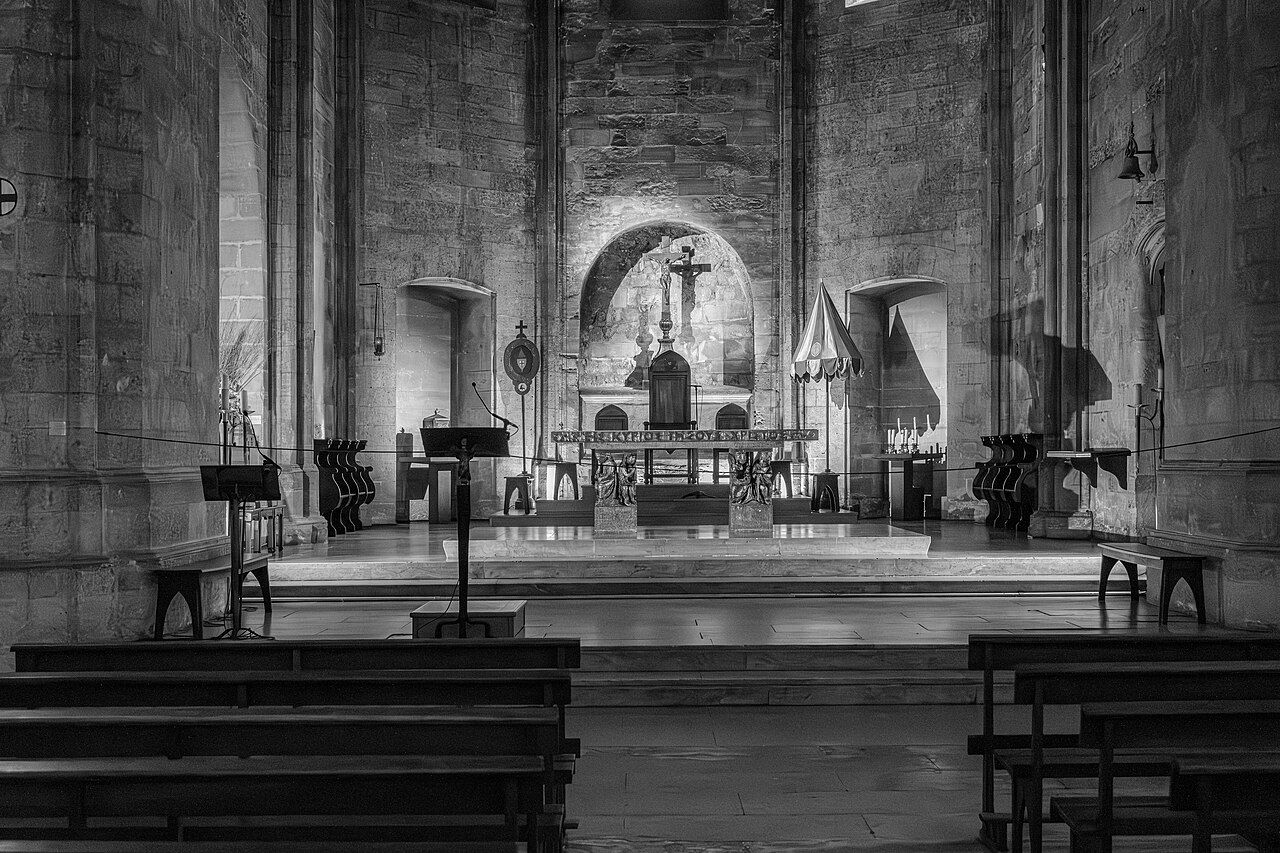 Photograph: Marc-Julien-Photography — CC0-1.0
-
“A short climb from the water.”
That is the approach to Abbaye Saint-Victor, above the Quai de Rive-Neuve. From below, the square, battlemented towers give the church the look of a castle. It is a useful first impression, but not the whole story. The church seen today was largely built over the span from the 11th century through the 14th century; below it, the crypts hold late Roman and early Christian sarcophagi. The place gathers very different stretches of time into one visit.
The church is less a single monument than a sequence of uses held in the same place.
-
Founded above the port
The abbey was founded in the early 5th century by the monk John Cassian. Its name comes from Victor, a Roman soldier martyred in Marseille around the year 300. Those beginnings sit well apart from the fortress-like shape that now marks the skyline. The building’s long history is not legible in one glance; it is easier to hold the broad outline first, then let the details accumulate.
Saint-Victor stands above the water, rather than on the quay itself. The short climb makes that change in level part of the visit. The port remains close, but the church has a different scale and weight from the waterfront below. I like that the approach is brief and direct: there is little distance between the everyday movement of the quay and the older layers kept here.
-
A church made to look like a fortress
The fortified church seen today was largely built over the span from the 11th century through the 14th century. Pope Urban V, a former abbot of Saint-Victor, had it fortified with towers in the 1360s. The square, battlemented towers are the clearest sign of that character. They make the church look defensive, a shape that is easy to read from the surrounding area even before knowing its history.
There is a contrast between that strong exterior and the quieter work of understanding what survives inside and below. The church’s story extends beyond its fortress-like outline and the older remains it contains. Its present form and the crypts beneath it carry separate layers of the same account. I find the contrast more useful than trying to make the building tell one story at a time.
-
Down into the crypts
The crypts hold late Roman and early Christian sarcophagi. Some were cut into an ancient quarry that later served as a burial ground. That detail changes the way the spaces read: the rock serves as a setting for the remains and as part of the site’s earlier use. The sequence is plain, and striking. A quarry, then a burial ground, then a church above.
A dark wooden statue of the Virgin, known as Notre-Dame de Confession, is kept in the crypt. The name and the material give this part of the visit a more intimate focus than the towers outside. I find it useful to take the crypts at their own pace, without trying to reduce them to a list of dates.
-
What was left
Most of the abbey’s buildings were destroyed after the French Revolution, leaving the church. That fact gives the surviving structure a different emphasis. The surviving church stands in place of a larger group of abbey buildings, most of which were lost.
It is tempting to treat the church and the crypts as a neat passage through time: early remains below, later construction above. The facts are not quite so tidy. The site has had different forms and purposes, and what survives is partial. Still, the arrangement is easy to grasp while moving between the two levels. Above, the towers and battlements. Below, sarcophagi, quarry-cut spaces and the statue.
-
The procession comes up from the port
Every 2 February the archbishop leads a procession from the Vieux-Port up to Saint-Victor for Candlemas. Green candles are carried and sold at Saint-Victor for the occasion. The route links the water and the church directly: the climb that is a short part of an ordinary visit becomes the line of a procession. It gives the church a continuing place in the life of the port, not only a history held in stone.
The Candlemas customs extend beyond the procession to the boat-shaped biscuits of Candlemas, bringing another part of the day into view. At Saint-Victor, the green candles and the walk uphill are the details that stay with me. The church’s old defensive outline is still there, but on this day the movement towards it matters as much as the building itself.
The church is less a single monument than a sequence of uses held in the same place.
The church is less a single monument than a sequence of uses held in the same place.
-
Keeping the layers together
Saint-Victor asks for more than one kind of attention. The towers explain the fortress-like appearance; the crypts hold the sarcophagi and the statue; the Candlemas procession sets the building in motion from the port. None of these parts replaces the others. Together they make the abbey’s long span easier to feel, even without turning it into a smooth story.
For a visit, the simple orientation is enough: Saint-Victor stands above the Quai de Rive-Neuve, a short climb from the water. On Candlemas, the procession follows that rise from the Vieux-Port. The place feels most complete when both are kept in mind: the church as a surviving building, and the route that still leads up to it.
Place Above the Quai de Rive-Neuve From the water A short climb Candlemas Every 2 February; procession from the Vieux-Port to Saint-Victor
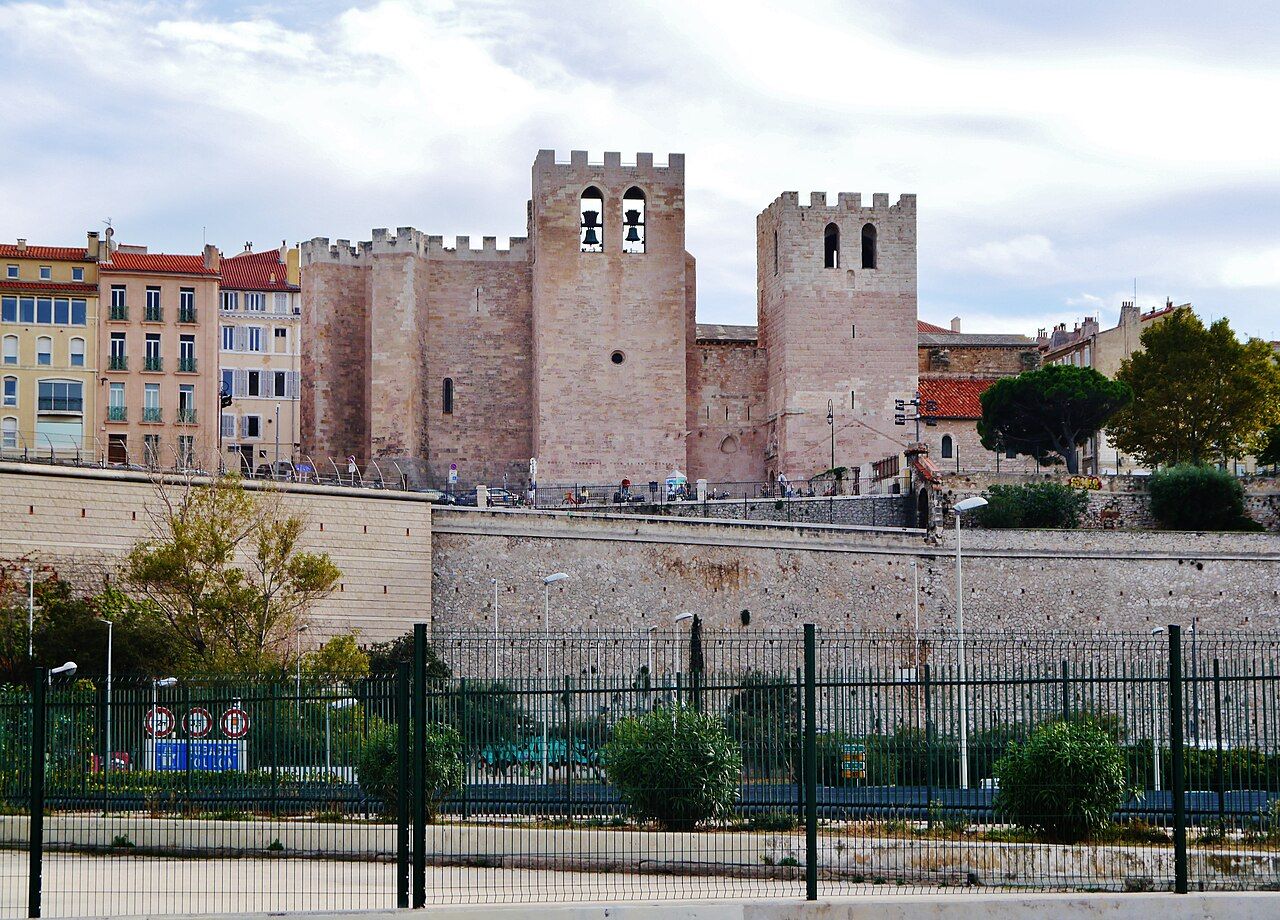 Photograph: Zairon — CC-BY-SA-4.0
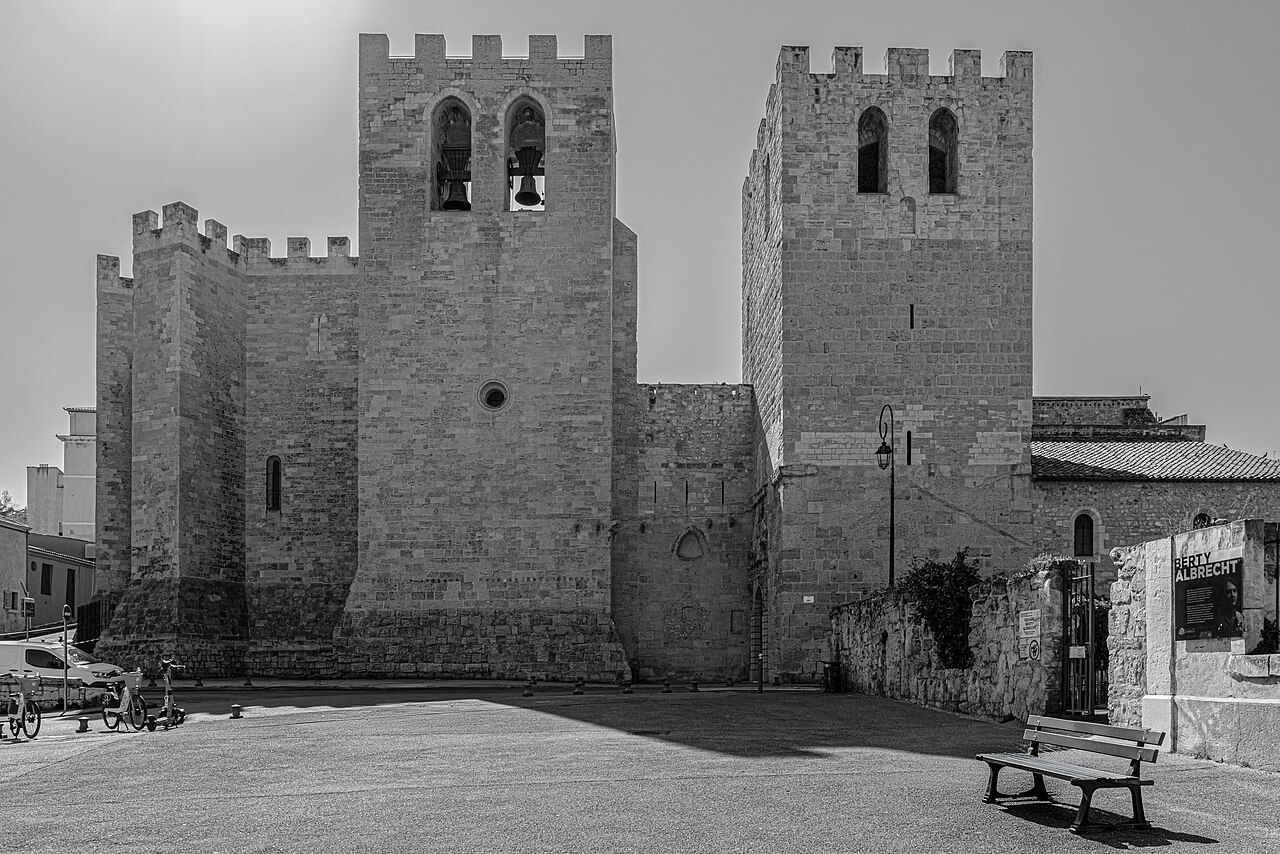 Photograph: Marc-Julien-Photography — CC0-1.0