Entry055
Bouillabaisse: from fishermen’s pot to city emblem
A meal made from bony rockfish that were hard to sell became a dish with a name, a traditional service and, in 1980, a charter signed by Marseille cooks.
- Place
- Marseille
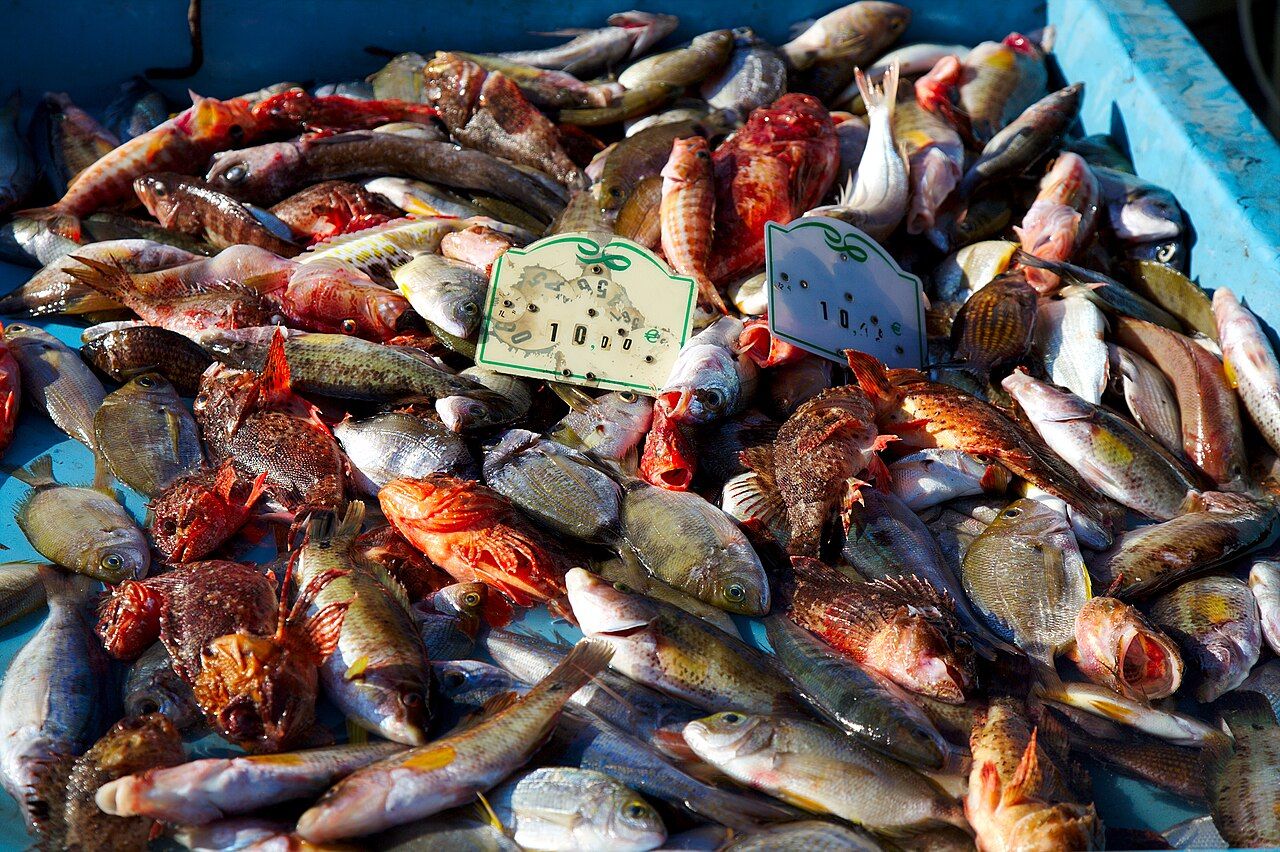 Photograph: smallkaa — CC-BY-2.0
1. When does a fishermen’s meal become a dish with rules?
Bouillabaisse is the Provençal fish stew most closely tied to Marseille. Its starting point is practical: fishermen made a meal from bony rockfish that were hard to sell. The fish were difficult to sell; they could still make a meal.
The origin is about using what the market did not easily take. Later, the named dish came with expectations about what it contains and how it is served. Bouillabaisse holds both ideas at once: a practical beginning and a recognised form.
2. A name that holds two actions
The name comes from the Provençal bolhabaissa, joining the words for boiling and for lowering the heat. The word carries a small sequence inside it: heat brought up, then brought down. It points to what happens in the pot, without turning the dish’s beginnings into a legend.
The name keeps a cooking action at its centre. The meal itself came to be described by the fish it contains and by the order in which it reaches the table.
3. The fish are not an afterthought
Scorpionfish, called rascasse in Marseille, is the fish most associated with bouillabaisse. Weever, John Dory, conger eel and gurnard are also often used. The list makes the original idea clear: this is a dish built around rockfish, not a single celebrated fish with a few additions.
The the quayside stalls where the rockfish are sold give that association a concrete place. The dish’s fish and the fish for sale sit within the same account of Marseille: what is caught, what is hard to sell, and what can be made from it. The fish remain central to the name.
4. The broth has its own history
Olive oil, onion, tomato, garlic, fennel and saffron flavour the broth. Tomatoes came from the Americas and entered the recipe only in the modern period. That detail makes the recipe less fixed in time than its close association with Marseille might suggest.
The fish tell one side of the dish’s history; the broth tells another. The beginning is described through the use of hard-to-sell rockfish, while tomato came into the recipe later. A recipe can carry both a practical origin and ingredients added afterwards.
5. First the broth, then the fish
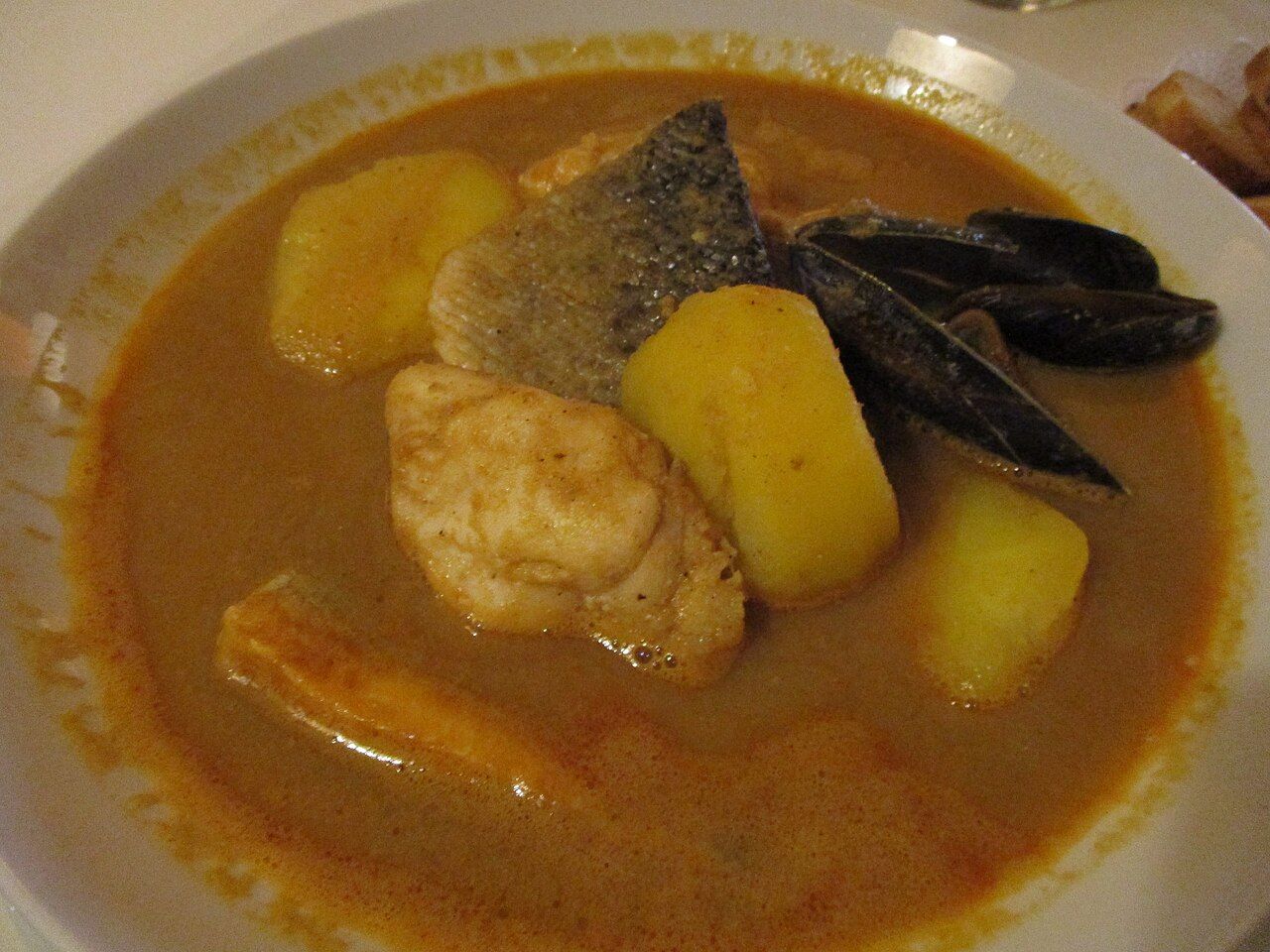
Bouillabaisse is traditionally served in two parts: first the broth, then the fish. The order gives the broth a separate place at the table rather than treating it as something left behind once the fish have been eaten.
 Photograph: Arnaud 25 — CC-BY-SA-4.0
The broth is eaten with toasted bread rubbed with garlic and spread with rouille. Rouille is made from olive oil, garlic, saffron and chilli, thickened with bread or potato. The service is plain in its sequence: broth, toasted bread, garlic, rouille, then fish. A fishermen’s meal has become a form of service as well as a recipe.
6. A dish shown before it is served
In the traditional service, the whole fish are shown at the table before they are cut up. First the fish are visible as fish; then they are divided for eating. The presentation makes the ingredients part of the meal’s structure, not merely something concealed in the broth.
Alongside the two-part service, this gives bouillabaisse a clear shape at the table. The broth comes first. The fish follow, shown whole before being cut. The order keeps the fish at the centre, where the origin story put them.
7. From use to definition
In 1980, a group of Marseille cooks signed a charter setting out what a true bouillabaisse must contain. The dish’s identity was stated as a matter of rules, not only association or habit. The charter answered a question the origin did not need to ask: what counts as bouillabaisse?
The facts here give the charter’s purpose, not its full terms. They show a change in scale: a meal made from bony fish that were hard to sell acquired a named set of expectations. The fish, broth and service help explain why a definition mattered. The change is not from a poor dish to a grand one, but from a use for difficult fish to a meal with a stated form.
The change is not from a poor dish to a grand one, but from a use for difficult fish to a meal with a stated form.
8. A form that still points back
The charter and traditional service do not erase the fishermen’s meal at the beginning. They make the change easier to see. At one end is a practical use for bony rockfish that were hard to sell. At the other are a dish closely tied to Marseille, fish associated with its name, a broth with its own flavours and a service in two parts.
This is not a neat rise from humble food to prestige. It is a story of a dish becoming more defined. The name still describes actions in a pot; the fish remain central; the broth gets its own place; and a charter gives the idea of a true bouillabaisse a written form. I prefer the dish’s practical beginning to any grand claim made for it.
| At the table | What belongs to the dish |
|---|---|
| Fish | Scorpionfish, weever, John Dory, conger eel and gurnard are among the fish used. |
| Broth | Olive oil, onion, tomato, garlic, fennel and saffron. |
| Service | Broth first, with toasted bread rubbed with garlic and rouille; fish afterwards. |