Entry060
The Capucins market in Noailles
A step-by-step look at the fruit, herbs, fish, olives and spices that make the Marché des Capucins a working pantry in Noailles.
- Place
- Marché des Capucins
- Arrondissement
- 1st
- From the Quai des Belges
- 10 minutes on foot
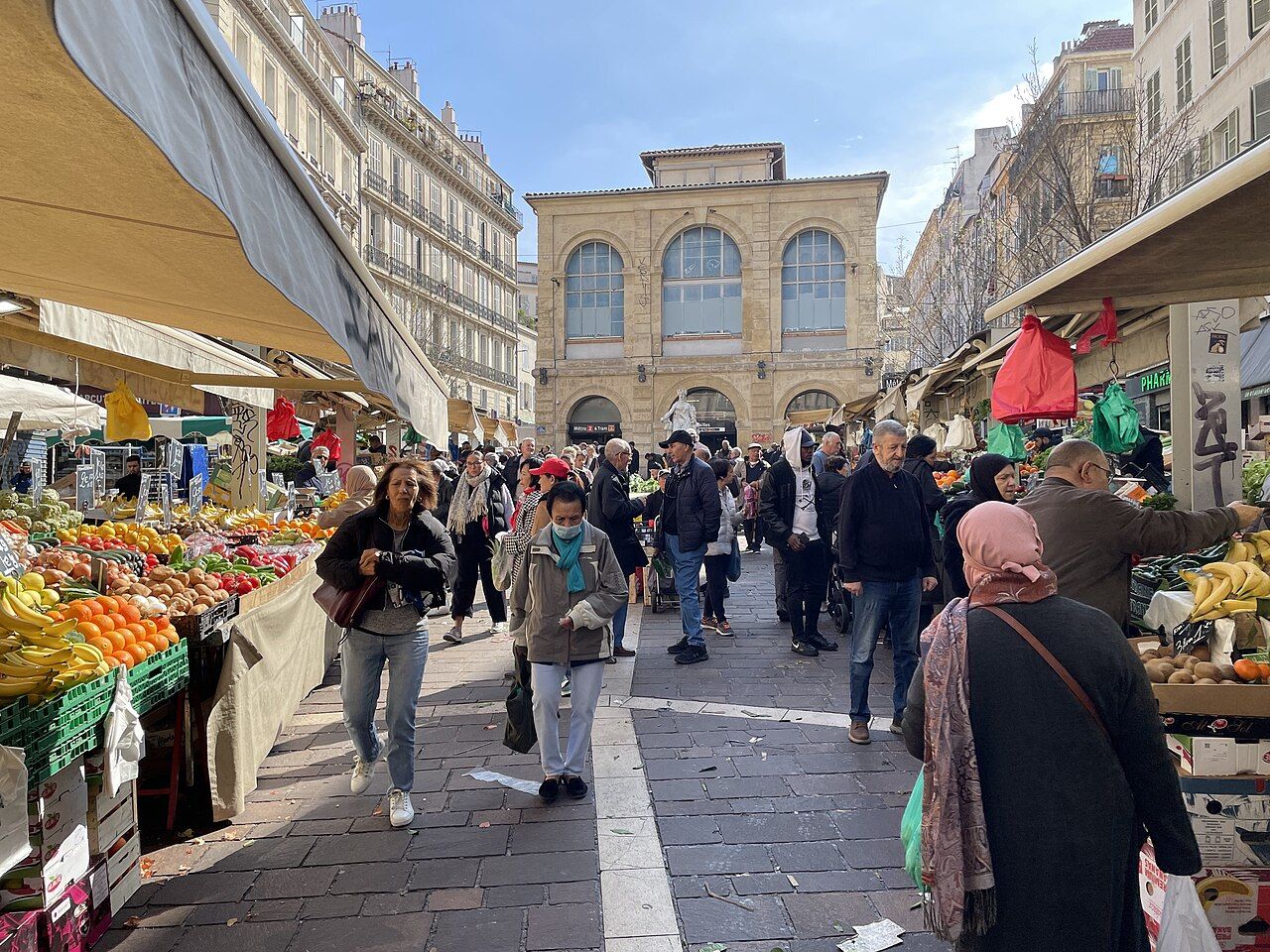 Photograph: Carl Ha — CC-BY-SA-4.0
1. Begin at Noailles
Start by getting a sense of the market. The Marché des Capucins fills the Rue Longue-des-Capucins and the streets around it in Noailles. The Noailles metro station opens a few steps from the market, so it is a straightforward place to begin. There is no single stall to seek out first. The useful idea is to take the market as a small group of streets, and notice how the goods change from the main stretch to its edges.
2. Follow the fruit and vegetables
Walk along the Rue Longue-des-Capucins and begin with the stalls of fruit and vegetables. They are piled along the street, giving the market its most direct display. Pause here before thinking about what to buy. The produce is the simplest way to take in the market as a working pantry: a row of fresh goods in open view, with other parts of the food trade continuing around it. I like beginning with what is laid out plainly.
3. Look around the stalls
Once the fruit and vegetables have set the pace, turn attention to the shops around the Marché des Capucins. Olives, spices, dried fruit and nuts are sold by weight. That detail changes the way to browse: these are goods to consider in portions, rather than only as a display. Take the street slowly and keep the different kinds of pantry goods in mind. The market is not only produce piled on stalls; its surrounding shops add another layer of choice.
4. Find the herbs
Make room in the walk for the fresh herbs. Mint and coriander are among the herbs sold in large bunches at the market. Their scale is worth noticing beside the smaller, measured goods in the surrounding shops. A bunch of mint or coriander is an uncomplicated marker of the market’s range: fresh leaves in quantity, alongside olives, spices, dried fruit and nuts. The point is to see how much of a pantry sits close together.
5. Walk the edges
Leave the middle of the market for a moment and follow its edges, where fishmongers and butchers trade. This is another useful part of the route, not a separate destination. The market’s different food trades meet within the same few streets, and the edges make that arrangement easier to read. Keep walking rather than trying to take in everything at once. A short return towards the fruit stalls gives the visit a simple shape: produce, pantry goods, herbs, then the trades along the edges.
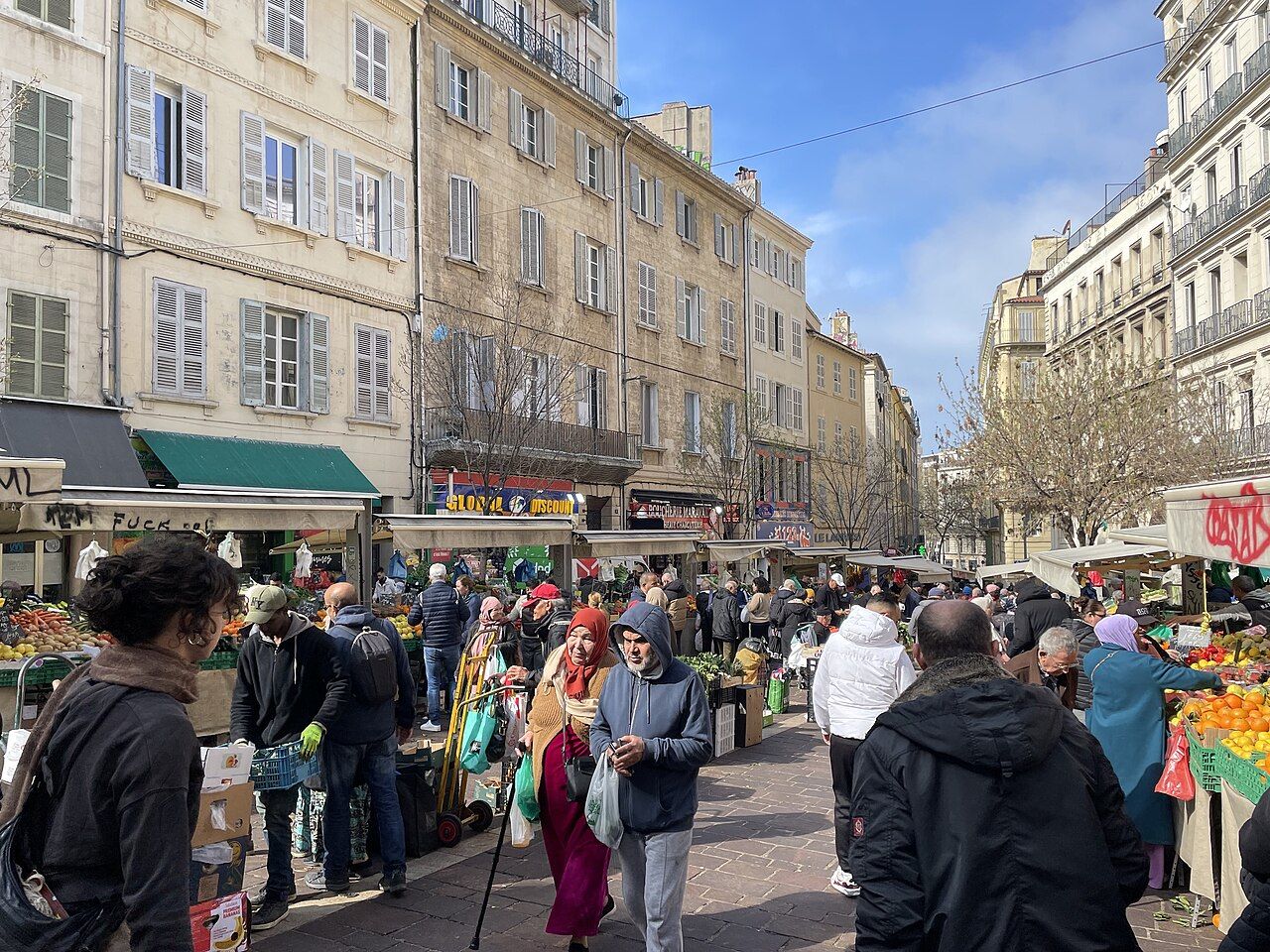 Photograph: Carl Ha — CC-BY-SA-4.0
The range here reaches beyond one regional pantry. Produce and spices from North Africa, West Africa and the eastern Mediterranean are sold around the Marché des Capucins. For another walk, the painted squares up the hill is another direction to keep in mind.
6. Finish with the market’s rhythm
The Marché des Capucins is held every day except Sunday, and it is busiest in the morning. Those two facts give the visit its practical outline. Choose a day when the market is held, then let the streets themselves set the order: Rue Longue-des-Capucins first, the surrounding shops next, and the edges after that. The market is often called the belly of Marseille. By the end of this short circuit, the name feels less like a slogan than a plain description of its many food trades.
The herbs are my favourite measure of the market’s generous scale.
| Market detail | What to know |
|---|---|
| Location | Rue Longue-des-Capucins and the streets around it in Noailles |
| Market days | Every day except Sunday |
| Busiest time | Morning |
| Metro | Noailles metro station opens a few steps from the market |
| Goods | Fruit and vegetables, olives, spices, dried fruit, nuts, herbs, fish and butcher trade |