Entry036
Château d’If: the prisoners behind the legend
A square fort on a small island became a prison, then the setting for a novel. The real prisoners and Edmond Dantès belong side by side, but not in the same account.
- Place
- Château d'If
- Arrondissement
- 7th
- From the Quai des Belges
- boat, about 20 minutes
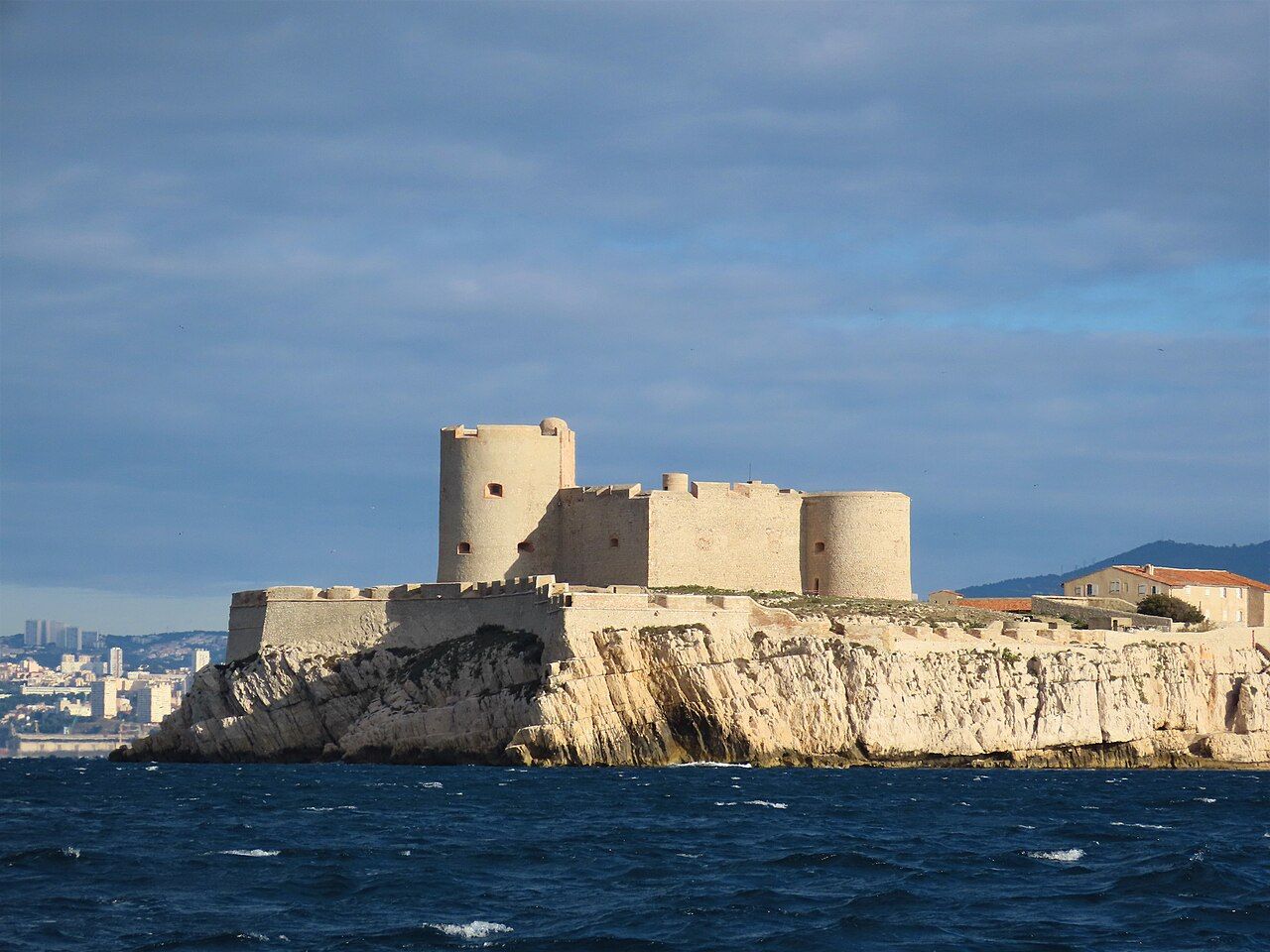 Photograph: Rémih — CC-BY-SA-4.0
1. What is real, and what belongs to the novel?
What happened at the Château d’If, and what was made there for a story? The distinction matters on this small island, about three and a half kilometres west of the Vieux-Port. A fort ordered by François I became a prison. Later, The Count of Monte Cristo made it the place where Edmond Dantès was held. Those histories share the same rooms in the visitor’s imagination, but they are not the same account.
The useful starting point is the building itself. The Château d’If is a square of three storeys with three round towers. Its form belongs to the history of the fort; Edmond Dantès belongs to a novel. Keeping those things distinct makes the story more interesting, not less.
2. An island visit before the fort
François I came to the island of If in 1516, before ordering the Château d’If to be built. He was there to see a rhinoceros that the king of Portugal was sending to Pope Leo X. It is an unusual episode to set beside the plain geometry of the fort that followed. The island had already been the destination of a royal visit; the building came later.
The fort went up between 1527 and 1529. The sequence is clear: the visit, then the construction, then the prison. I find the separate pieces more compelling than a single legend, especially the contrast between the earlier visit and the fortress’s practical, square outline.
3. A fortress without a siege
The Château d’If never had to withstand a siege. It was soon used as a prison instead. Its military form remained, while its history turned towards confinement. The towers and storeys might suggest a dramatic military past, but the recorded fact is simpler. The siege never came.
A fortress does not need a battle to become significant. Here, the transition to prison gave the building its later role, and the island setting gave it a distinct place in the bay. The shape is striking enough to hold the eye; the story asks for more care than the shape alone provides.
4. The people held there
After the revocation of the Edict of Nantes in 1685, Protestants were held in the Château d’If in large numbers. The phrase is brief, but it describes a substantial part of the prison’s history. These were real prisoners, held in the real fort. Their presence belongs to the account independently of the fiction that would later make the island familiar to readers.
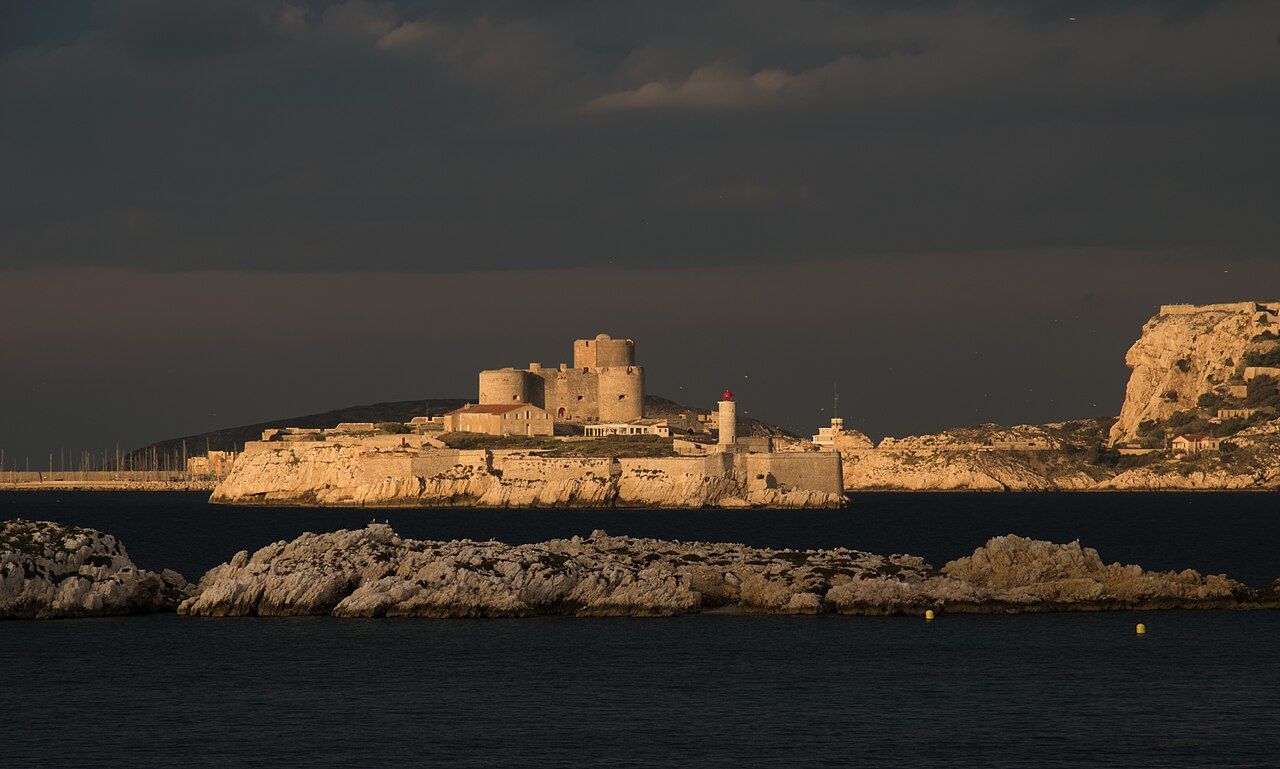 Photograph: Vlad Mandyev — CC-BY-SA-4.0
The future revolutionary orator Mirabeau was imprisoned there in 1774. His name gives another point of reference, but the prison is not a collection of literary characters. Its history already includes a fortress that did not face a siege, Protestants held in large numbers and a named prisoner associated with revolution. The novel is only one layer.
5. Dantès’s sentence
The Count of Monte Cristo was published in 1844. In the novel, Edmond Dantès is held in the Château d’If for fourteen years. That sentence is fiction, and Dantès is a character. The novel’s use of the fort is so closely attached to its name that it can be tempting to treat the character as part of the prison record. He is not.
The fort’s literary life sits beside, rather than replacing, its prison history.
The novel uses an actual place with a history of imprisonment, then gives it a fictional prisoner and a long fictional sentence. The real prison had its own people and events. Both ideas can be held at once: the novel made a powerful setting of the fort, while its documented past does not depend on Edmond Dantès.
The fort’s literary life sits beside, rather than replacing, its prison history.
6. Names on the cells
Cells in the Château d’If were later named after Edmond Dantès and the Abbé Faria, characters from the novel. The boundary between history and fiction becomes visible in the place itself. The names refer to characters, not to real prisoners in the fort’s history. They make the novel part of the way the building is presented, while leaving the difference between invented and historical prisoners intact.
The cells named for Dantès and Faria speak to the novel’s hold on the place; Mirabeau and the Protestants belong to its prison history. The same fort contains both references. It is enough to keep track of which is which.
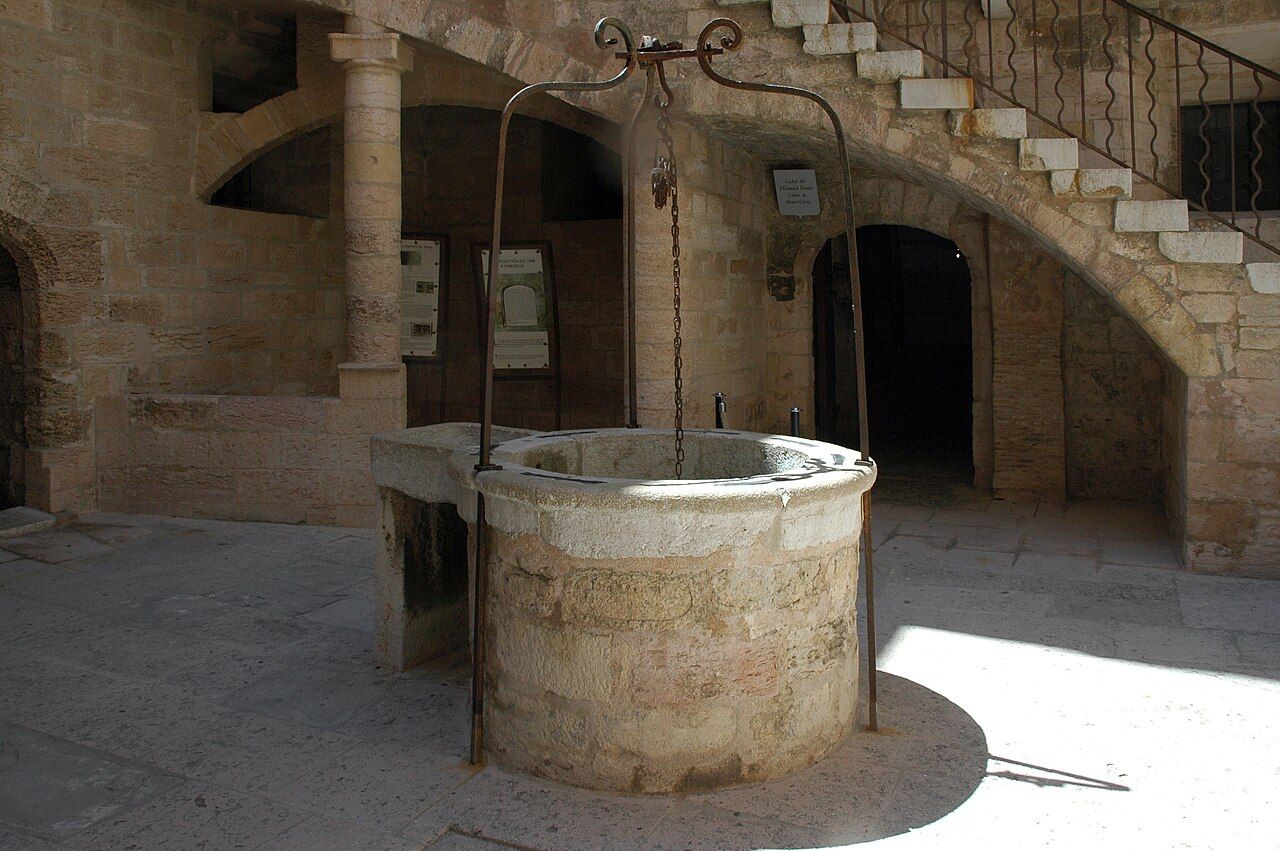 Photograph: DimiTalen — CC0-1.0
7. The island and the bay
The island of If is part of the Frioul archipelago. Boats to the island leave from the Vieux-Port, and the journey is about 20 minutes. The fort’s position on its small island is part of its identity, not just a detail beside the building’s history. The island separates the Château d’If from the Vieux-Port while keeping it closely connected to the bay.
The island setting also places the fort among the larger islands just beyond. I prefer to think of the visit as a short crossing to a specific historical site. The square fort, the prison stories and the novel all meet on the same small piece of land.
8. Keeping the accounts separate
The Château d’If is cared for by the Centre des monuments nationaux. That fact sits beside the need to read the place in layers: the construction ordered by François I, the prison history and the later literary association. One does not cancel the next. The building’s square shape and three round towers belong to the first story; the people held there belong to the second; Dantès and Faria belong to the third.
The novel gives the fort a memorable fictional prisoner, but its real history is enough to make the place worth considering on its own terms. The short crossing from the Vieux-Port ends at a building that can be read in several ways, provided the invented sentence is not mistaken for a real one.
I prefer the fort’s layered history to the legend on its own.
| Island | If, part of the Frioul archipelago |
|---|---|
| From the Vieux-Port | Boat, about 20 minutes |