Entry028
The Cosquer cave, from the drowned gallery to the quay
A cave entrance lies far below the sea off Cap Morgiou. Its painted walls now have a full replica beside the MuCEM, reached by electric car.
- Place
- Villa Méditerranée
- Arrondissement
- 2nd
- From the Quai des Belges
- 15 minutes on foot
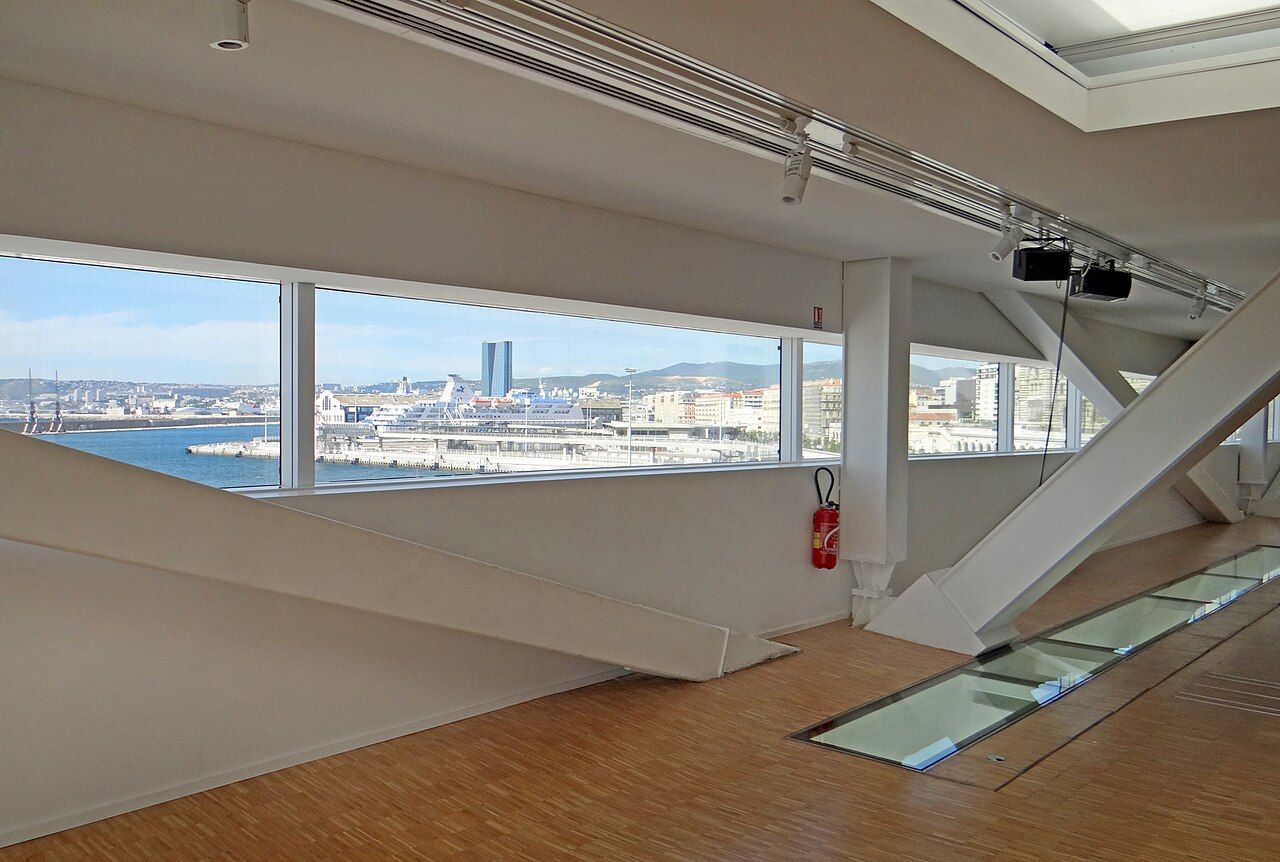 Photograph: Jean-Pierre Dalbéra from Paris, France — CC-BY-2.0
“The real Cosquer cave is closed to the public and studied by France's Ministry of Culture.”
1. Begin with the entrance
Start with the fact of its position. The Cosquer cave opens under Cap Morgiou, with the entrance about 37 metres below the surface of the sea. It is not an entrance on a path or a visible opening in a cliff face. The route into the story starts with that distance under water, and with the knowledge that the cave is closed to the public.
From the quay, the useful direction is not towards the entrance itself, but towards the full replica beside the MuCEM. The geography changes; the cave’s story does not.
2. Put the water into the sequence
Rising seas at the end of the last Ice Age drowned most of the Cosquer cave. That is the hinge in the account: a gallery made and used long before the present shoreline, then left largely below the sea. The water is not a detail added to the cave’s story. It explains why the entrance is so far beneath the surface and why a replica matters to anyone trying to understand the place.
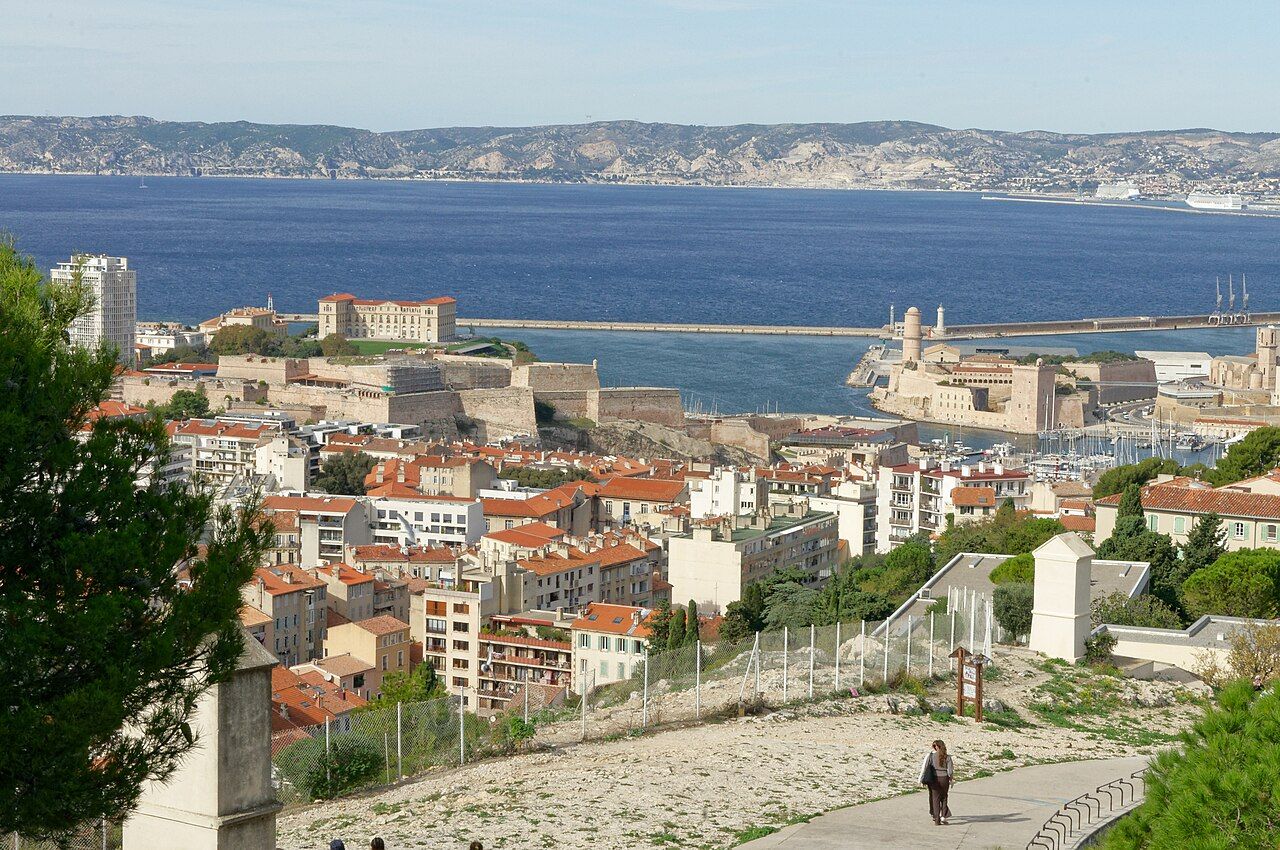
The hills above the entrance still give the story a point on the map. the calanque above the drowned entrance is the landward reference; below it, the cave remains out of reach.
3. Hold the dates lightly
The paintings and engravings were made between about 33,000 and 19,000 years ago. Those figures cover a span rather than a single moment of making. I find it easier to keep them as a range, then look at what is actually recorded on the walls: horses, bison, ibex, seals and great auks.
The animals bring the cave into focus without needing a grand description. A wall of marks, images of animals, and a long stretch of time. The work is visible in the replica; the original remains under the sea.
4. Notice the hands
There are many hand stencils in the Cosquer cave, several with fingers that seem to be missing. A hand stencil makes a distinct record from the animal figures. It is direct and spare; the missing-looking fingers leave a question in the image without settling what it means.
I keep a pocket of sweets. It is a small, ordinary detail to carry beside traces made so long ago, and a reminder to look slowly rather than turn every mark into an answer.
 Photograph: Bertrand SOUBEYRAND — CC-BY-SA-4.0
5. Separate the cave from its copy
The real Cosquer cave is closed to the public and studied by France’s Ministry of Culture. Keep that fact distinct from the visit to the replica. The cave is the source; the replica is the place visitors can enter. The distinction matters, especially in a story that begins with an entrance beneath the sea.
The cave was found by the diver Henri Cosquer in 1985. Its paintings were made public in 1991. Those dates mark two different steps: finding the entrance, then making the paintings known.
6. Take the story to the Villa Méditerranée
The full replica opened in June 2022 inside the Villa Méditerranée, next to the MuCEM. This is how the drowned gallery reaches the waterfront: not by moving the original, but by making a replica beside the port. Visitors move through it in small electric cars, so the experience follows a route through a built copy rather than a dive to the real entrance.
The Villa Méditerranée was designed by Stefano Boeri, built for the Provence-Alpes-Côte d’Azur region and opened in 2013.
7. Leave the two places in view
Keep both locations in mind at once: the entrance under Cap Morgiou and the replica beside the MuCEM. One is the drowned cave, closed and studied; the other lets visitors move through a full copy on the waterfront. That separation is the clearest way to follow the story from the sea to the quay.
The replica is the more useful place to meet this cave, while the original stays where the story began.
| Place | Detail |
|---|---|
| Real Cosquer cave | Entrance about 37 metres below the sea; closed to the public and studied by France’s Ministry of Culture. |
| Cosquer replica | Inside the Villa Méditerranée, next to the MuCEM; visitors move through it in small electric cars. |
| Villa Méditerranée | Opened in 2013; the replica opened there in June 2022. |