Entry019
L'Estaque: hills and painted roofs
A day in the former fishing and tile-making village, reading the hills, chimneys and harbour view against the paintings made here.
- Place
- L'Estaque
- Arrondissement
- 16th
- From the Quai des Belges
- about 10 km north-west
 Photograph: Romainbehar — CC0-1.0
1. “Houses at L'Estaque”
Morning begins with the painting’s name: “Houses at L'Estaque”, made by Georges Braque in 1908. It is often named as one of the first Cubist paintings. The useful question is not how to recreate it, but where its village sits: between the hills that rise directly behind it and the bay in front.
L'Estaque is a former fishing and tile-making village on the north-west edge of Marseille, in the 16th arrondissement. I like beginning with that simple match.
2. The line west
L'Estaque has a railway station on the coastal line running west from Marseille along the Côte Bleue. A practical starting point; the view itself makes the stronger impression.
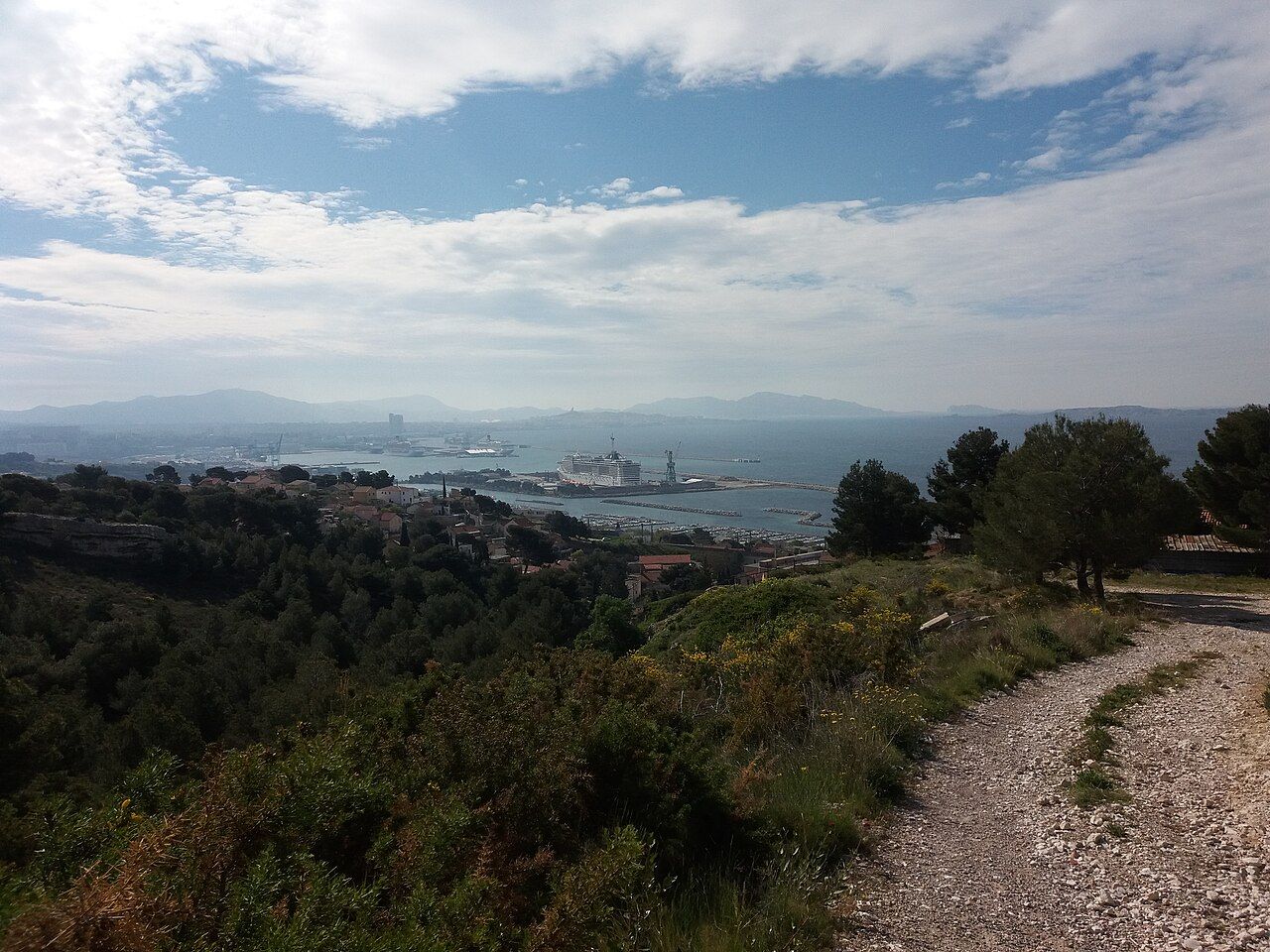
The village faces the bay, with the hills of the Chaîne de l'Estaque rising directly behind it. Slopes at the back, roofs in between, water and, beyond it, the city.
3. The chimneys among the roofs
By late morning, the old tile works come into the picture. Their tall chimneys appear in many paintings of the village. That is a useful detail to keep in mind while looking at the present roofs and hills: the paintings record not just a general view, but a village whose tile-making past had a visible place in its outline.
A painted line need not match the scene exactly. A chimney can serve as a point of comparison; the slope behind it gives the view its setting. The pleasure is in seeing how a painter arranged parts of the same place.
4. Cézanne's repeated view
Paul Cézanne painted the bay of Marseille from L'Estaque many times in the 1870s and 1880s. The repetition matters. It makes the bay more than a single subject or a background to the village: it was a view he returned to. From here, the eye can travel across the water and back to the line of hills behind L'Estaque.
Renoir painted at L'Estaque in 1882. His presence adds another name to the day’s sequence, but the practical task stays the same: look between the painted village and the landforms around it. I prefer this back-and-forth to treating the paintings as a checklist.
 Photograph: Romainbehar — CC0-1.0
5. The harbour and the view across the bay
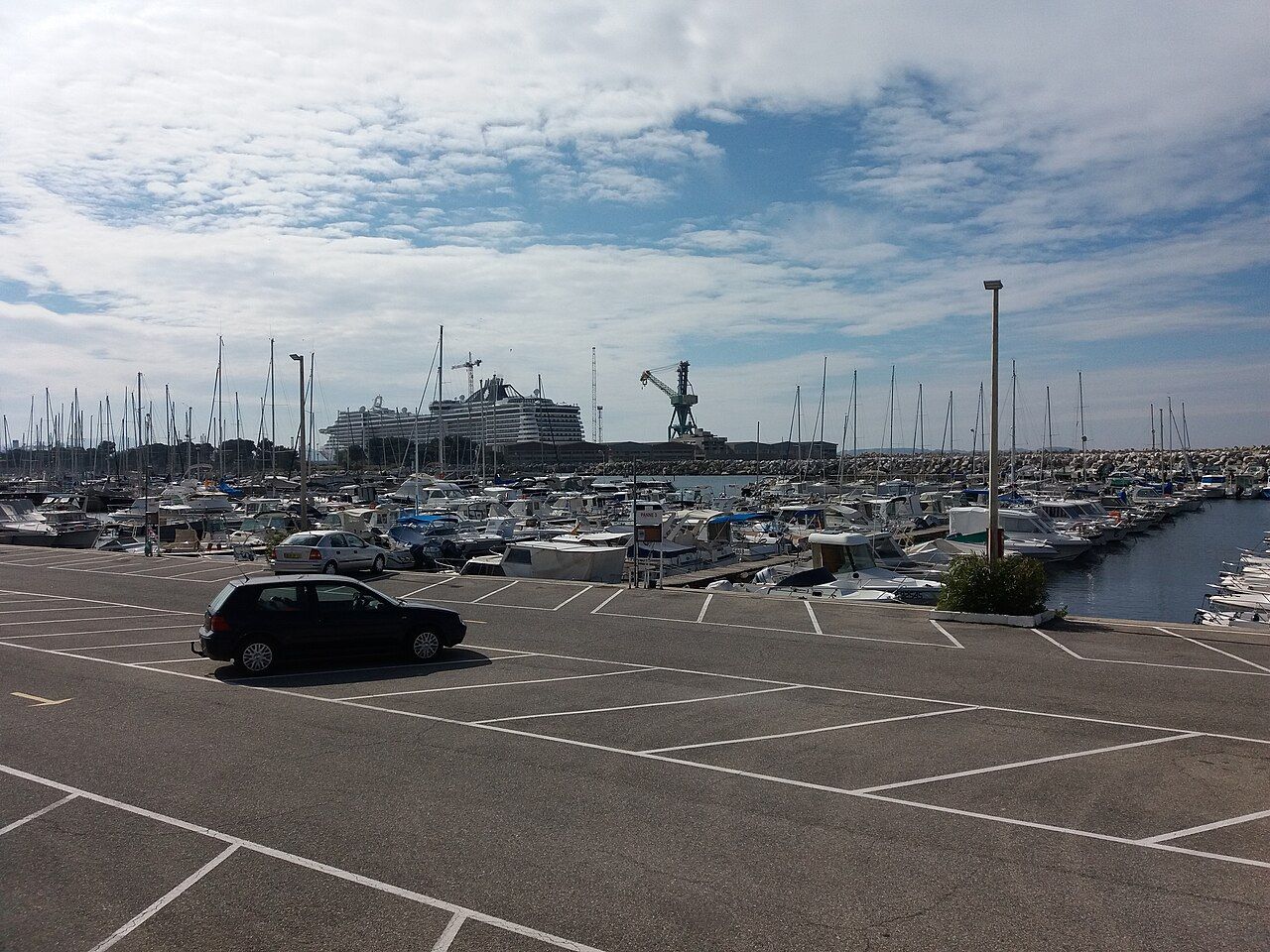
In the afternoon, the harbour gives the view its widest frame. From the harbour of L'Estaque, the gaze looks back across the bay to the city and Notre-Dame de la Garde. The hills are close behind the village; the city and the landmark sit across the water. It is a clear way to understand why the bay kept returning in these paintings.
A small entry in the notebook: the sugared fritters sold on its seafront. The view is the main business of this pause, with the seafront in the frame.
6. Braque and Dufy
Braque painted at L'Estaque between 1906 and 1908, moving from Fauvism towards Cubism. Raoul Dufy painted alongside him at L'Estaque in 1908. Their work makes the village a place to compare approaches as well as subjects: hills, roofs, chimneys, bay.
Return to the roofs, then look up to the Chaîne de l'Estaque. The present view does not have to reproduce a painting to make the connection legible. Recognise the arrangement of village and slope, and notice what a painter might simplify or bring forward.
7. The view at the end of the day
As the day draws on, the harbour remains the point where the parts meet: the village behind the seafront, the hills immediately behind the village, and the city across the bay. L'Estaque’s painters left several ways to look at that arrangement, from Cézanne’s repeated views to Braque’s changing forms. The chimneys give the comparison a local detail.
The day can stop with the view it began by trying to understand. A painting names a place; the hills and roofs show where to look.
| Place | Useful detail |
|---|---|
| L'Estaque | 16th arrondissement, on the north-west edge of Marseille |
| Railway station | On the coastal line running west from Marseille along the Côte Bleue |
| Harbour | View across the bay to the city and Notre-Dame de la Garde |