Entry003
Fort Saint-Nicolas, watching the harbour mouth
A day’s look at the citadel on the south side of the Vieux-Port entrance, from its royal beginnings to the ramparts seen across the shore.
- Place
- Fort Saint-Nicolas
- Arrondissement
- 7th
- From the Quai des Belges
- 15 minutes on foot
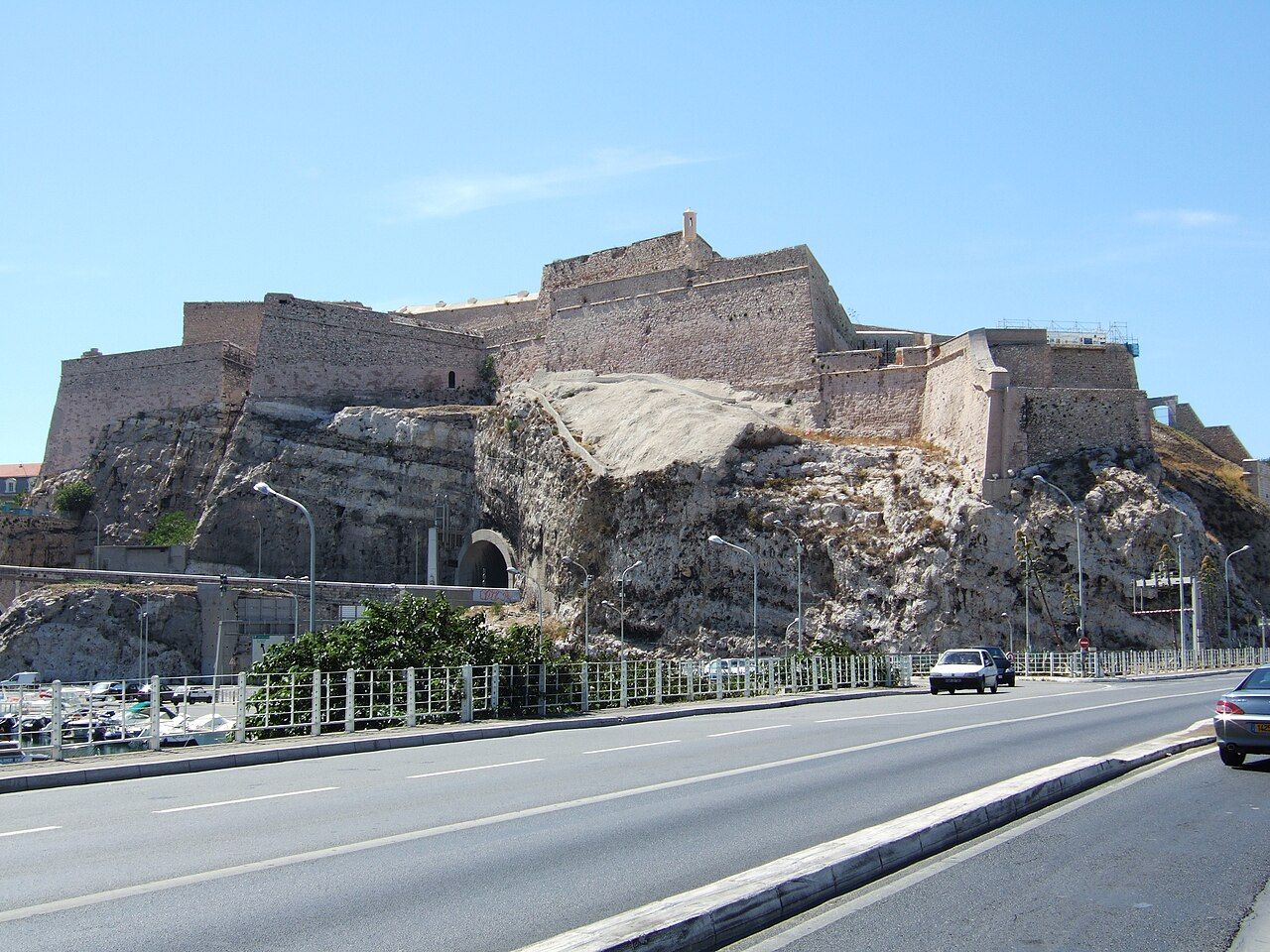 Photograph: photographer unknown — CC-BY-SA-2.5
“The guns of Fort Saint-Nicolas were placed to cover the city as well as the sea approach.”
1. Morning: take the angle
Start the day with the position. Fort Saint-Nicolas stands on the south side of the entrance to the Vieux-Port, facing Fort Saint-Jean across the harbour mouth. The view sets the citadel in relation to the city and the sea approach at once. I like this as a first reading of the place: not an isolated fort, but one side of a watch across the entrance.
2. The reason for the guns
As the morning moves on, keep that two-way purpose in mind. The guns were placed to cover the city as well as the sea approach. The angle matters. Fort Saint-Nicolas was not directed only out towards the water; its position also kept the city within range. A simple arrangement to describe, and a hard one to miss once the two forts are in view.
3. Built for a king
Fort Saint-Nicolas was built from 1660 on the orders of Louis XIV. The engineer Louis-Nicolas de Clerville drew up the plans. The fort’s position explains the practical logic of the work; its royal order gives that work another edge. I pause here long enough to let the names and purpose settle before moving on.
4. Two levels beside the water
By midday, the citadel reads as two parts: an upper fort, the Fort d’Entrecasteaux, and a lower fort beside the water. The names are useful, but the arrangement is the point. Keep the upper and lower forts together in mind, then return to the larger view across the entrance. Fort Saint-Jean opposite; the Vieux-Port opening between them.
5. A changed meaning
In 1790, crowds began pulling down part of Fort Saint-Nicolas as a symbol of royal power. The demolition was stopped. The change in meaning is plain: the structure ordered by a king became a target for crowds, though the attempt to pull it down did not continue. In the afternoon, that history sits beside the military purpose, rather than replacing it.
6. Evening: look back from the gardens
Fort Saint-Nicolas stayed in military use into the 21st century. From the gardens of the Palais du Pharo, its ramparts are clearly seen, alongside the empress's palace on the next headland. That is a good place to gather the day’s details: the facing fort, the divided levels, and the guns set towards city and sea.
I prefer the view that keeps both forts in frame.
| Position | South side of the entrance to the Vieux-Port |
|---|---|
| Facing | Fort Saint-Jean |
| Parts | Upper fort, the Fort d’Entrecasteaux; lower fort beside the water |
| Military use | Into the 21st century |