Entry006
The town hall quay, read in two eras
A short sequence for reading Marseille’s north harbour frontage: the Hôtel de Ville, its older civic neighbour and Pouillon’s pale stone blocks beside it.
- Place
- Quai du Port
- Arrondissement
- 2nd
- From the Quai des Belges
- 5 minutes on foot
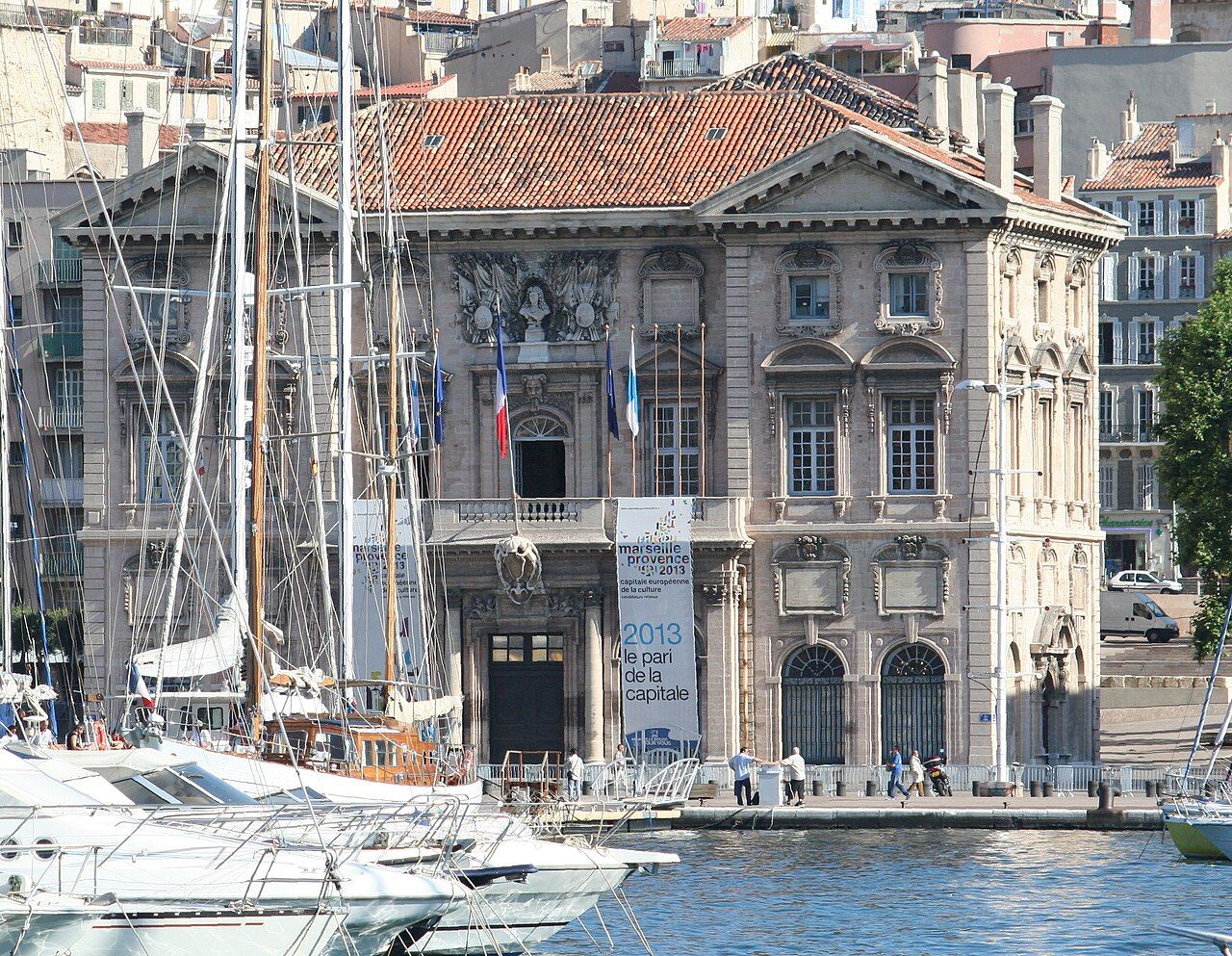 Photograph: Robert Valette — CC-BY-SA-3.0
“The sober Baroque facade of the Hôtel de Ville shows the influence of the palaces of Genoa.”
Start on the north side of the Vieux-Port, at the Quai du Port. Keep the harbour frontage in view as one long reading rather than treating the town hall and the blocks beside it as separate stops. The useful question here is what belongs to an older civic building, and what belongs to the rebuilding after the war.
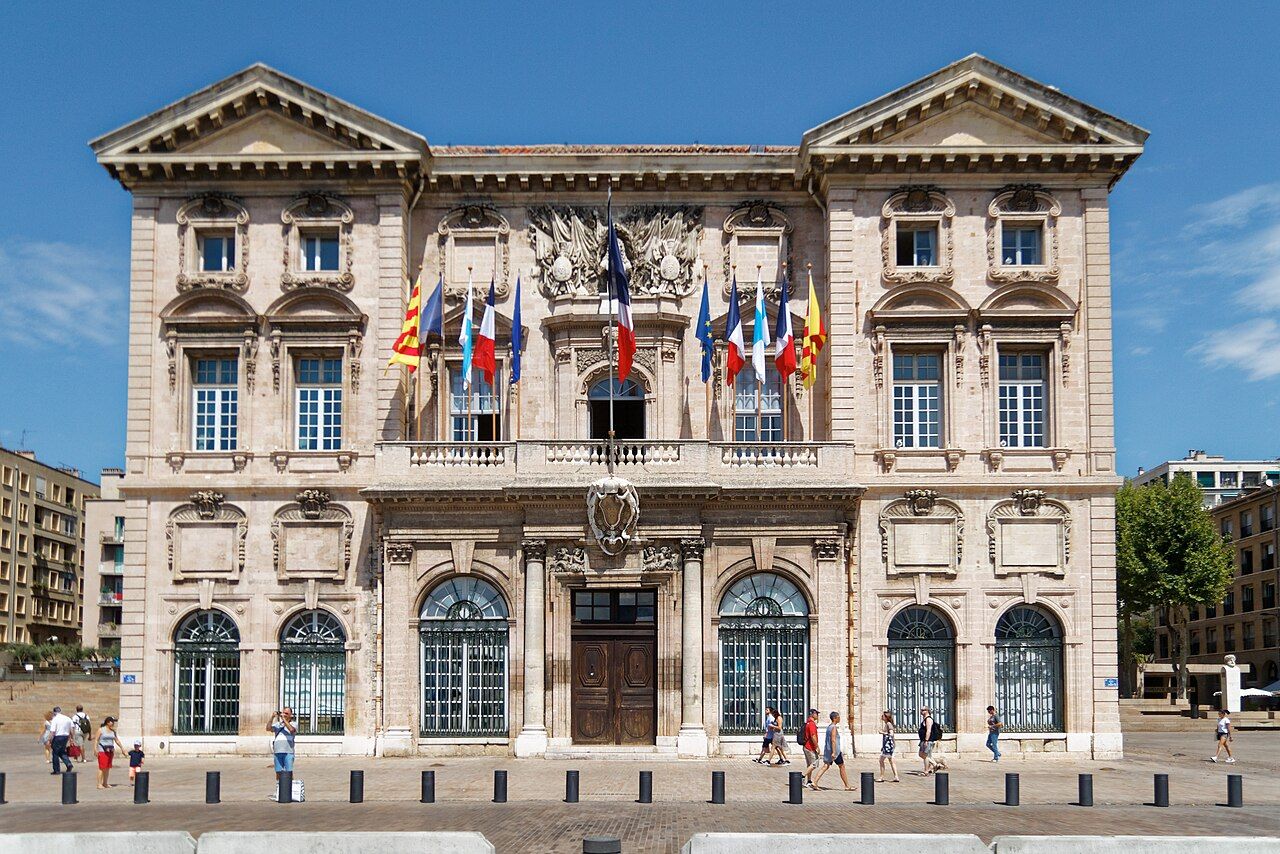
Find the Hôtel de Ville. It stands on the Quai du Port, and its sober Baroque facade is the older of the two eras. The building was put up between 1653 and 1673. Those dates give the facade its place in the sequence: a town hall from the seventeenth century, set against a frontage largely remade much later.
Read the facade without trying to make it grander than it is. Its Baroque manner shows the influence of the palaces of Genoa, but the description that fits it best is sober. I like that restraint as a starting point. It makes the change in scale and material along the quay easier to notice.
Now follow the frontage beside the town hall. Plans by the architect Fernand Pouillon shaped the rebuilt frontage of the Quai du Port in the years following the Second World War. The rebuilt frontage went up in the early 1950s. The blocks are faced with pale stone from Fontvieille, near Arles. Keep those details together: architect, period and stone.
Take in the stone blocks as a run of buildings, not simply as a background to the town hall. The pale stone gives the frontage a clear material character. The Hôtel de Ville and Pouillon’s blocks sit side by side, but their dates and architectural descriptions point in different directions. That contrast is the main thing to carry along the quay.
Look directly in front of the Hôtel de Ville for the north landing stage of the Ferry Boat. It gives the frontage a practical point of orientation, without changing the two-part reading: the town hall on one side of the story, the post-war rebuilding on the other. I find it useful to pause here and compare the materials.
Turn behind the town hall towards the streets that climb steeply to Le Panier. The change in level offers a different way to read the site: the quay is the harbour edge, while the streets behind it rise towards the neighbourhood. The Pavillon Daviel is also behind the town hall. It was built in the 1740s as a courthouse.
For a nearby continuation, the Musée des Docks Romains lies a few streets west of the Hôtel de Ville. Or stay with the quay and hold the two eras together: the Hôtel de Ville built between 1653 and 1673, and Pouillon’s frontage put up in the early 1950s. I prefer this short comparison to a hurried pass along the north side.
For the earlier setting, see the quarter that stood here before 1943.
 Photograph: Bjs — CC-BY-SA-4.0
| Position | Quai du Port, on the north side of the Vieux-Port |
|---|---|
| Ferry Boat | North landing stage directly in front of the Hôtel de Ville |
| From the port | 5 minutes on foot |