Entry022
Jardin des Vestiges: standing on the old shore
A day among the old harbour edge, Greek city wall and Roman basin, several metres below the streets around the Bourse.
- Place
- Jardin des Vestiges
- Arrondissement
- 1st
- From the Quai des Belges
- 5 minutes on foot
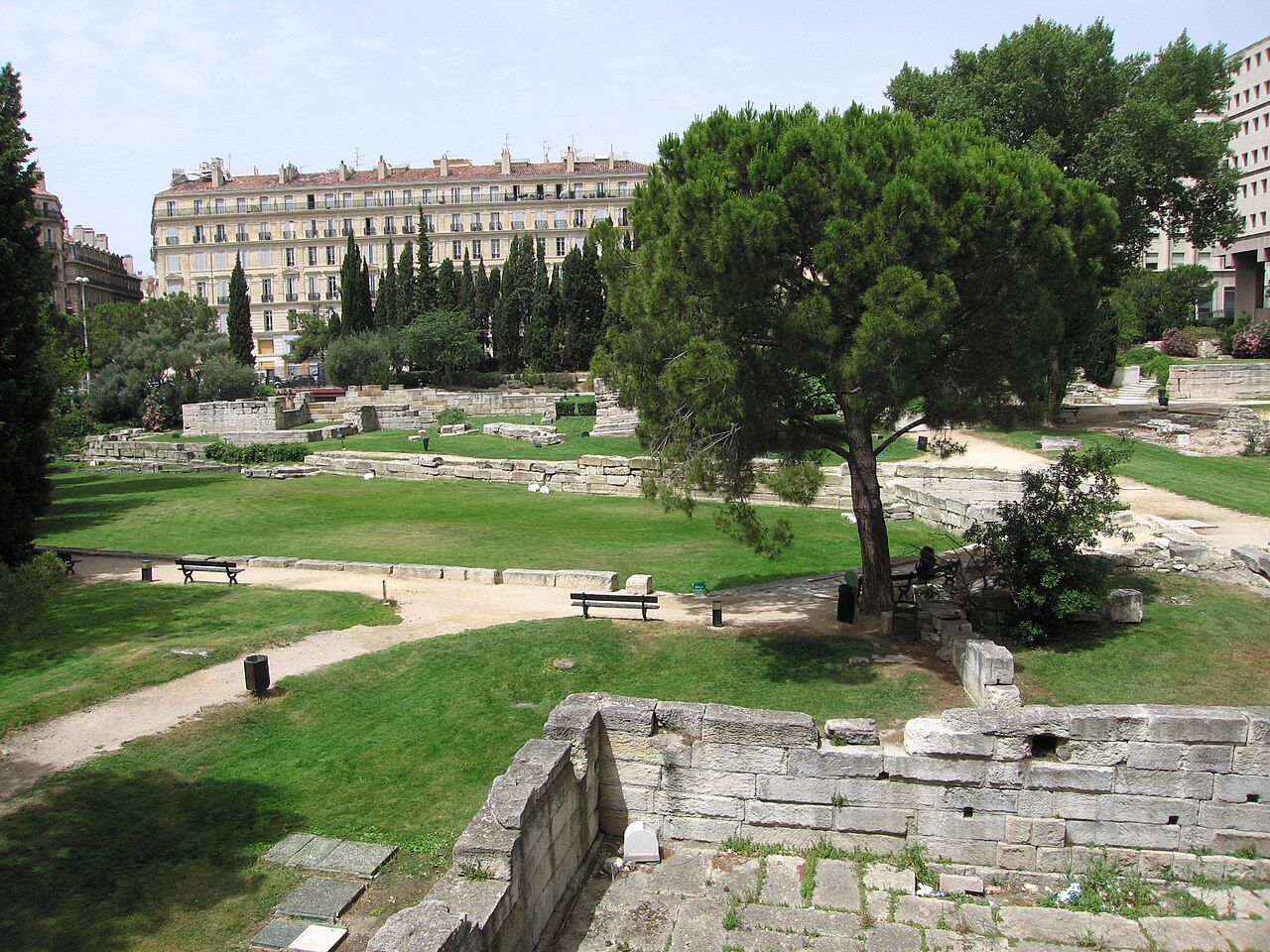 Photograph: Vincent — PD original
1. “The old edge of the harbour”
Morning begins at the Bourse, near the foot of the Canebière. The Jardin des Vestiges sits behind it, several metres below the streets. The first thing to adjust is the level: the lawns are at the height of the ancient shore. The present street is up above; the garden keeps its own lower ground. I like starting with that difference, before trying to read the stones as separate remains.
2. Down to the lawns
The garden is reached through the Musée d'Histoire de Marseille. From there, the route leads into an archaeological garden rather than to a single building or object. The the history museum beside the ruins makes a useful point of entry in the day's sequence: first the modern city, then a lower level where the old harbour edge can be considered at close range. The drop in height is the clearest part of the visit.
3. The shore underfoot
At lawn level, the ground itself becomes part of the evidence. These lawns sit at the level of the ancient shore, several metres below today's streets. That is a simple fact to hold on to while moving among stones and trees. The harbour once reached hundreds of metres further inland than the present quay. I find that easier to picture from here than from street level: the old shoreline is not an idea on a map, but the level beneath the feet.
4. A line of wall
By midday, attention turns to the part of the Greek city wall of Massalia that survives here. It belongs to the Hellenistic period. The remains do not need much framing: a stretch of wall, in a garden below the modern city, makes the difference in scale plain. Cypress and olive trees grow among the stones. Their presence gives the site its ordinary garden detail, without making the ancient remains feel separate from the ground around them.
5. Where the quay ran
The ancient quay marks the old edge of the harbour, known as the Corne du Port. It is a useful line to follow in thought, especially after looking at the wall. The harbour did not stop at the present quay; it once extended hundreds of metres further inland. I keep returning to the words “old edge”. They make the garden read as a shore, not simply as a collection of ruins set below street level.
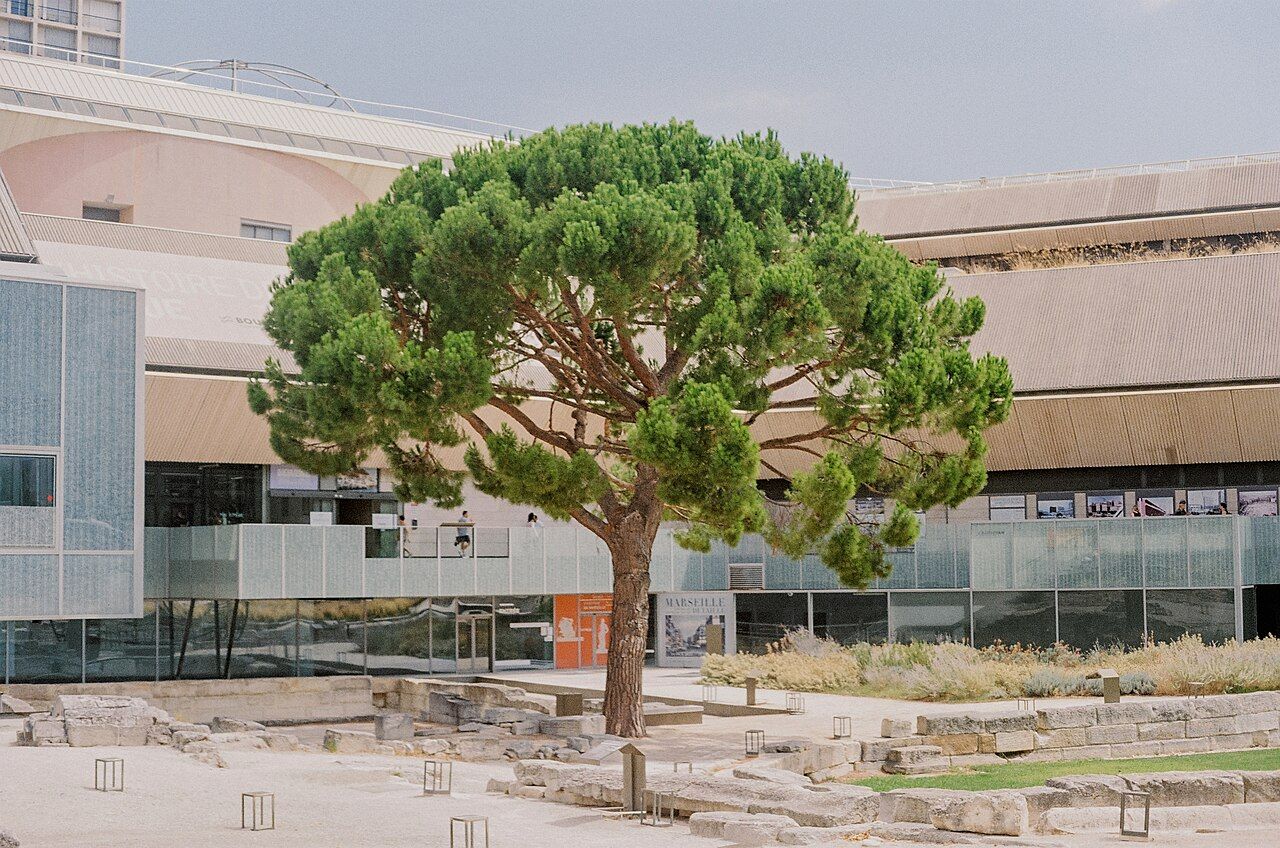 Photograph: ChrisChris92 — CC-BY-SA-4.0
6. A basin, then the south side
Later in the day, the Roman-era freshwater basin adds another feature to view. It survives in the same garden as the Greek city wall and ancient quay. No need to make the basin carry more than that. It is one part of a place where the harbour, wall and freshwater feature occupy the same lowered ground. On the south side stands the Palais de la Bourse, built between 1852 and 1860. The modern building and ancient shore meet around the garden's edges.
7. Back towards the street
By evening, the day's sequence returns to the level difference: street, garden, ancient shore. The remains came to light during building work in 1967. That detail sits alongside what can be seen now: part of a Greek city wall, an ancient quay, and a Roman-era basin, with cypress and olive trees growing among the stones. The garden's position behind the Bourse makes the change in level especially clear. I leave with the shore as the strongest impression, rather than any single stone.
| Access | Reached through the Musée d'Histoire de Marseille |
|---|---|
| Setting | Behind the Bourse, near the foot of the Canebière |
| From the port | 5 minutes on foot |
The lawns at the ancient shore are the detail I would keep from the day.