Entry052
La Joliette and the port moving north
From the basin opened in 1853 to ferries bound for Corsica and beyond, La Joliette holds the working port’s older edge beside its renewed docks.
- Place
- La Joliette
- Arrondissement
- 2nd
- From the Quai des Belges
- 20 minutes on foot
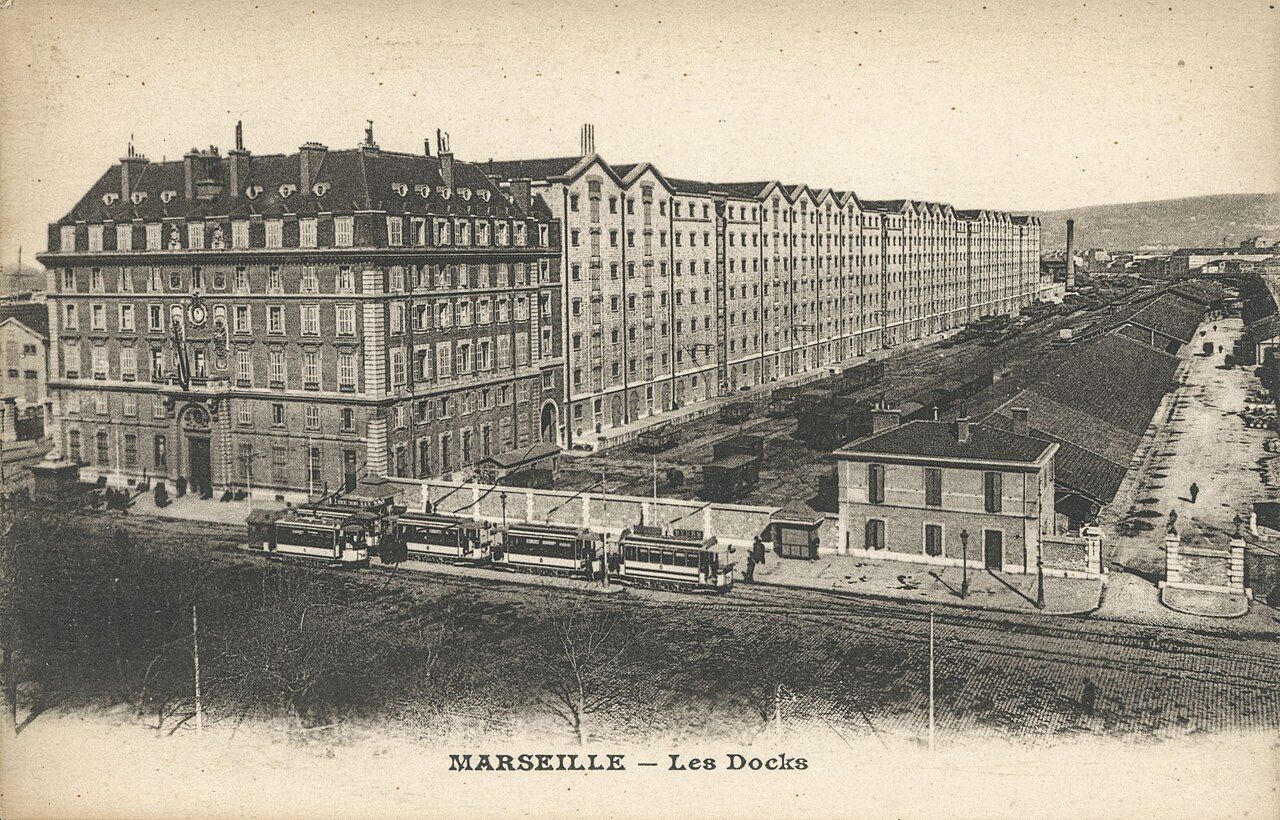 Photograph: photographer unknown — PD original
1. Where does the old port begin to change?
In the morning, I start at Joliette, where tram line T2 and metro line 2 both stop. The basin gives the day its first point of reference. Opened in 1853, the Joliette basin began the move of Marseille’s shipping north of the Vieux-Port. It is a useful place to consider the port not as a single harbour, but as a working edge that shifted along the coast.
2. A basin with a longer reach
The old town sits behind this part of the waterfront; the basin points towards a larger port. The change did not happen all at once. The movement north began here, and the working port still has a place in the day’s route. I find the contrast easiest to read on foot: the basin holds the older story, while the passenger terminals nearby carry on with journeys out from Marseille.
3. The warehouses beside it
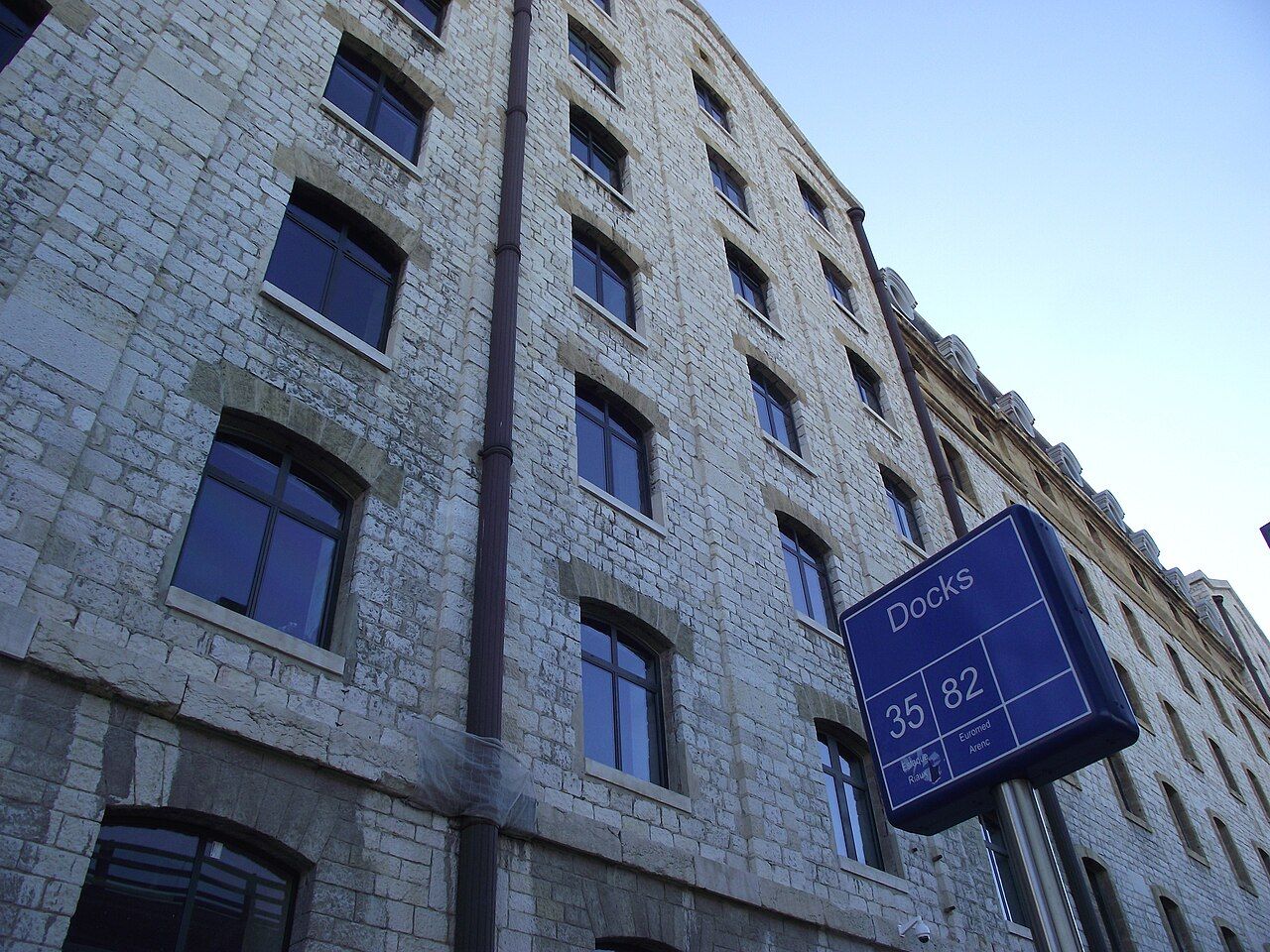
The Docks de la Joliette run alongside the basin: a range of warehouses about 365 metres long, finished in 1864. Their scale makes the earlier purpose plain. In the 1990s, the warehouses were turned into offices. Walking past them, I keep both uses in mind. They are no longer simply a record of goods moving through the port; office use has given the long range another role without removing its place in the port’s history.
4. The port in the present tense
Later in the morning, the passenger terminals near La Joliette bring the working port back into the present. Ferries to Corsica, Sardinia, Algeria and Tunisia sail from here. This district holds former warehouses and new offices, but the passenger terminals keep the working port in view. The port of Marseille is run by the Grand Port Maritime de Marseille, a public body of the French state. The institutional name sits behind a much more direct fact: ferries still leave from the terminals.
5. Along the old docks
As the day moves on, I follow the wide seafront promenade along the old docks between the MuCEM and Arenc. This is a walk through a changed port landscape, not a break from it. The water and the docks stay in view; the route gives the old working edge room to be seen at walking pace. From the south, the striped cathedral above the basins marks another point in the waterfront’s outline. The cathedral of La Major overlooks the Joliette basins from that side.
 Photograph: Fred Romero from Paris, France — CC-BY-2.0
The Euroméditerranée renewal scheme around La Joliette was launched in 1995. Its presence helps explain why the warehouses and promenade now share the same stretch of port. A pocket of sweets travels with me on the walk. No grand conclusion. Just the slow change from basin to offices to open waterfront.
6. Arenc and a change of use
In the afternoon, the route reaches Arenc. A grain silo built there in the 1920s was turned into a concert hall in 2011. The change echoes the warehouses at La Joliette, though the buildings had different uses. One became offices; the other became a concert hall. This stretch keeps the port’s working past close to its newer life, without making the two seem the same.
7. The view back south
By evening, I look back towards the basins and La Major. The day has followed the port north: from the basin that began the shift, past the long warehouses, and on towards Arenc. The ferries keep the route connected to places beyond Marseille, while the promenade makes room to walk beside the old docks. For me, La Joliette reads best as a port still in use, with its former working buildings folded into the walk.
| On foot | A wide promenade runs between the MuCEM and Arenc. |
|---|---|
| Tram | Line T2 stops at Joliette. |
| Metro | Line 2 stops at Joliette. |
| Ferries | Passenger terminals near La Joliette serve Corsica, Sardinia, Algeria and Tunisia. |