Entry027
The Roman docks under Place Vivaux
A small museum above a Roman warehouse, where huge storage jars remain sunk into the floor in the places they were found.
- Place
- Musée des Docks Romains
- Arrondissement
- 2nd
- From the Quai des Belges
- 5 minutes on foot
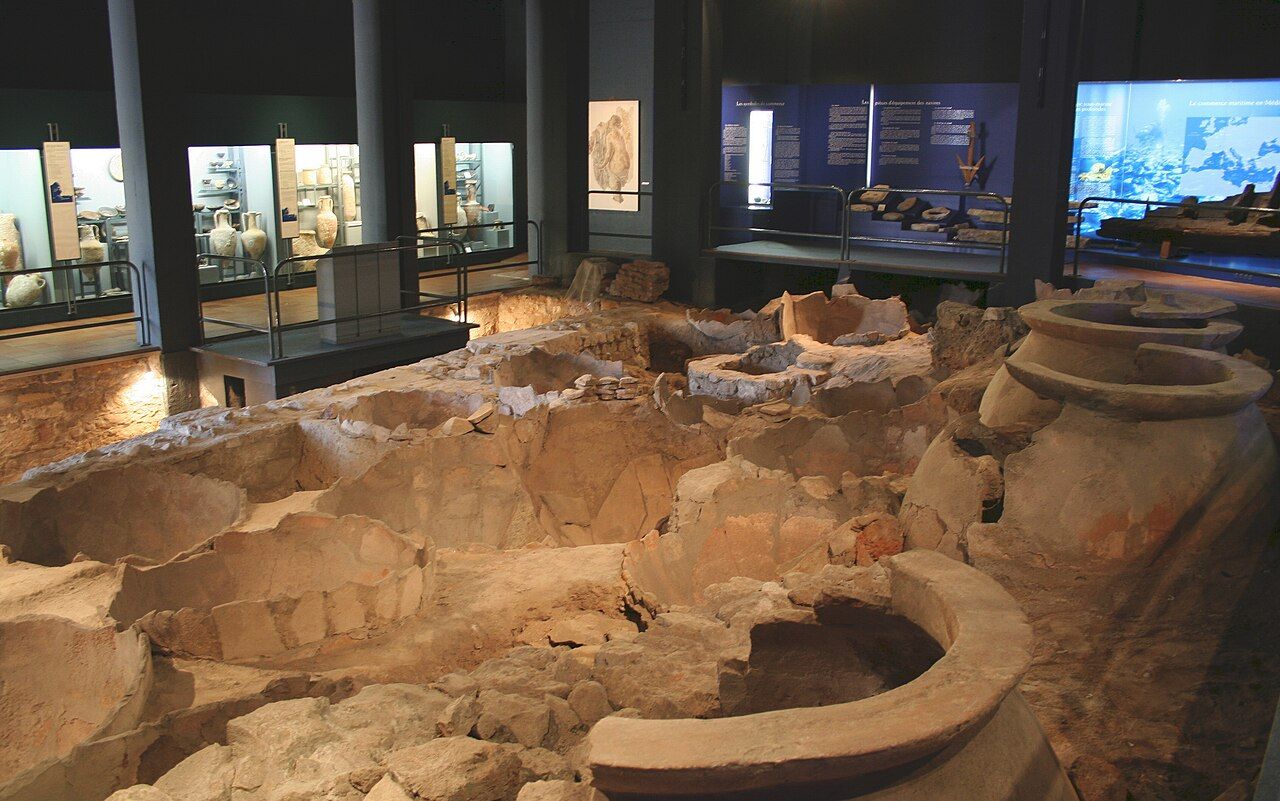 Photograph: Robert Valette — CC-BY-SA-3.0
1. Morning: Place Vivaux
What remains of a Roman warehouse beneath the city is easiest to understand from the jars still in its floor. In the morning, I start at the Musée des Docks Romains, on Place Vivaux just behind the Quai du Port. The museum stands over the warehouse remains. The site was found in 1947, during the rebuilding of the quarter.
2. The warehouse below
The warehouse dates from the 1st century AD. It belonged to the port’s working life: the huge storage jars, called dolia, held wine, oil and grain for trade. That list is plain enough. The scale of the jars makes the storage feel less abstract. They remain sunk into the floor where they were found, rather than being presented as objects detached from the place that held them.
3. The jars in place
By late morning, I am still returning to the dolia. Their position tells the story without much explanation: storage built into the warehouse, and the warehouse built for goods moving through the port. The useful detail is also the most direct one. These are not jars arranged to suggest a warehouse; they are the jars left in the warehouse floor. I prefer that kind of evidence. It gives the room a clear centre.
4. Objects from the water
Later, the museum widens the view beyond the building. It also shows amphorae and objects raised from wrecks off Marseille. The finds carry the port’s story out to sea and towards the islands where divers found Roman wrecks. The focus here stays close to the trade: containers, goods and the remains of journeys connected with Marseille.
5. An afternoon return
The Musée des Docks Romains opened in 1963 and belongs to the city’s museums. After the objects from wrecks, I return in my thoughts to the warehouse floor. The dolia make a practical point about storage, but their setting matters just as much. The jars have not been moved away from the place where they were found. The museum keeps the relationship between object and site in view.
6. Evening: the floor remains
By evening, the story still comes back to those great jars. The warehouse was part of the port’s trade; the museum lets the floor show how that work was organised, with the dolia sunk where they were dug in. It is a modest account, but a convincing one. I would choose the jars in place over a room of separated objects.
| Place | Place Vivaux, just behind the Quai du Port |
|---|---|
| From the port | 5 minutes on foot |
| Opened | 1963 |