Entry026
Musée Grobet-Labadié: a family house
Read this townhouse through its rooms: furniture, tapestries, faience, paintings and old musical instruments arranged as a lived-in home, not a set of galleries.
- Place
- Musée Grobet-Labadié
- Arrondissement
- 4th
- From the Quai des Belges
- metro line 1, then 5 minutes
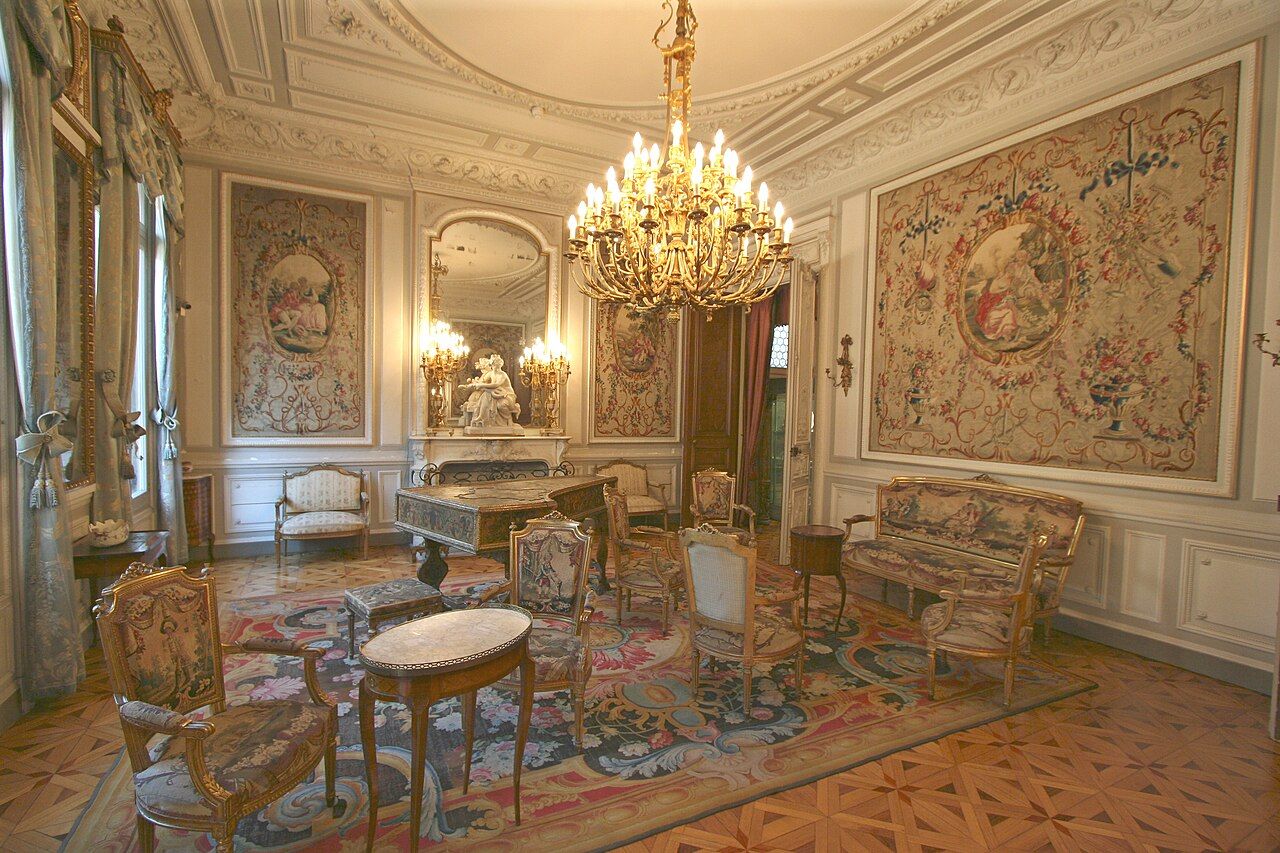 Photograph: Robert Valette — CC-BY-SA-3.0
1. Start with the house
“The rooms of the Musée Grobet-Labadié are arranged as a lived-in home rather than as galleries.”
Take that as the key to the visit. The Musée Grobet-Labadié is a townhouse on the Boulevard Longchamp, facing the Palais Longchamp. The house was built in 1873 for the merchant Alexandre Labadié. Begin with the building itself: this is a family home that became a museum, rather than a gallery arranged around separate displays.
2. Keep the family in view
Marie-Louise Grobet-Labadié gave the house and its collections to the city of Marseille in 1919. That transfer is part of how to read the rooms: the objects and the setting came together as a collection. The house’s story is not separate from what it contains. Keep both in mind as the visit moves from the idea of a home to its contents.
3. Look across the objects
Furniture, tapestries, faience and paintings are shown in the rooms of a 19th-century home. Take these as a group before settling on any one object. The mix gives the house its character; it is useful to notice how different kinds of collection share the same domestic setting. The city’s wider museum landscape also includes the city's modern art museum.
4. Read the rooms as rooms
Resist treating each room as a gallery with a single subject. The arrangement is lived-in, and that changes the way the objects sit together. Look for the feeling of a home made from collected things, rather than a sequence of displays. This is the visit’s most helpful distinction, and the one that gives the objects a shared context.
5. Pause over the instruments
Louis Grobet, Marie-Louise’s husband, collected old musical instruments, now shown in the house. Set them alongside the furniture, tapestries, faience and paintings. The instruments bring another part of the family’s collecting into the rooms. I would give them a separate pause, then look again at how they belong to the wider household collection.
6. Finish with the setting
The Musée Grobet-Labadié belongs to the museums of the city of Marseille. Return to the idea of a home kept as a home: not a neutral background, but the setting in which the collection is shown. I prefer this kind of museum visit, where the rooms make the objects easier to read together.
| Location | 4th |
|---|---|
| From the port | Metro line 1, then 5 minutes |