Entry017
Notre-Dame de la Garde: the climb to the Bonne Mère
A climb above the Vieux-Port leads to a basilica built on a fort, walls hung with ex-votos and a terrace looking across the city and bay.
- Place
- Notre-Dame de la Garde
- Arrondissement
- 6th
- From the Quai des Belges
- 40 minutes uphill or bus 60
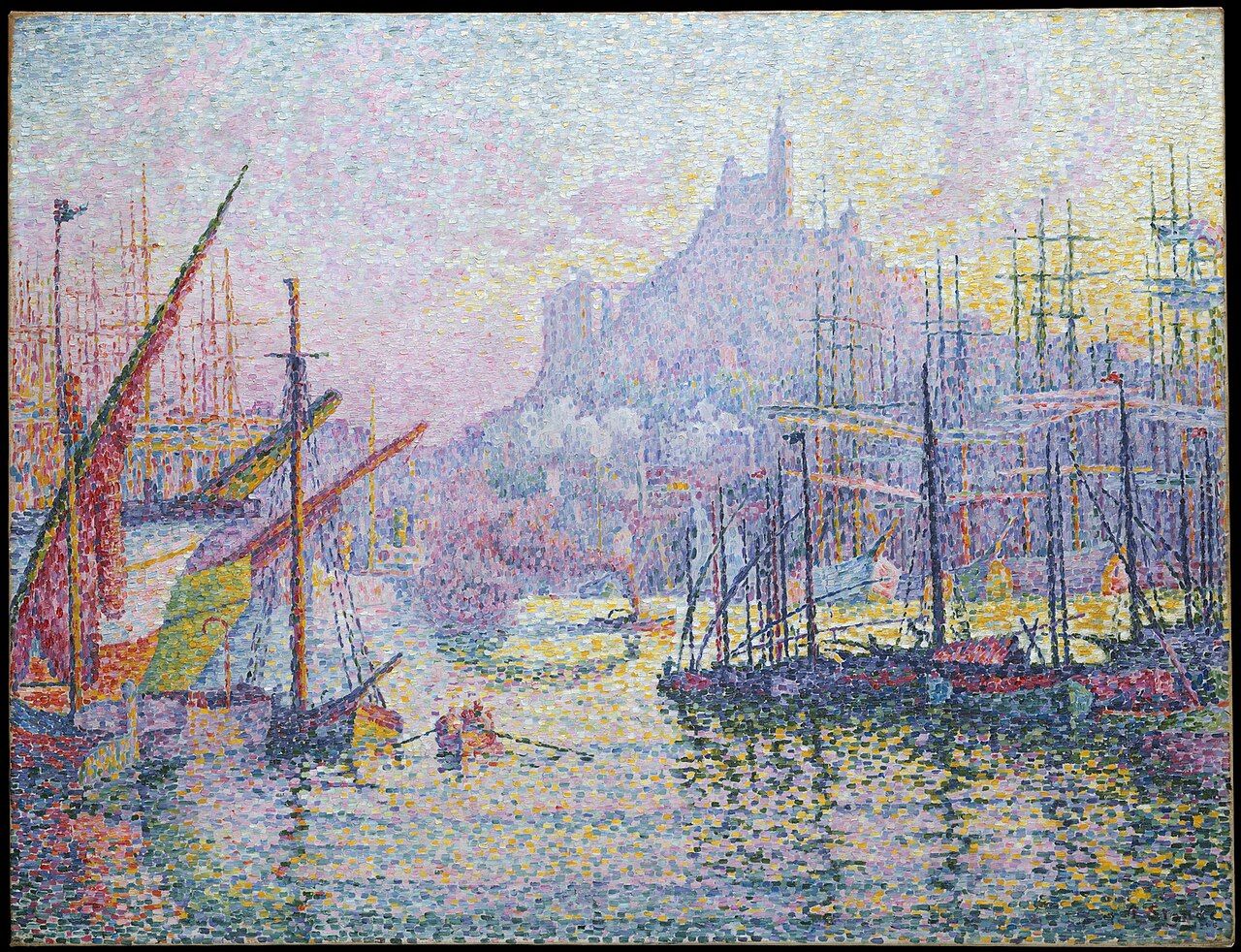 Photograph: Paul Signac — CC0-1.0
“The Good Mother.”
1. The hill above the port
The basilica of Notre-Dame de la Garde stands on a limestone hill about 150 metres high, south of the Vieux-Port. The climb gives the visit its shape. The city falls below as the hill rises; at the top, the terrace turns the view back towards Marseille and the bay. From here, it takes in the whole city, the Frioul islands and Château d’If. The height is not an incidental detail. It is part of how the basilica is understood: a building set above the port, visible from across the city.
Bus line 60 climbs from the Vieux-Port to the foot of the basilica. On foot, the uphill journey from the port takes 40 minutes. Both approaches lead towards the same limestone height, but the walk makes the change in level part of the day. I prefer arriving with the climb behind me; the terrace then feels like a pause rather than a destination reached without effort.
2. A chapel, a fort, a basilica
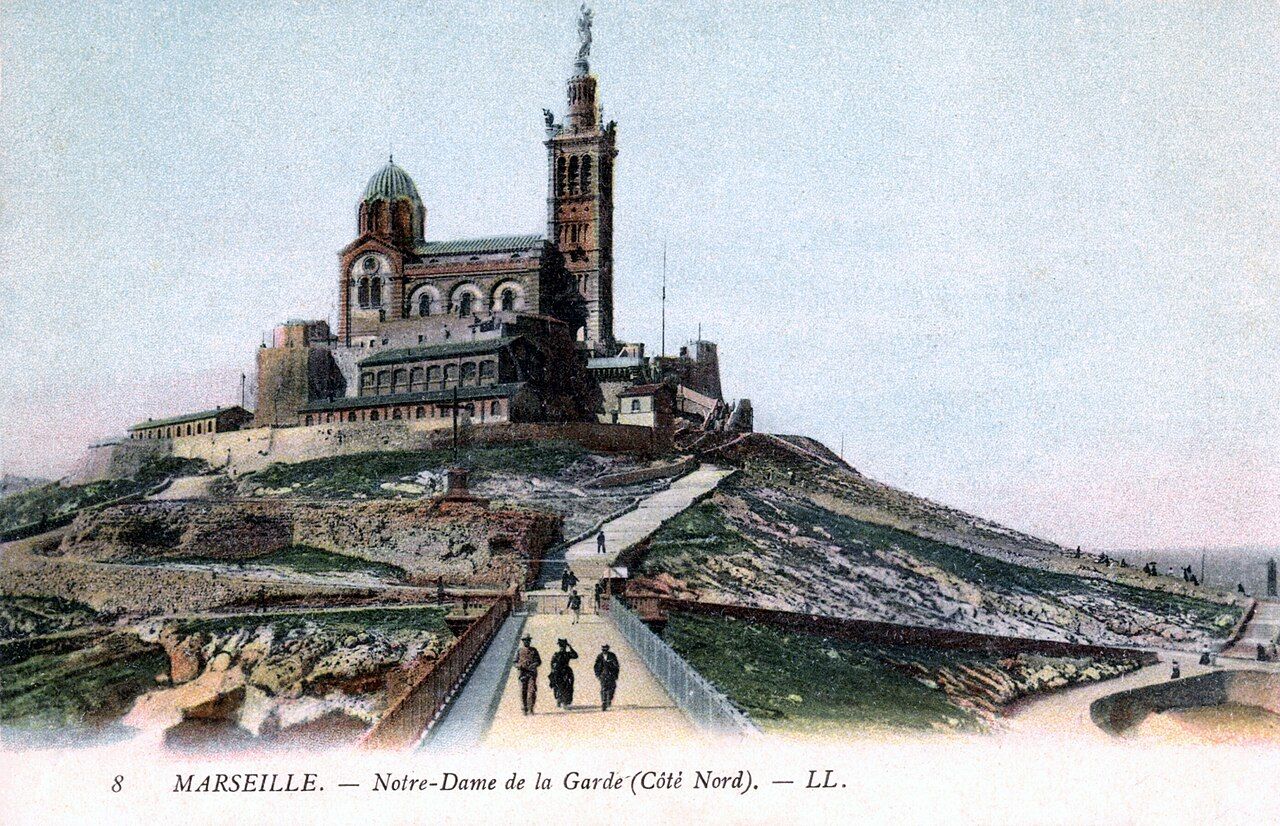
A chapel to the Virgin stood on the hill of La Garde from the 13th century. The hill’s later history is set into the building’s foundations: François I had a fort built here in the 1520s, and the basilica now rises from its base. The site holds these different uses together. A place of worship on the hill came before the fort; the basilica that stands there now incorporates the fort’s base rather than leaving it behind.
The present basilica was built between 1853 and 1864 to designs by Henri-Jacques Espérandieu. Those dates give the building a distinct place in the story of the hill, between the earlier chapel and the fort beneath it. Standing outside, it is worth keeping that sequence in mind. The basilica is a landmark on a high point, and its position carries the layers of the site with it.
3. The figure above the tower
The bell tower is crowned by a gilded statue of the Virgin and Child, about 11 metres tall. From below, the gold figure draws the eye to the top of the basilica. The people of Marseille call the basilica and its statue la Bonne Mère, the Good Mother. The name belongs to both: the building and the figure above it. It is a familiar local name, but it also says something plain about the place’s place in the city.
The great bell weighs about eight tonnes. Its scale sits alongside the tower’s height and the gilded statue, three details that give the upper part of the basilica its presence. The view needs no elaboration. The hill, the tower and the figure are easy to read from a distance, and the terrace gives the reverse view: the city spread out below.
The terrace makes the height legible: the city, the islands and the bay belong in one view.
4. Inside, the ex-votos
Inside, the walls are hung with ex-votos: paintings and models of ships given in thanks for rescues at sea and recoveries. They change the scale of the visit. Outside, attention goes to the hill and the sweep of the view; inside, it settles on individual objects and the reasons they were given. The ship models bring the sea into the basilica in miniature. The paintings add another record of thanks, attached to the walls rather than left outside in the view.
The ex-votos are not decoration in the simple sense. Each is an offering connected to a rescue at sea or a recovery. It is possible to look at the objects as works with their own shapes and details, but their purpose matters too. The walls hold many separate acts of thanks. That is the part of the interior I would give time to, before moving on to the mosaics on a gold ground.
 Photograph: photographer unknown — PD original

5. Gold ground and marks of fighting
The interior is decorated with mosaics on a gold ground. The colour and pattern set a different register from the paintings and ship models of the ex-votos. Both are worth noticing together: the mosaics cover the interior with their material and design, while the ex-votos bring their particular stories of thanks. The basilica gives room to both kinds of attention, and the walls reward a slower look than the terrace does.
Marks left by bullets and shells in the fighting of August 1944 can still be seen on the walls. They remain alongside the mosaics and ex-votos, part of the visible fabric of the basilica. This is a fact to notice without dressing it up. The marks belong to a specific period of fighting, and their presence changes how the walls are read: not only as a decorated interior, but as a surface that still carries evidence of what happened there.
6. The terrace and the bay
From the terrace, the whole city, the Frioul islands and Château d’If come into the same view. From the terrace, the view includes the island prison seen from the terrace. The bay is not a separate scene from Marseille here; it sits within the larger view of the city. After the close details inside, the terrace opens the scale back out again.
The height makes the view useful as well as pleasing. The Vieux-Port lies south of the hill, and the basilica’s position gives a broad outlook over the city and bay. I like the terrace best after the interior: the change from small offerings, mosaics and marks on walls to the full sweep outside is a good order for the visit. The basilica holds both kinds of looking without needing to choose between them.
7. Leaving the hill
The descent closes the visit in reverse. The basilica’s height becomes apparent again, this time from below rather than from the terrace. The hill has held a chapel, a fort and the present basilica; inside are ex-votos, mosaics and marks from the fighting of August 1944. Outside, the view draws the city and islands together. The climb is part of the account, not simply the way to reach it.
The terrace makes the height legible: the city, the islands and the bay belong in one view.
| From the Vieux-Port | 40 minutes uphill, or bus line 60 to the foot of the basilica |
|---|---|
| My preference | The terrace after the interior, for the change in scale |