Entry005
The Ombrière: a mirror over the quay
A day at the head of the Vieux-Port, where a polished steel canopy reflects the quay and gives its open roof a second life.
- Place
- Quai des Belges
- Arrondissement
- 1st
- From the Quai des Belges
- at the quay
 Photograph: Scanné par Claude_Villetaneuse — PD original
1. Start at the quay
What does a roof do when its underside is a mirror? At the head of the Vieux-Port, the Ombrière makes that question easy to follow. It is a polished stainless-steel canopy, open at the sides and held above the paving on thin steel pillars. I begin at the quay, where the roof seems to float rather than settle heavily onto the harbour edge.
2. The morning edge
The harbour is already a working view: people, boats and the light on the quay all appear again beneath the canopy. The reflection makes the scene feel close without closing it in. Nearby, the morning fish stalls nearby belong to this same harbour edge. The Ombrière does not frame the view so much as return it, in a broad, shifting surface.
3. A roof made for the quays
Norman Foster designed the Ombrière for the remaking of the harbour quays in 2013. The scale is clear from below: about 46 by 22 metres, and about 6 metres above the paving. Those figures describe a generous roof, but the thin supports keep the structure visually light. My preference is to look up from the edge rather than stand directly beneath its centre.
4. Pale stone underfoot
The canopy belongs to a wider change. The 2013 makeover took most car traffic off the quays and laid pale granite paving round the harbour. The surface gives the head of the port a more open feel; the steel roof answers that openness with a ceiling that reflects the activity below. The materials are plain enough to let the movement do most of the work.
5. The new layout
The landscape architect Michel Desvigne worked with Norman Foster on the new layout of the quays. The makeover was carried out by the City of Marseille and the urban community of the time for Marseille’s year as European Capital of Culture. That purpose sits behind the visible changes, but at the quay the result is practical to read: less car traffic, pale paving, and a canopy that gathers the view without blocking it.
 Photograph: Patrick Nouhailler's… — CC-BY-SA-3.0
6. A name that stayed
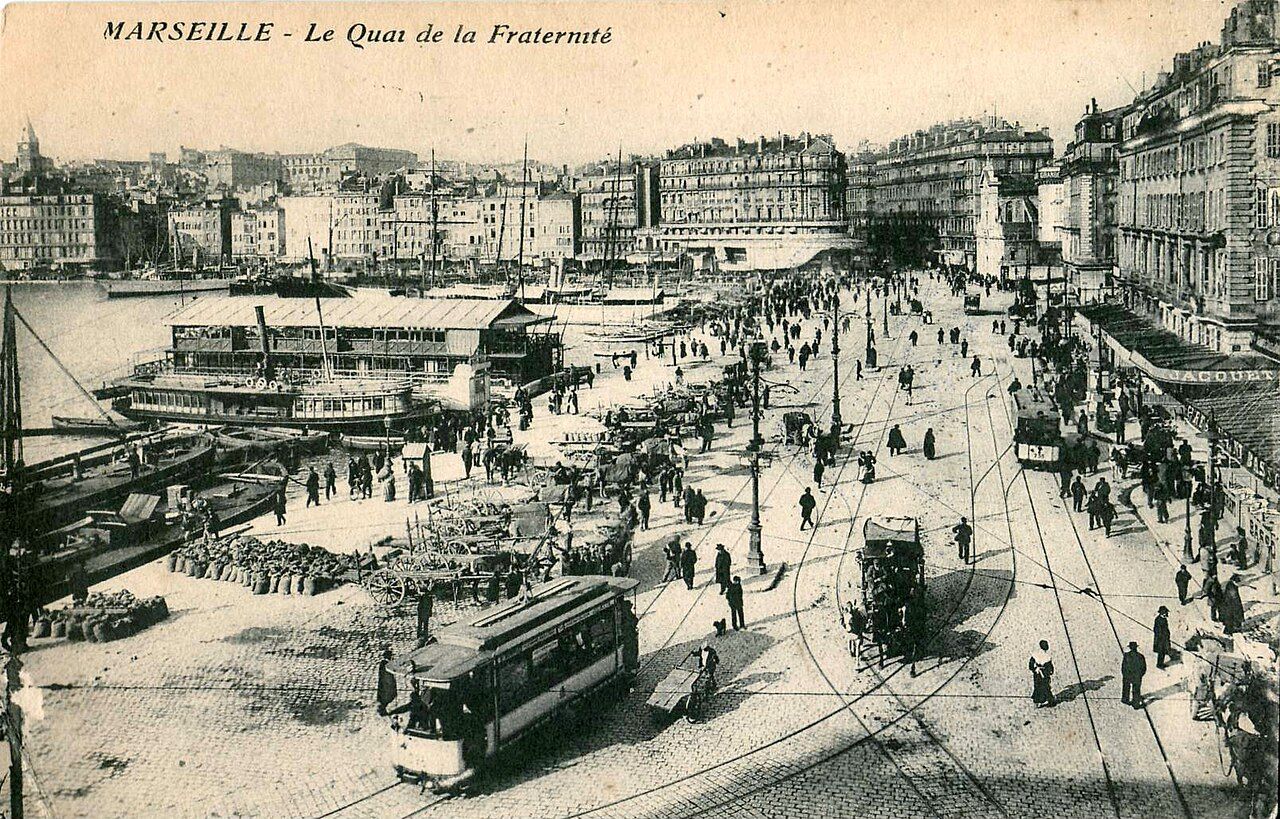
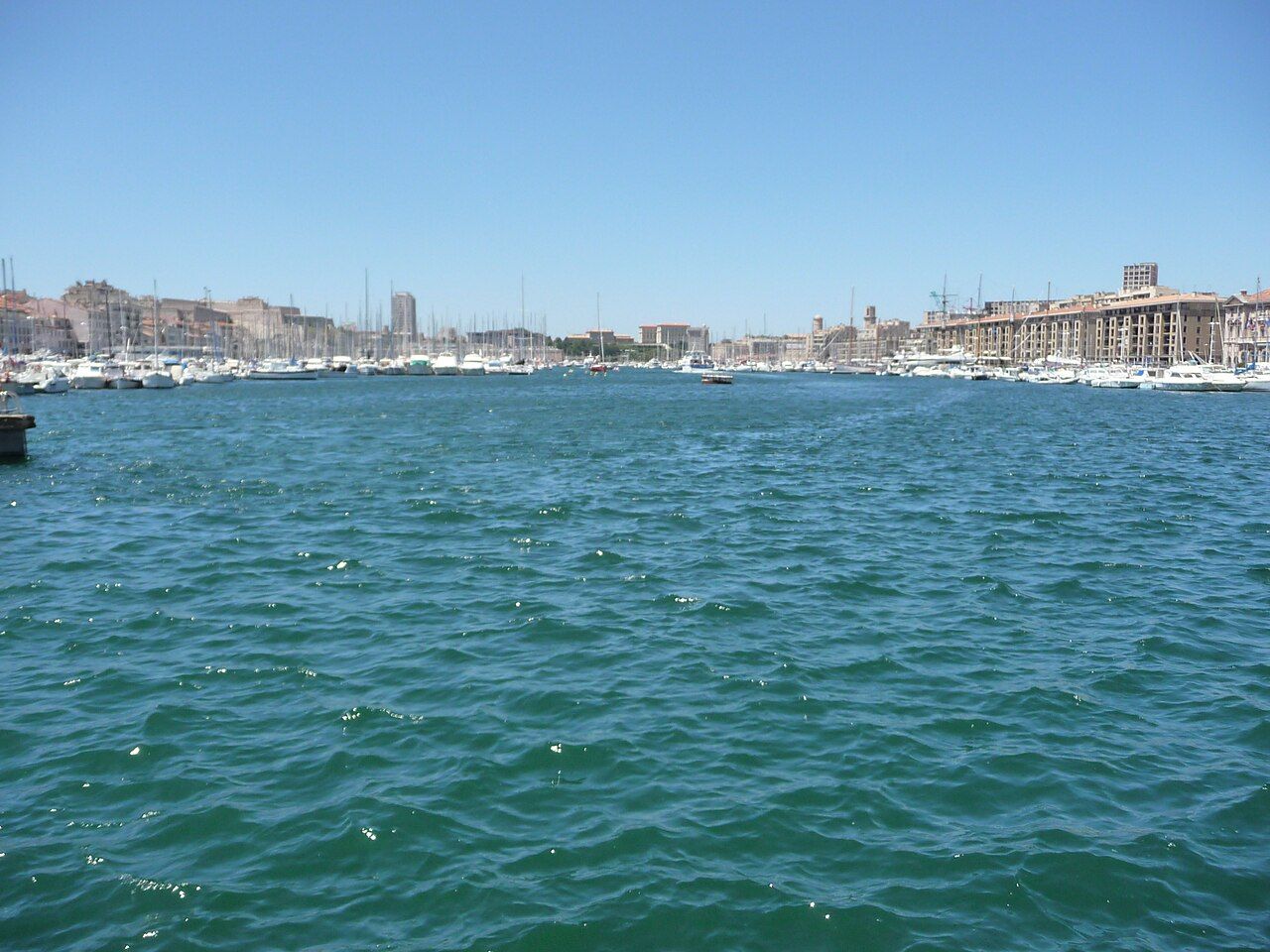
At the head of the harbour, the quay was renamed Quai de la Fraternité in 2013. Many people still call it the Quai des Belges. Both names sit around the same piece of water and paving; the Ombrière gives the place a fixed point, though its reflections keep changing with the people and boats below.
7. The midday mirror
By the middle of the day, the reflection is not simply decoration. Street performers and passers-by use it as a giant mirror for photographs. The roof turns an ordinary pause on the quay into a view of the quay itself, upside down and moving. I find the repeated reflection reason enough to look away from the steel now and then.
8. The light draws on
In the last part of the day, the same structure remains in place while the reflected light changes. The harbour, the people and the boats continue to be part of its underside. Nothing needs adding to the roof for it to hold attention; its job is simple, and the mirror makes that simplicity visible. I leave with the pale paving and the moving reflection as the clearest parts of the walk.
| Feature | Detail |
|---|---|
| Location | At the head of the Vieux-Port, at the quay |
| Canopy | About 46 by 22 metres; about 6 metres above the paving |
| Quay makeover | 2013 |