Entry057
Panisse, chickpea in a fryer
From chickpea flour in Noailles to a paper bag by the sea: panisse carries a Ligurian coast story into Marseille’s kiosk food.
- Place
- Marseille
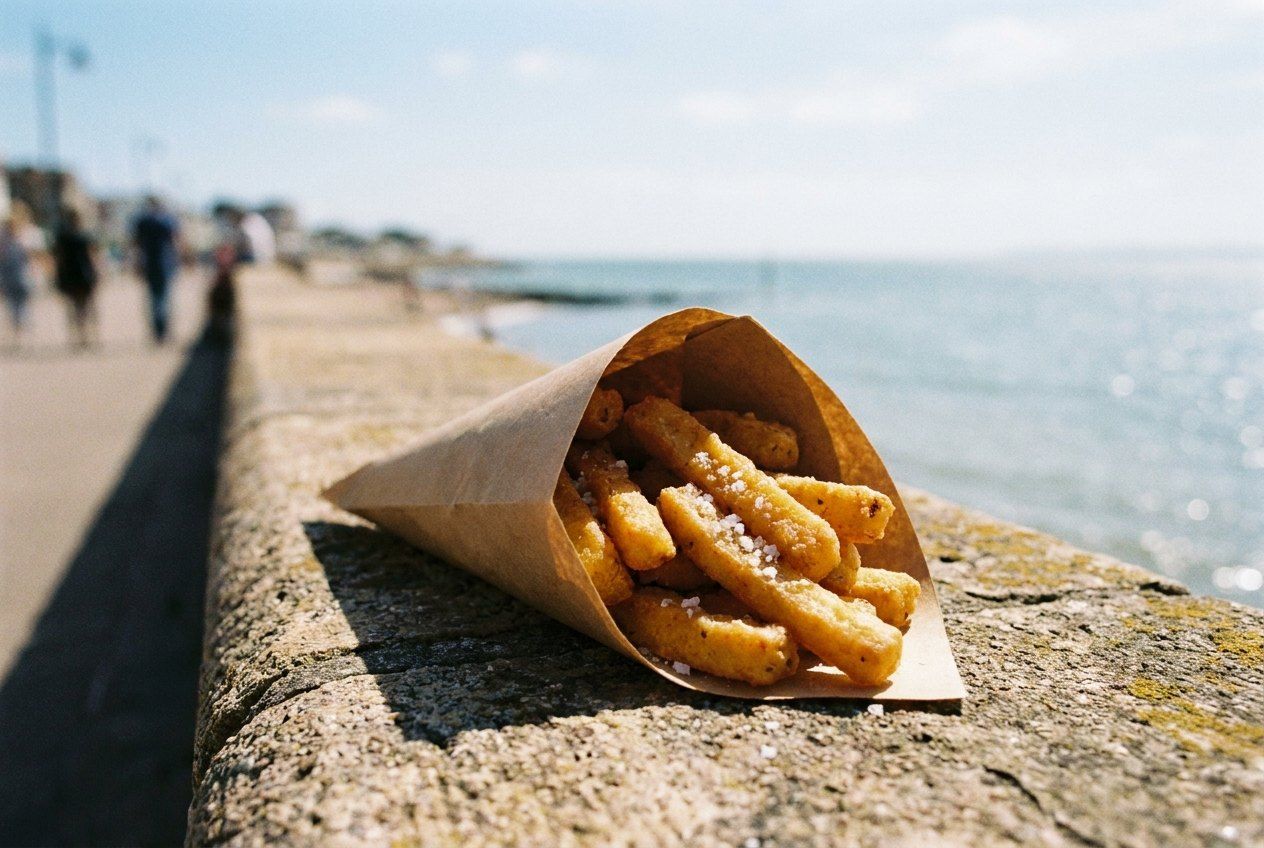
Panisses are eaten hot, often with salt and pepper.
1. Morning: start with the flour
Chickpea flour is sold in the grocers of Noailles. A useful beginning for a day with panisse: not a finished snack, but the plain ingredient. The flour is the starting point; the route to a particular kiosk remains untraced. I like this order. First the ingredient, then the hot paper bag.
2. The paste
Panisse is made by cooking chickpea flour with water and olive oil into a thick paste. That is the whole first transformation. The flour loses its loose, dry form; what comes next depends on letting the paste set. No complicated list of ingredients to carry around in the head. Chickpea flour, water, olive oil, and patience enough for the next step.
3. Set, cut, fry
Once set, the paste is cut into sticks or rounds and fried. Both shapes begin with the set paste, then go into the fryer. A plain description suits it: set, cut, fried. Then served hot, often with salt and pepper. By the middle of the day, the method has taken the flour from a grocer’s shelf to something made to eat at once.
4. A coast carried inland
Panisse came to Marseille with immigrants from Liguria and the coast near Genoa. It is related to the chickpea flatbreads of Nice and Genoa. Those connections place the snack within a wider family of chickpea foods, with a route from Liguria and the coast near Genoa into Marseille. The route reaches the village where the kiosks stand, at the edge of the city’s seaside trade.
5. Afternoon: the kiosk version
Around Marseille, panisses are sold by the paper bag at seaside kiosks, notably at L’Estaque. The bag is part of the useful scale of the food: a portion to carry, not a dish that needs explaining. Panisse is naturally free of wheat. That fact sits quietly beside its other qualities, rather than changing the simple route from paste to fryer.
6. Evening: hot, with salt and pepper
The day ends where the method becomes a snack again. A stick or a round, fried and eaten hot, often with salt and pepper. The account has moved from Noailles flour to a seaside kiosk, and from Liguria’s coast to Marseille. Nothing elaborate is needed between those points. Panisse holds its place in a paper bag, with its journey still easy to follow.
| Made from | Chickpea flour, water and olive oil |
|---|---|
| Sold | By the paper bag at seaside kiosks around Marseille, notably at L’Estaque |