Entry011
The plague of 1720: people and places around the harbour
A ship, a quarantine station, a bishop and a stretch of shore keep Marseille’s plague close to the harbour and the people it struck.
- Place
- Marseille
 Photograph: Michel Serre — CC-BY-SA-4.0
“with plague on board”
1. A ship arrives
On 25 May 1720, the merchant ship Grand-Saint-Antoine reached Marseille from the eastern Mediterranean with plague on board. The account begins at the harbour, with a ship carrying cloth and disease. The date is exact; the consequence that followed was measured in lives.
Quarantine rules for the Grand-Saint-Antoine were relaxed under pressure from merchants waiting for its cargo of cloth. Merchants waited for the goods; quarantine was meant to contain the danger. The two claims meet at the arrival of a ship whose cargo was wanted and whose presence brought plague.
2. The cost in Marseille
The plague of 1720 killed somewhere between a third and a half of the people of Marseille. The range holds uncertainty without making the loss small. It is a hard figure to take in, even written as a fraction of the city’s people. This was one of the last great outbreaks of plague in western Europe, but the scale is clearest in Marseille itself.
The harbour gives the epidemic an entry point; the city’s named places give it a wider shape. The lazaret stood on the shore north of the old town. The Esplanade de la Tourette is tied to the clearing of bodies. Cours Belsunce carries the name of a bishop who stayed. These are separate connections, gathered around one terrible year.
3. The lazaret on the shore
Marseille’s quarantine station, the lazaret, stood on the shore north of the old town. Its position gives quarantine a place in the harbour landscape. The facts give its location rather than its rooms or daily workings. That is enough to set it beside the Grand-Saint-Antoine’s arrival and the rules that were relaxed.
The lazaret belongs to the city’s response, while the merchant ship marks the arrival. Between them sits the decision made under pressure from merchants waiting for cloth. A short chain of details: the ship, the quarantine station and the commercial pressure that loosened the rules.
 Photograph: Rvalette — CC-BY-SA-4.0
The lazaret stood on the shore north of the old town.
4. Bodies at the Esplanade
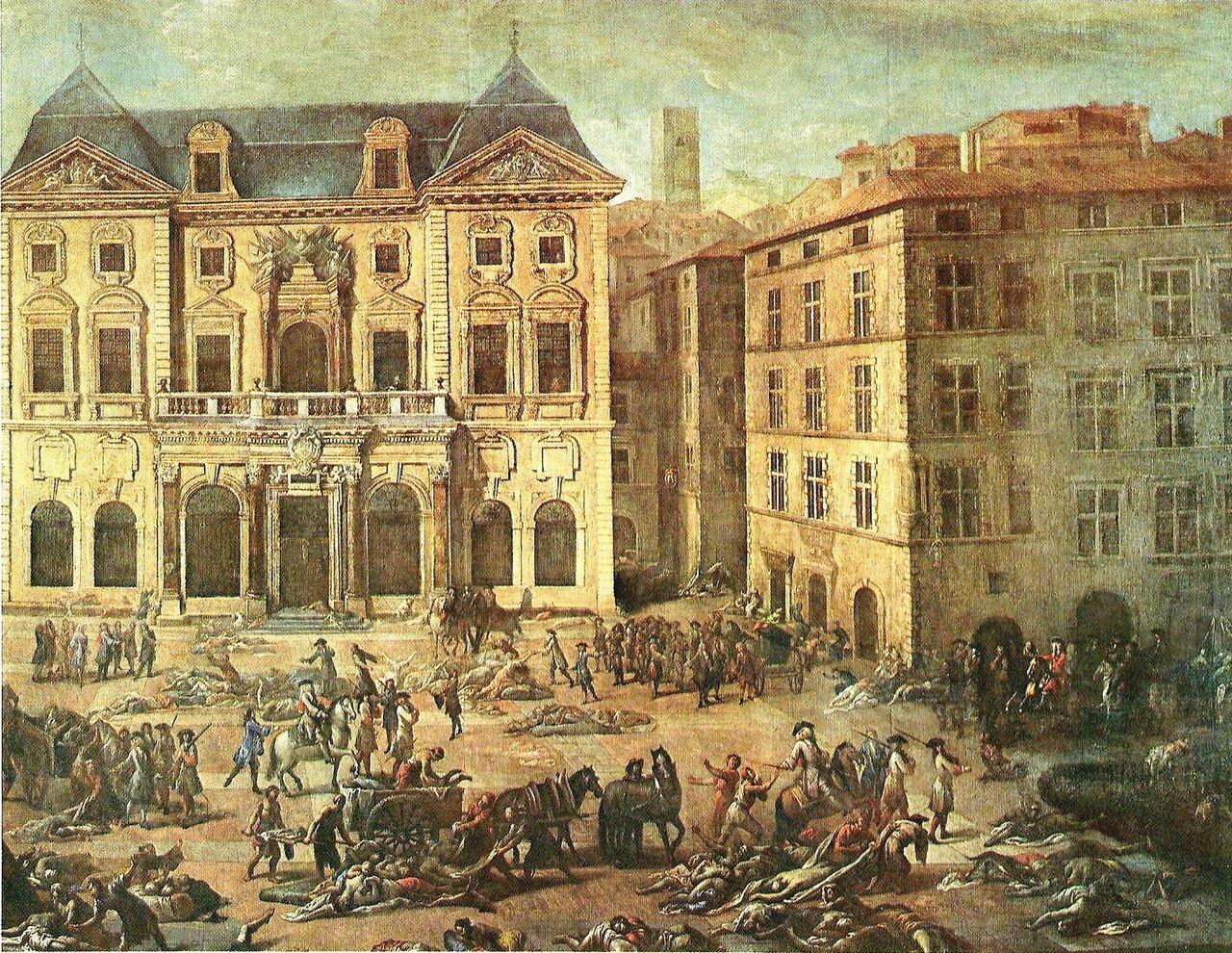
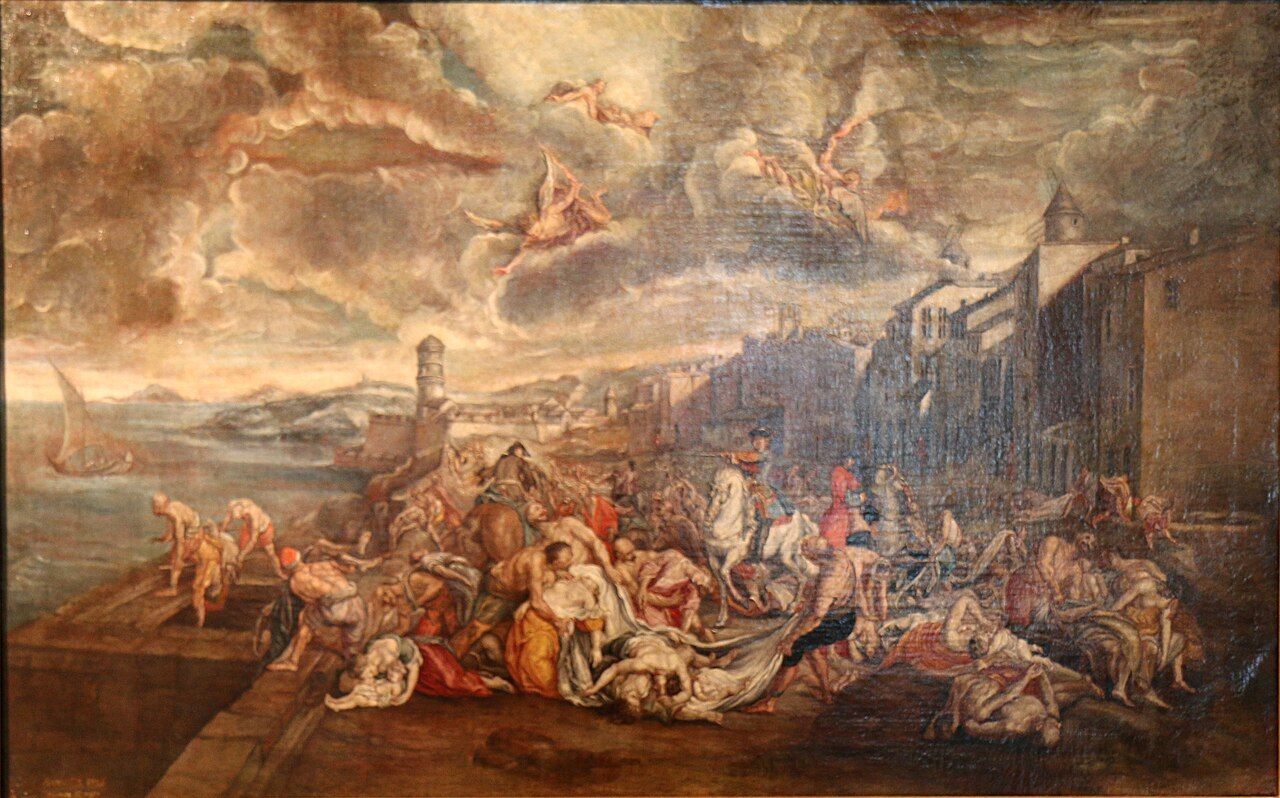
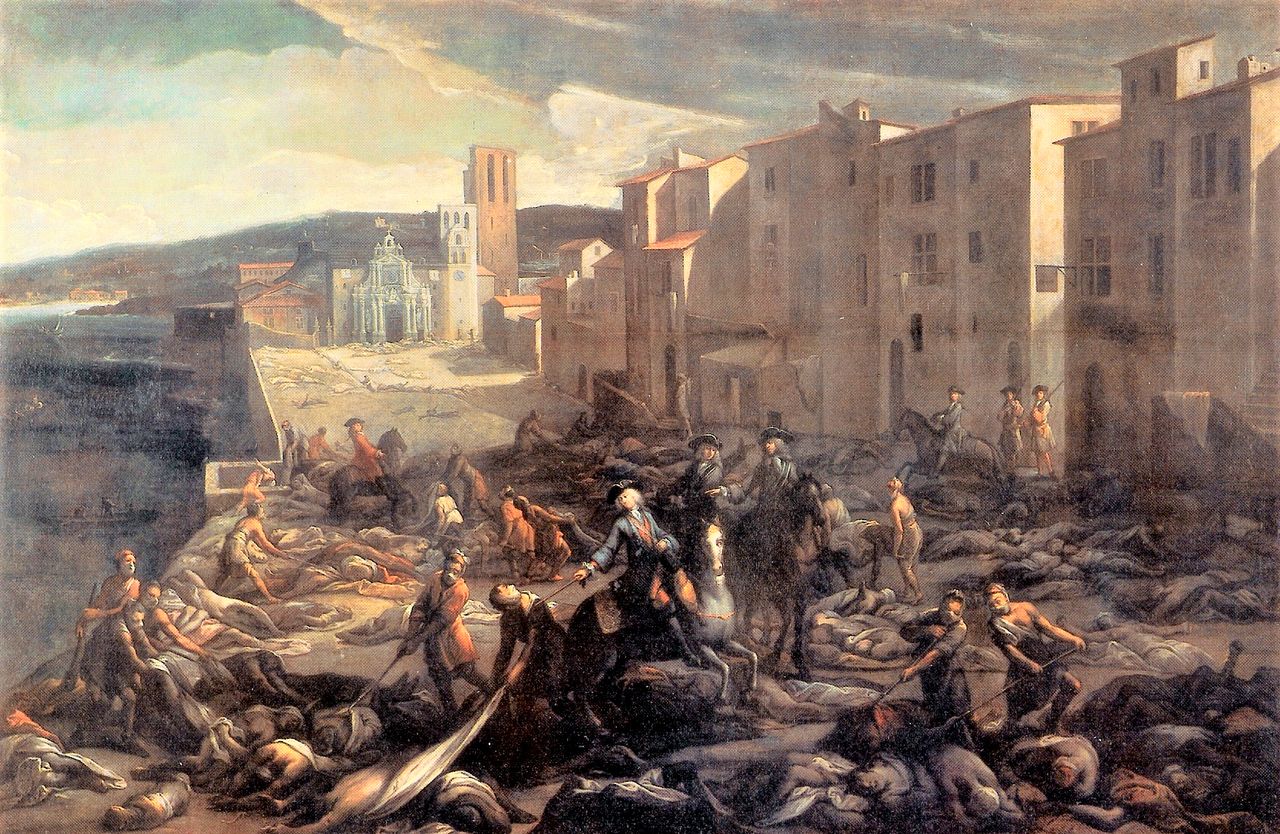
In 1720, the Chevalier Nicolas Roze cleared heaps of bodies from the Esplanade de la Tourette with the help of convicts from the galleys. The place name is attached to a task that cannot be made mild by distance. The record names Roze, the convicts and the work they did among the dead.
The epidemic’s death toll is given as a range, somewhere between a third and a half of Marseille’s people. At the Esplanade de la Tourette, that scale meets a specific act of clearing. The stated facts carry enough: heaps of bodies, Roze and the convicts from the galleys who helped.
5. Belsunce’s name
Bishop Henri de Belsunce stayed in Marseille through the epidemic to care for the sick and the dying. Cours Belsunce is named after him. The connection is direct: a person who remained in the city, and a place that keeps his name. His care belongs alongside the account of the bodies cleared at the Esplanade, though the facts describe separate acts.
The name on Cours Belsunce carries one strand of the epidemic into the city’s map. It points to Henri de Belsunce and to his decision to stay in Marseille through the outbreak.
6. Off Jarre
In the autumn of 1720, the Grand-Saint-Antoine was burned off the island of Jarre. The ship that had reached Marseille with plague on board ended its passage there. The remains of its hull were found off Jarre in 1978. Arrival, burning and later discovery make a sequence tied to the same ship and island.
 Photograph: Michel Serre — PD original

The harbour’s quarantine story also reaches towards a later quarantine hospital out on the islands, while the lazaret stood on the shore north of the old town. The Grand-Saint-Antoine was burned off Jarre. These places hold separate points in the account, from quarantine to the ship’s final place.
7. Across the hills
In 1721, a plague wall, the Mur de la Peste, was built across the hills of Provence to hold back the disease. It belongs to the year after the plague of 1720 and to a broader landscape than Marseille’s harbour. Its stated purpose is plain: to hold back the disease.
Set beside the lazaret, the wall gives two scales of response. The quarantine station stood on the shore north of the old town; the wall crossed the hills of Provence. One belongs to Marseille’s harbour, the other reaches across the region.
The Grand-Saint-Antoine, the lazaret, the Esplanade de la Tourette, Cours Belsunce, Jarre and the Mur de la Peste each hold a separate association: arrival and quarantine; the clearing of bodies; care for the sick and dying; the ship burned and later found; a wall built across the hills. The outbreak was one of the last great outbreaks of plague in western Europe, but these details keep the account close to Marseille.
The harbour places that stay with me are the lazaret on the shore and the Esplanade de la Tourette, where the human cost comes sharply into view.
| Place | Connection |
|---|---|
| The lazaret | Marseille’s quarantine station, on the shore north of the old town. |
| Esplanade de la Tourette | Where Nicolas Roze cleared heaps of bodies with help from convicts from the galleys. |
| Cours Belsunce | Named after Bishop Henri de Belsunce. |
| Jarre | The Grand-Saint-Antoine was burned off the island in the autumn of 1720; hull remains were found off Jarre in 1978. |
| Mur de la Peste | Built across the hills of Provence in 1721 to hold back the disease. |