Entry059
The fish market on the quay
A morning walk through the Quai des Belges market, where small-scale fishers sell their own catch and an old fishing body still regulates the waters off the city.
- Place
- Quai des Belges
- Arrondissement
- 1st
- From the Quai des Belges
- at the quay
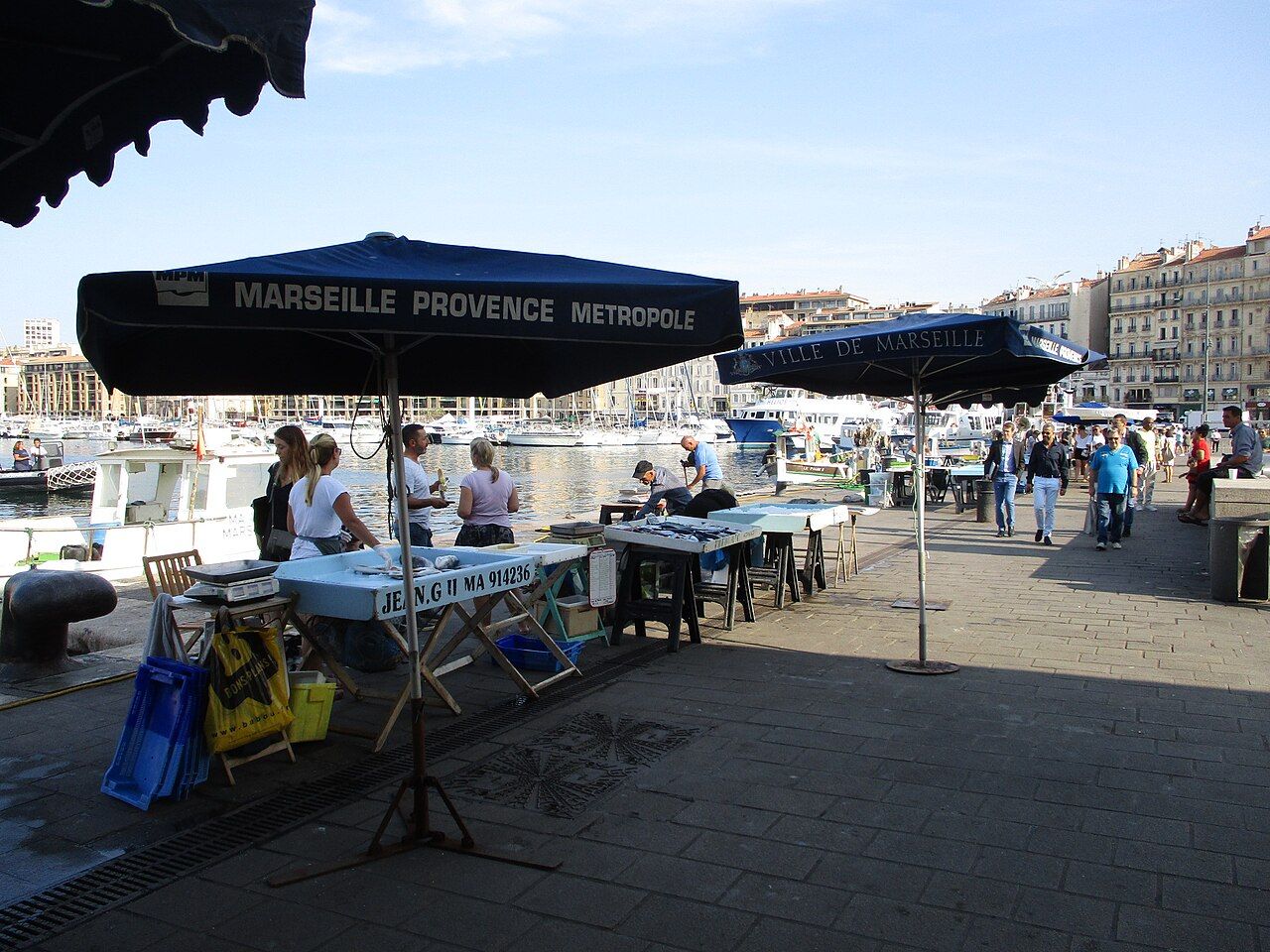 Photograph: Arnaud 25 — CC-BY-SA-4.0
1. “Every morning”
“Every morning small-scale fishers sell their own catch from stalls on the Quai des Belges.”
Begin at the quay and take the stalls as they are: a working market, with fishers selling what they have caught themselves. It reads best as a working market, not a separate attraction. The trade is in plain sight, part of the harbour’s daily activity. I pause over what is being laid out, then move on.
2. Read the stalls
Look over the catch before trying to put it into categories. Rockfish, sea bream, red mullet, octopus and cuttlefish all appear on the Quai des Belges. The selection gives the market its own order: a range of fish and seafood from the coast, set out by the people who caught it. Some of the fish are often still moving when they are laid out. A small detail, but it makes the exchange feel immediate.
3. Notice what is in season
Sea urchins appear on the stalls in winter. That is worth noticing alongside the more familiar fish, rather than treating the market as a fixed display. The catch varies, and the quay is not presenting a menu with every item always available. Customers often choose rockfish for bouillabaisse. It is a practical connection between the stall and the table, and a reminder that the market is selling food, not only offering a view.
4. Look back towards the boats
Many of the boats supplying the market moor in the Vieux-Port itself. The fishers use small boats and work close to the coast; the scale of the boats and the catch belongs together. From the stalls, look towards the mirrored roof over the quay, then back to the fish being sold. The market sits within the harbour, not apart from it. The boats and stalls belong to one harbour scene.
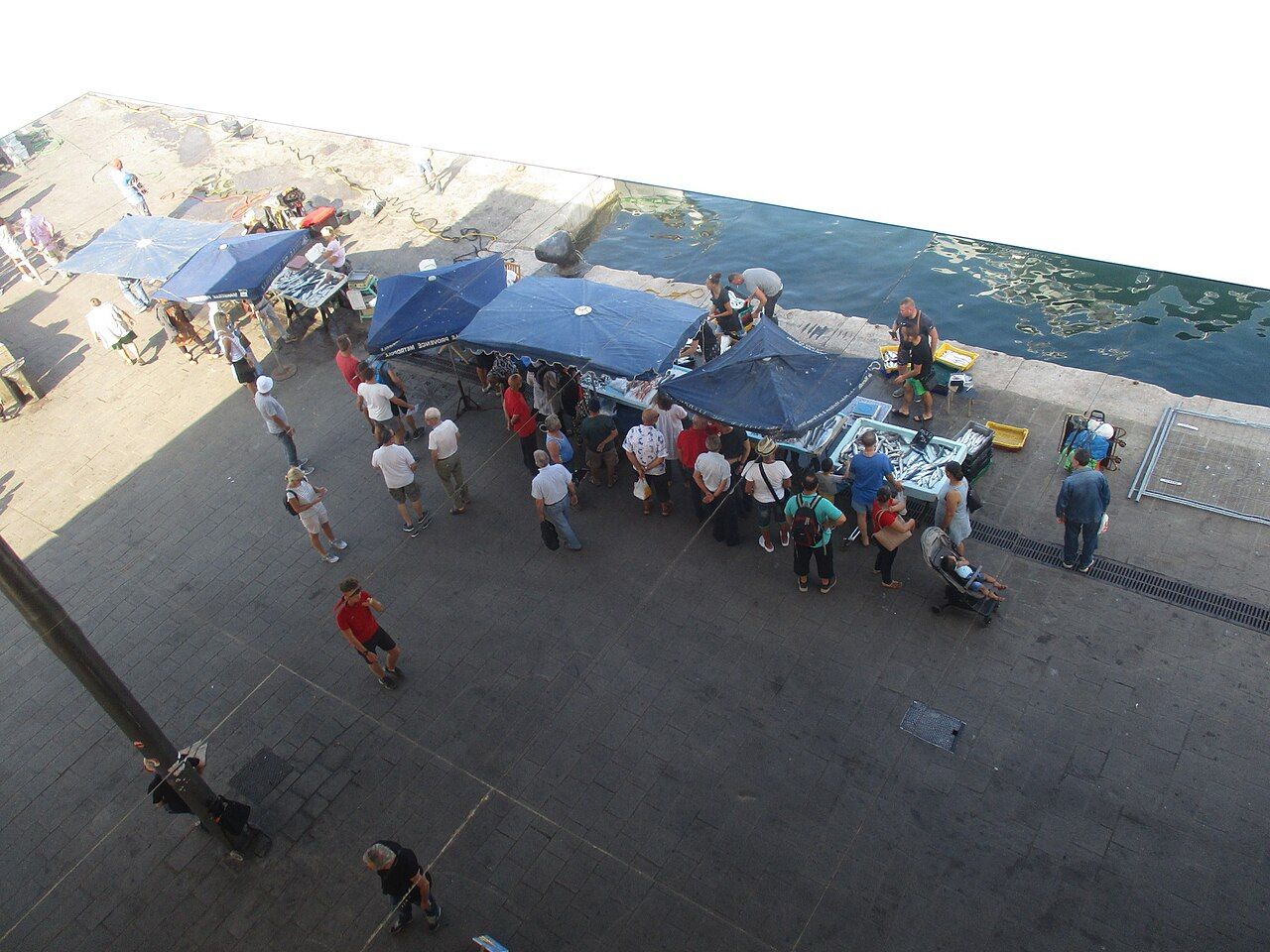 Photograph: Arnaud 25 — CC-BY-SA-4.0
5. Put the trade in its longer frame
The Prud’homie des pêcheurs de Marseille dates back to the 15th century. It is a body of fishers that settles disputes and sets fishing rules, and it still regulates fishing in the waters off the city. That history adds a longer frame to the stalls, without turning them into a museum display. The fishers are selling their own catch now; the rules that govern fishing are also part of the working life of the quay.
6. Leave time for the market to finish
The fish market is over by about midday. Take the stalls in order: see what is being sold, note the fish that are still moving, and look for the boats that moor in the Vieux-Port. Then let the market remain a morning event rather than stretching it into something else. Its short run is part of its character. The quay keeps its ordinary harbour setting, and the trade happens in full view of the city.
| At the quay | What to know |
|---|---|
| Place | Quai des Belges |
| Market | Every morning; over by about midday |
| Catch | Rockfish, sea bream, red mullet, octopus and cuttlefish |
I prefer it as a working scene, with the catch still moving and the harbour close around it.