Entry009
Quai de Rive-Neuve and the galley shore
A day by the Vieux-Port’s southern quay, following the naval past through a filled-in canal, an oil-trade name and a former fish auction hall.
- Place
- Quai de Rive-Neuve
- Arrondissement
- 7th
- From the Quai des Belges
- 5 minutes on foot
 Photograph: Chabe01 — CC-BY-SA-4.0
1. “The galley corps was abolished in 1748.”
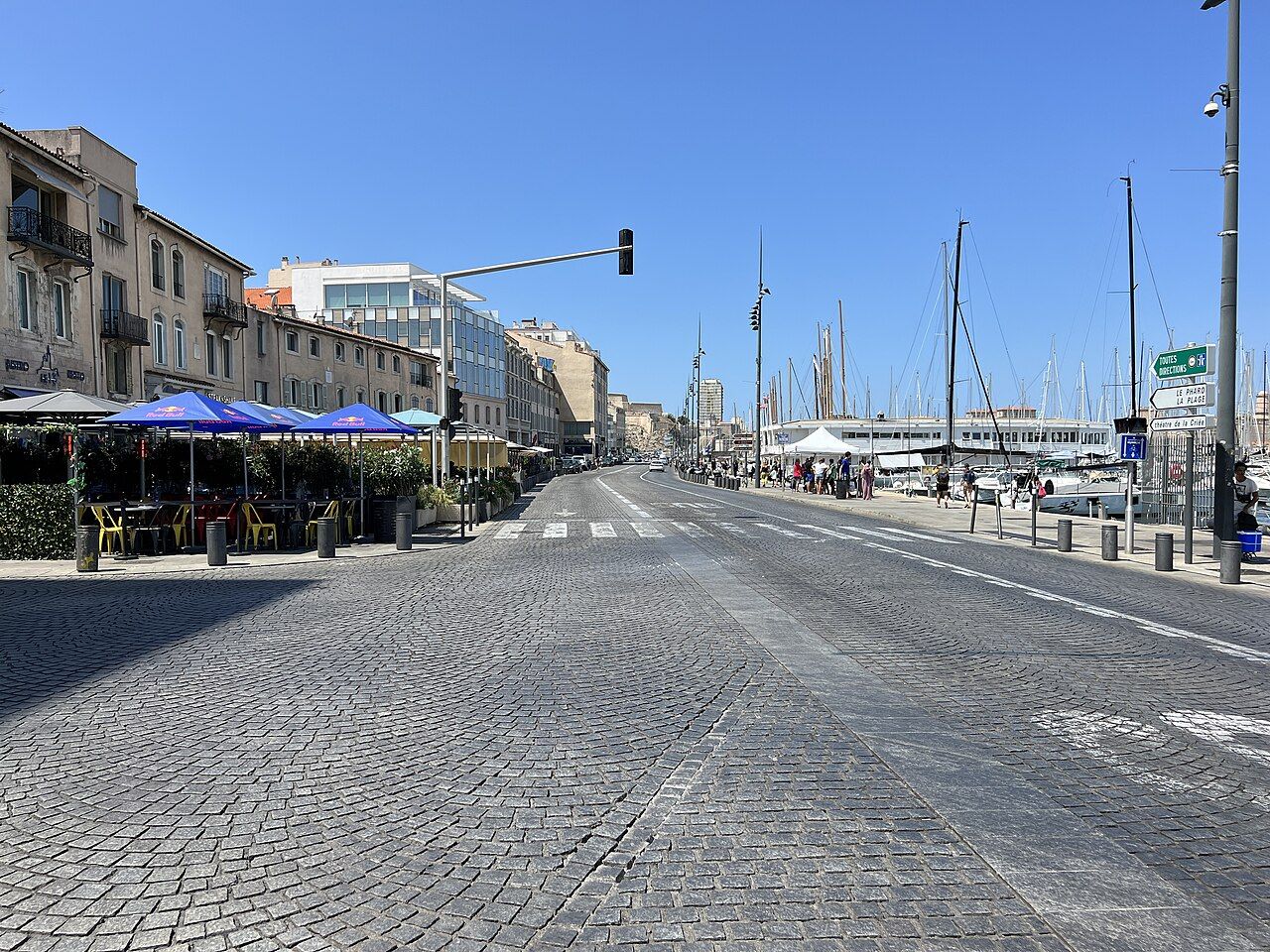
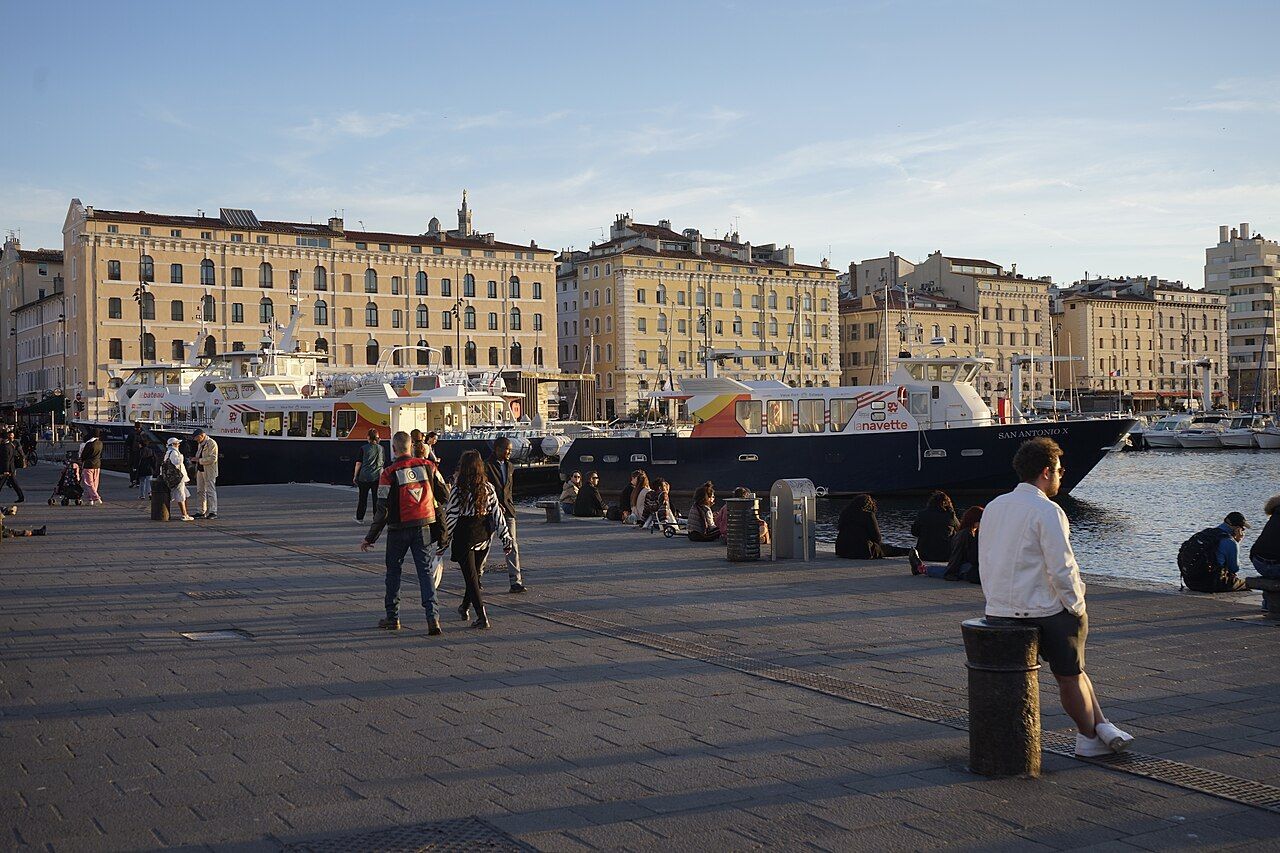
In the morning, I follow the Quai de Rive-Neuve, which runs beside the Vieux-Port on its southern edge. The harbour lies between the quay and the Hôtel de Ville and Le Panier, across the water. The view is open; the story beneath it is less obvious. This shore held a working arsenal, then was sold off and built over. It is enough to follow the names and the ground they describe.
2. A naval shore
From the 1660s, the south shore held the royal galley arsenal. It built and berthed France’s Mediterranean galley fleet. That gives this stretch of water a different reading: not only a harbour to look across, but a place where vessels were made and kept. Thousands of convicts and slaves rowed the galleys based at Marseille. I keep that fact beside the calmer present view, rather than letting the view smooth it away.
3. The work ends
The galley corps was abolished in 1748. By then, the arsenal had been part of the harbour’s purpose for generations. I walk on with the date in mind. What remains in this account is a change in use: the galley corps ended, and the land that served it would soon pass into other hands.
4. The canal under the course
Behind the quay, the Cours d’Estienne d’Orves was laid out over the filled-in canal of the arsenal. This is the clearest trace to follow on foot: the present-day course occupies the ground of an earlier piece of the naval site. A small detail of the old layout, carried into the walk by the street itself.
5. Land sold and built over
The land of the galley arsenal was sold off in the 1780s and built over. A walk here now passes through the result, with the old site carried forward mostly as a layer beneath the current one. I read the quay as a shore whose uses have changed. The past is present in the layout and the names, without taking over the whole view.
 Photograph: Carl Ha — CC-BY-SA-4.0
6. A name from trade
By the Place aux Huiles, the name points to the oil trade that once used this part of the quay. It is a smaller clue than the arsenal, but an easy one to carry along the walk. The name turns the shore back towards trade, goods and movement, after the history of the galleys. I like these plain markers. They make a place legible without asking it to become a monument.
7. The hall changes use
On the quay, the former municipal fish auction hall became the Théâtre National de la Criée in 1981. Another change of use, stated without a great deal of fuss. The building’s earlier role belongs to the quay’s working life; the theatre belongs to its later one. I reach this part of the walk with the day’s sequence gathered into a few shifts: arsenal, trade, auction hall, theatre. The ground keeps taking on new purposes.
8. The western end
At the western end of the quay, I look up to the the fortified abbey on the slope above. I finish by looking across to the Hôtel de Ville and Le Panier, then back along the quay. The view is better for having its working history in it.
The quay is most interesting where its old uses survive as names and altered ground.
| Place | What the facts say |
|---|---|
| Quai de Rive-Neuve | The quay marks the harbour’s southern edge. |
| Cours d’Estienne d’Orves | Laid out over the filled-in canal of the arsenal. |
| Place aux Huiles | Takes its name from the oil trade once carried on in this part of the quay. |