Entry039
Riou and the outer islands
From Les Goudes, read the uninhabited islands off Marseille’s southern tip: Riou’s height, breeding shearwaters and the wrecks at Grand Congloué.
- Place
- Île de Riou
- Arrondissement
- 8th
- From the Quai des Belges
- seen from Les Goudes, 15 km south
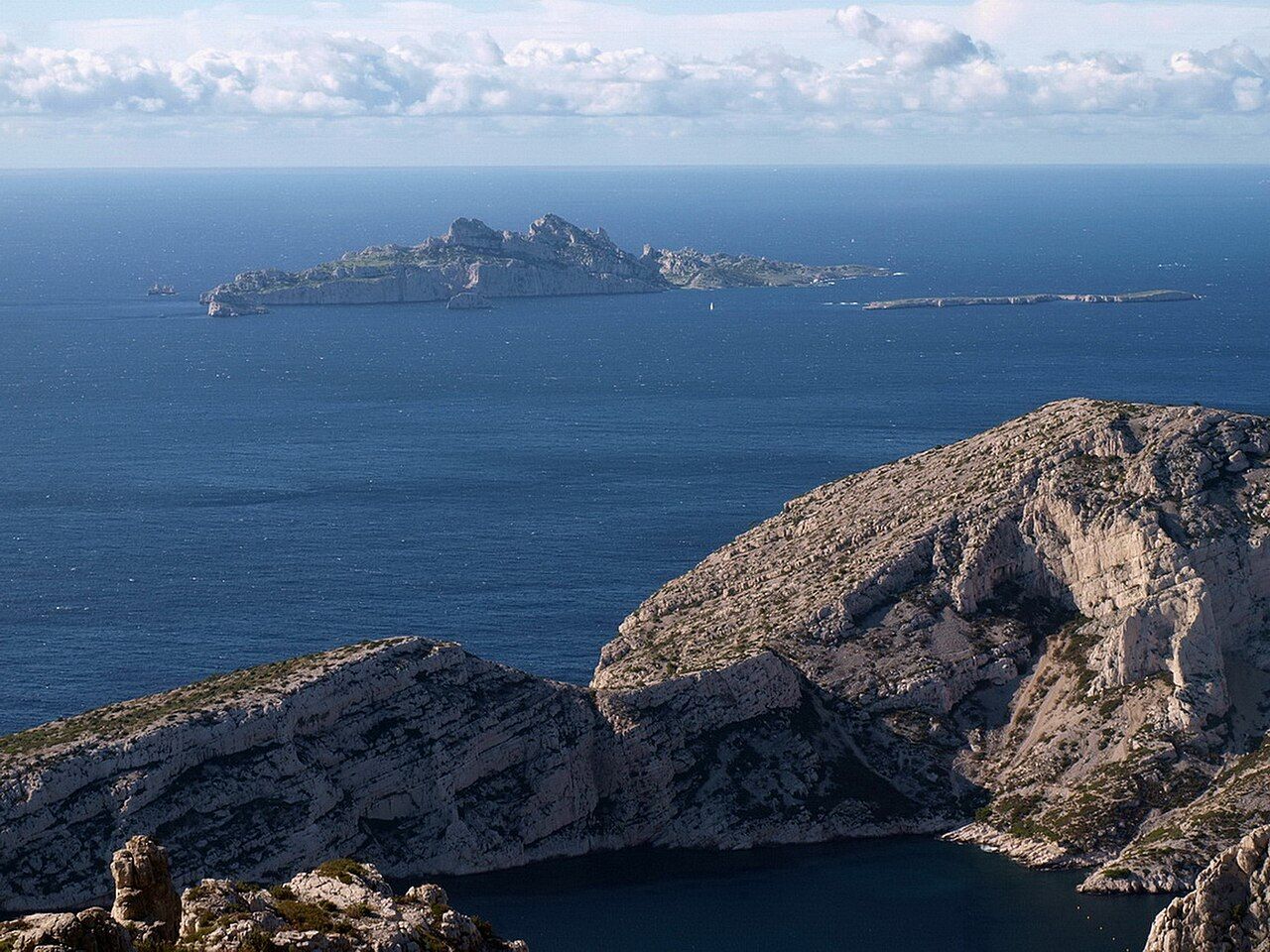 Photograph: Dolorette BERNARD — CC-BY-SA-3.0
1. What lies beyond Les Goudes?
Start with the position: the Riou archipelago lies off Marseille’s southern tip, beyond Les Goudes. From the shore at Les Goudes, look out towards the islands and hold on to that simple relationship. The archipelago is not one island, but a group set beyond the edge of the city.
2. Name the islands
Work through the names before trying to take in the whole group: Riou, Jarre, Jarron, Plane, then the Grand and Petit Congloué. These are the islands of the archipelago. The names make a useful frame for the view, even when the shore gives only a broad sense of the group.
3. Pick out Riou
Riou is the largest island. It rises to about 190 metres, a figure worth keeping in mind as the eye moves across the group. I find it easier to begin with this main rise, then place the smaller islands around it, rather than treat the archipelago as a single outline.
4. Think of the birds
The islands are uninhabited. Scopoli’s shearwaters breed on Riou in large numbers. That is the detail to carry into the shore view: Riou is a landmark and a breeding place. The colony belongs to the island, whether or not it enters the shore view.
5. Look below the surface
At the Grand Congloué, ancient wrecks brought another layer to the archipelago. In 1952, Jacques-Yves Cousteau led an underwater excavation there. It was one of the first underwater archaeological excavations made with diving equipment. Keep that sequence in mind: a distant island above, a site of archaeological work below.
6. Follow the trade connection
The wreck story gives the shore view a historical thread. For a related detail, follow the jars and amphorae of Roman trade. It offers a connection to what the water can hold, without suggesting the wrecks are visible from shore.
7. Keep the wider setting in view
The Riou archipelago lies within the core of the Calanques National Park. Bring the names, the breeding shearwaters and the Grand Congloué excavation back into one view. I prefer this layered reading of the islands to a view that stops at the outline.