Entry061
The santon fair
At Marseille’s Foire aux santons, a Provençal crib opens out from the Holy Family and shepherds to the whole village, with the ravi among its most loved figures.
- Place
- Marseille
 Photograph: Palamède — CC0-1.0
1. A village at the manger
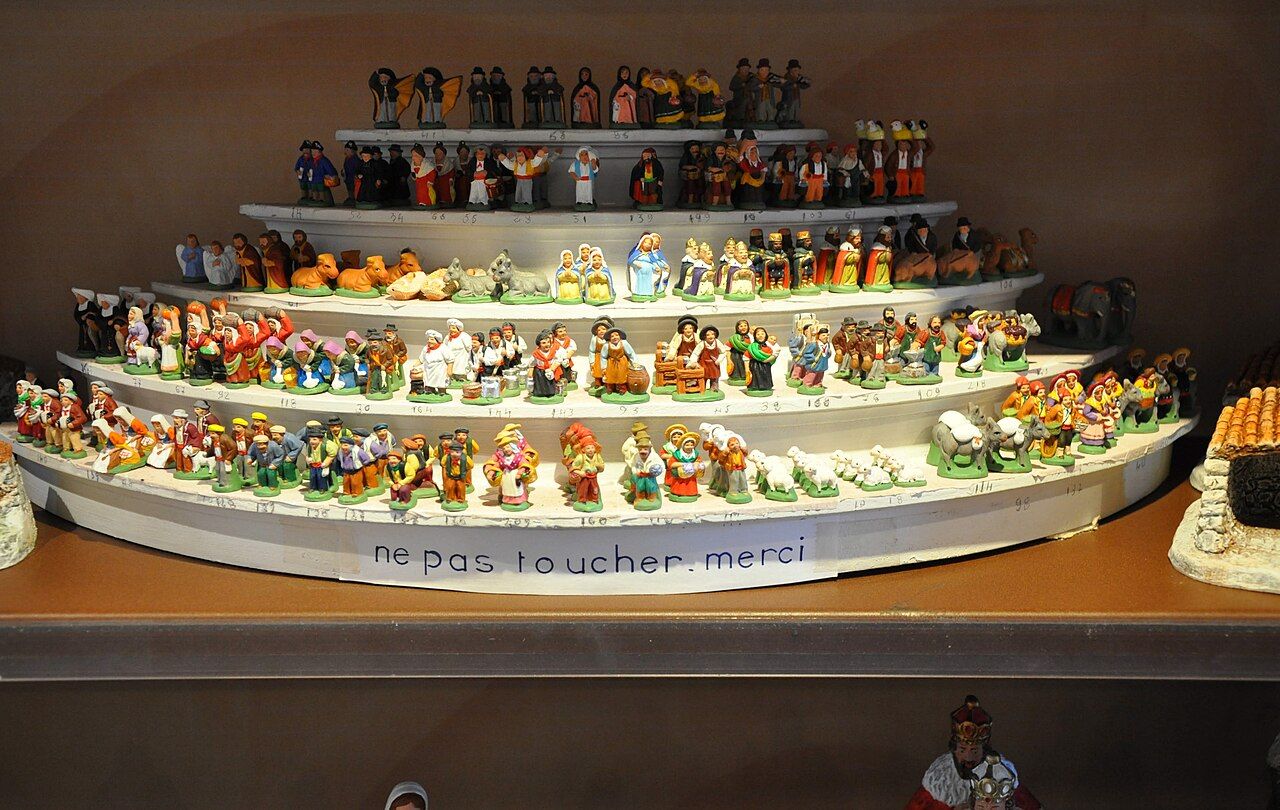
What happens to a crib when the whole village is invited to the manger? In Provence, the answer is a cast of small painted clay figures: santons, used to make Christmas cribs. The Provençal word they take their name from, ‘santoun’, means little saint. But the crib’s company reaches well beyond the Holy Family and the shepherds. It includes the people of a village, brought together around the manger. That change of scale is the pleasure of looking: a sacred scene, and a crowd of familiar lives set within it.
The phrase the avenue of the old fair points towards a street; the Foire aux santons turns attention to the figures gathered for a crib. The fair has been held in Marseille since 1803. Its name is attached to a particular kind of object, but the figures suggest a larger subject: the village arriving, one character at a time.
2. From home-made cribs to a fair
Clay santons spread after the French Revolution, when churches were closed and families made cribs at home. The change gives the figures a practical history as well as a religious one. A crib made at home could take in more than the central figures. It could make room for the village, and give the scene a human scale that a small group of figures could not provide.
Jean-Louis Lagnel, a Marseille craftsman, is credited with making the first clay santons around that century’s close. The Foire aux santons of Marseille was first held in 1803, and is among the oldest Christmas fairs in France. Those dates place the craft and the fair close together in the story, without making them the same thing: one is a way of forming figures, the other a yearly gathering devoted to them.
3. The figures have work to do
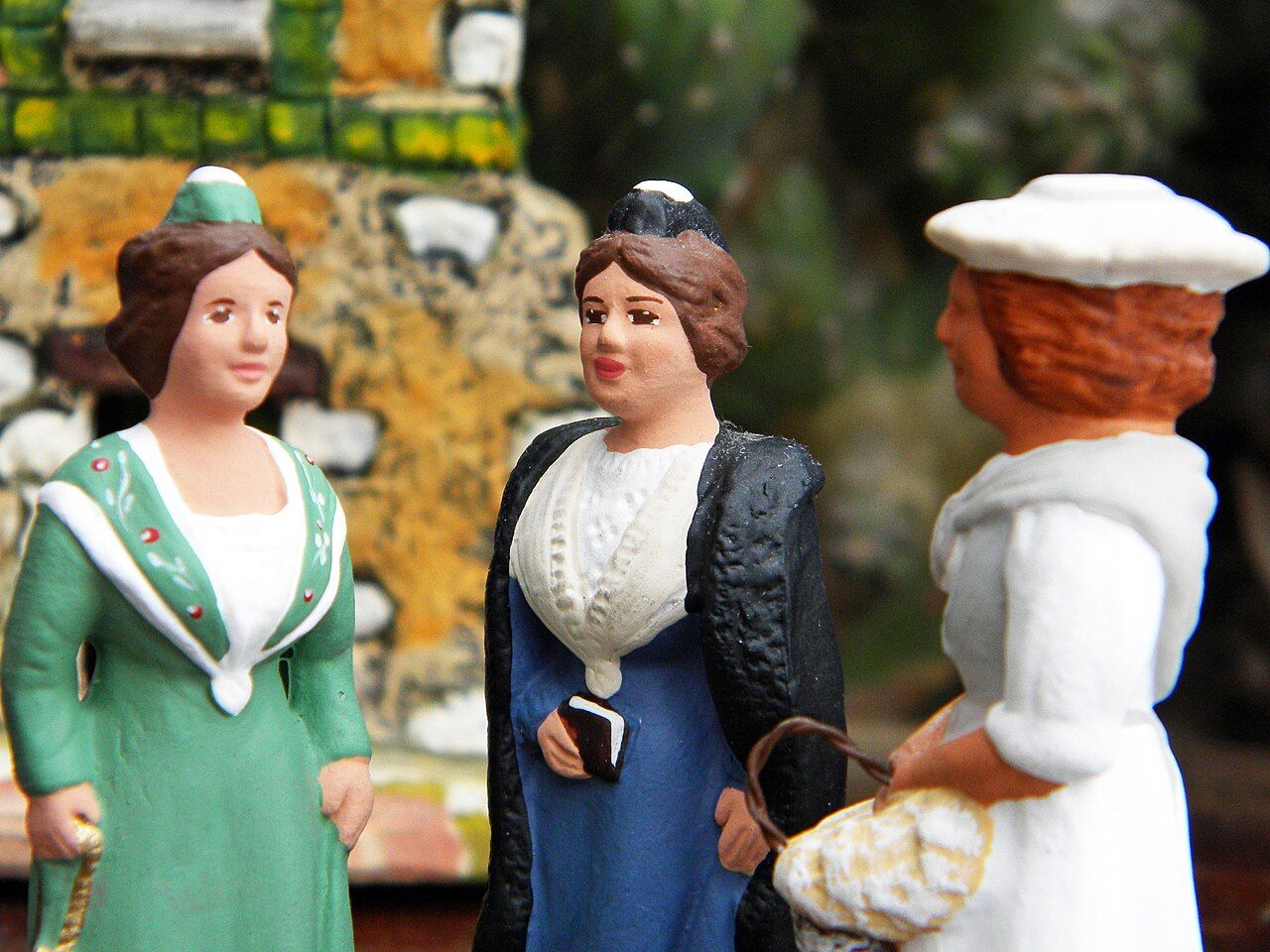
The classic santons include the knife grinder, the fishwife, the miller and the woman carrying sticks. Their names are plain descriptions of work or task. That plainness helps the village feel complete. The characters are not only witnesses to the manger; they arrive with the occupations and errands that make up ordinary life. A knife grinder brings a trade into the scene. A fishwife, a miller, a woman carrying sticks: each gives the eye another point to pause on.
A crowd is easy to take in; its parts take longer to read. A crib with many figures can first look like a collection. Then the names slow the looking down. The knife grinder is not interchangeable with the miller; the woman carrying sticks has a distinct place in the company. The figures make the village out of individual roles, rather than leaving it as a general background to the manger.
 Photograph: dierk schaefer — CC-BY-2.0
4. The ravi
The ravi is a simple figure with arms raised in wonder. It is one of the best-loved santons. The gesture is spare, and easy to understand without a long explanation: astonishment made visible in a small figure. In a cast that includes people known by their work, the ravi brings a distinct presence. No trade is needed. The raised arms are enough to make the figure stand apart.
I like that directness. A village scene can hold people busy with their tasks and one person caught in wonder, without asking either to take over. The ravi gives the eye a place to rest, then sends it back to the rest of the figures. I can stay with the small gestures for a while; they explain themselves without much more.
The ravi is a simple figure with arms raised in wonder.
5. Made by hand
Santons are made in plaster moulds, dried, and painted by hand. The process keeps the figure’s form and its painted surface close together: a small object made in stages, then given its character by the painting. Some santon makers also dress their figures in cloth costumes, as well as making painted clay ones. The materials vary, but the village remains the point of return. A figure has to be read as part of a larger company, even when a particular face or gesture catches attention first.
That mix of repeatable form and individual detail suits the subject. A village has shared roles, but it is not made of identical people. The familiar set of characters gives a crib its structure; the hand-painted finish and, for some figures, cloth costumes give each maker room to shape the result. No hurry from one to the next. The cast is the story.
6. The fair in the calendar
The Foire aux santons runs every year from late November until the end of December. It belongs to the Christmas season, but its interest is not limited to the central scene of the crib. The figures offer a way of seeing a village gathered around the manger: workers, passers-by in the scene, and the ravi with arms lifted in wonder. I prefer this crowded version of the crib. It leaves room for the whole village.
| Foire aux santons | Marseille |
|---|---|
| First held | 1803 |
| Runs | Every year, from late November until the end of December |
| Figures | Small painted clay figures used in Provençal Christmas cribs |