Entry041
Sormiou, where the road meets the beach
A day in Marseille’s largest calanque, from the narrow road over the ridge to the harbour, cabanons and clear water below.
- Place
- Calanque de Sormiou
- Arrondissement
- 9th
- From the Quai des Belges
- about 12 km south
 Photograph: Light2401 — CC-BY-SA-3.0
1. The name on the page
“Sormiou is the largest calanque within the city limits of Marseille.”
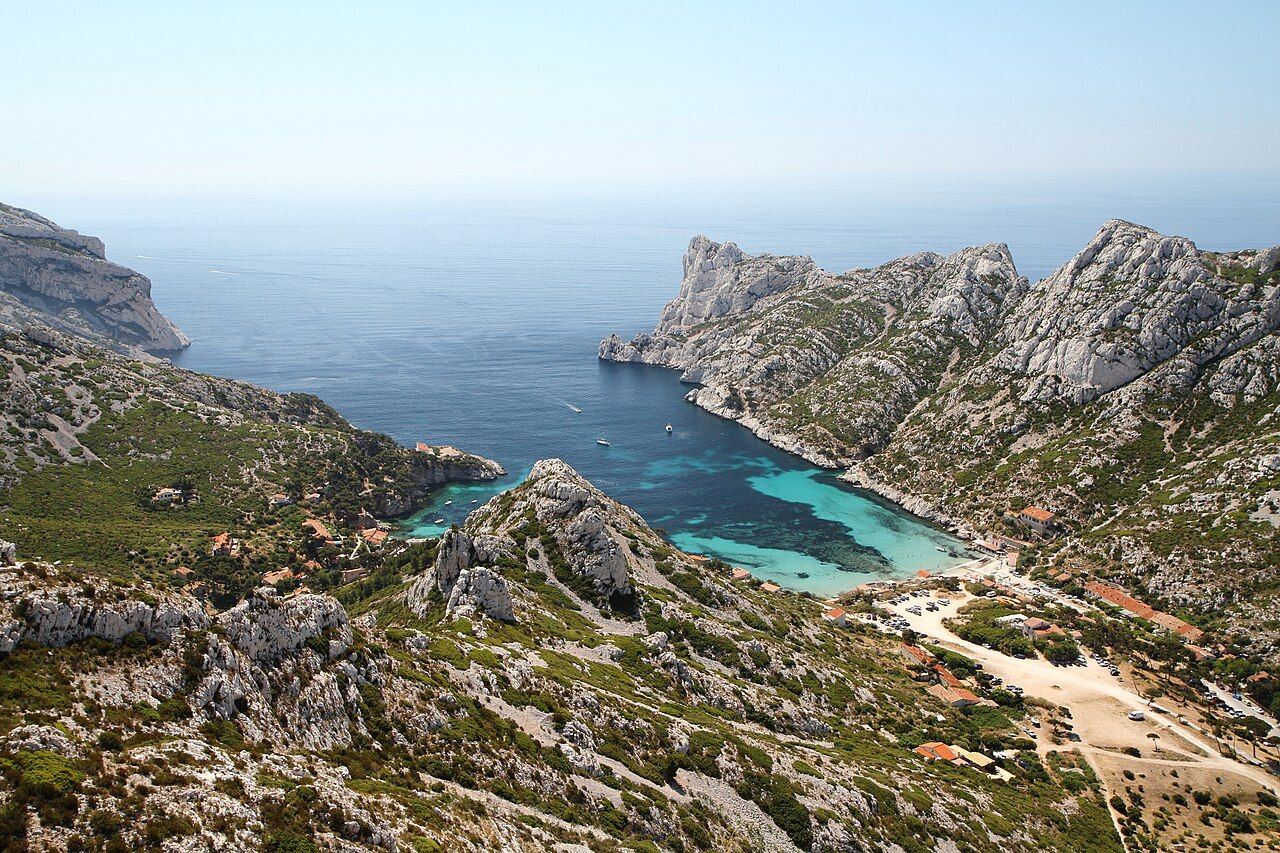
Morning begins with that measure in mind. Sormiou lies in the 9th arrondissement, but the figures soon give way to the route ahead: a narrow road climbs over the ridge, then drops into the calanque. The approach is part of the day’s story. The coast gathers in below, with beach, harbour and houses on the slopes.
2. Over the ridge
The road down to Sormiou has long been closed to most private cars in summer. That fact changes the feel of the approach, even before the calanque opens out. A road across a ridge and down towards the water is a clear line through the landscape. I like this kind of arrival: the view comes in stages, rather than all at once.
The road is narrow; the calanque below is broad. One leads into the other.
3. The beach below
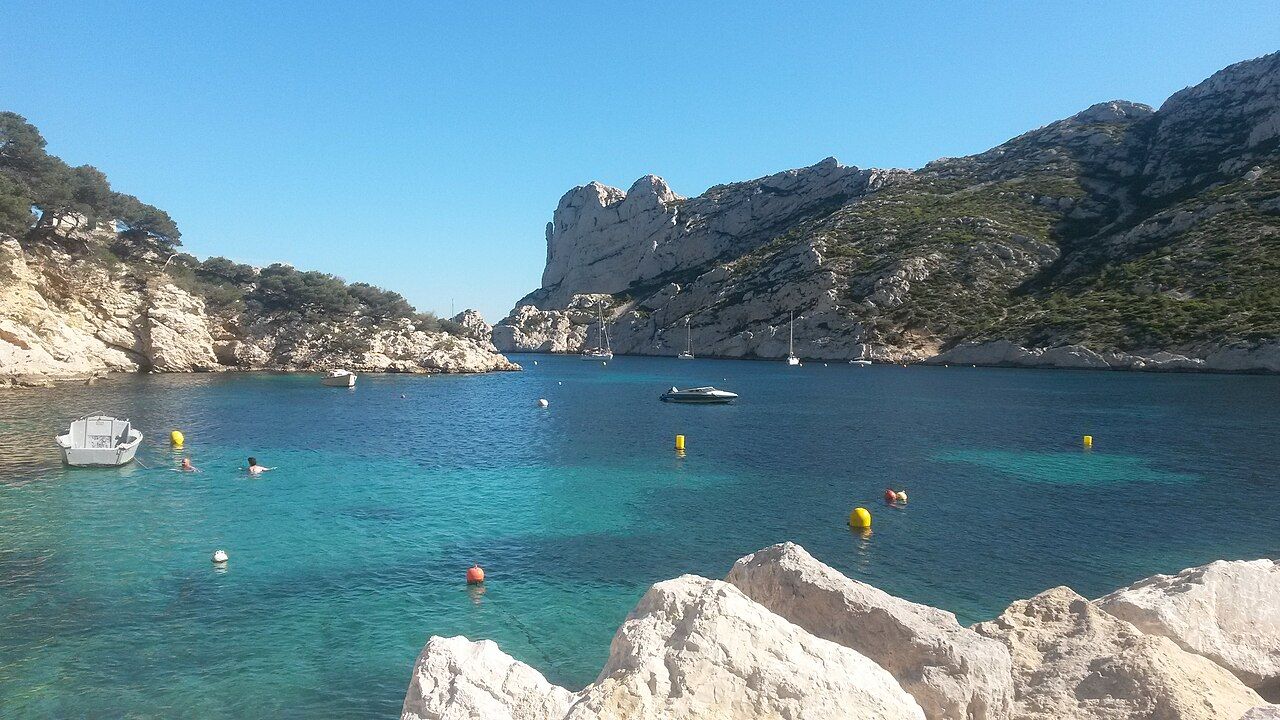
By the time the beach comes into view, its scale makes sense of the description. Sormiou’s pebble and sand beach is the largest in the calanques of Marseille. Pebble and sand together give the shore a mixed texture, without changing its simple role in the scene: a wide strip at the foot of the slopes, with the water beyond it.
From the rocks, the sea floor shows through the water. I prefer a view with something beneath it, and here the water does not hide that detail. Rocks, floor, clear water. A small fact, but one that keeps the place from being only a broad beach in the mind.
4. The harbour side
Later in the day, attention shifts to the small harbour. A jetty shelters it. The scale stays modest: harbour, jetty, beach, slopes. The harbour sits beside the beach, sheltered by the jetty. Its place in the calanque is plain, beside the beach and set apart by the protection of the jetty.
 Photograph: Benh LIEU SONG — CC-BY-SA-3.0
Across the coast, its fishing-port neighbour is linked to Sormiou by a path over the ridge. The path makes the two calanques part of the same walk on a map, while the ridge keeps each one distinct in the view.
5. Rows on the slope
The cabanons become the detail to watch as the day moves on. These small seaside houses line the slopes behind the beach, in rows. From the water’s edge, their position gives the calanque a settled outline: houses behind, beach in front, harbour close by. The rows belong to the view as much as the coast does.
In summer, with the road closed to most private cars, the cabanons suggest a community gathered around this particular edge of the city. That is an impression from their arrangement, not a claim about who is there. The useful fact is the pattern: small houses on the slopes behind the beach.
6. The western point
As afternoon turns towards evening, the Bec de Sormiou gives the calanque a firm edge. It is the rocky point that closes the calanque on the west. The beach and harbour draw the eye inward; the point marks where this broad inlet ends. I would keep the rocky outline in view on the way back across the shore.
7. The way out
By evening, the same road that brought the day down into Sormiou leads back over the ridge. The beach, the jetty and the rows of cabanons stay in their places; the path over the ridge still links the calanque with Morgiou. Sormiou holds together as a small harbour, a broad beach and a slope of seaside houses, all within the city limits of Marseille.
| Place | Sormiou, in the 9th arrondissement of Marseille |
|---|---|
| Road | Narrow; closed to most private cars in summer |
| Beach | Pebble and sand; the largest in the calanques of Marseille |
| Harbour | Small, sheltered by a jetty |
| Path | Over the ridge to the Calanque de Morgiou |