Entry030
Vallon des Auffes, a harbour under a bridge
A small fishing harbour sits in a narrow inlet below the Corniche. Take the stairs down, look across the boats and cabanons, then return to the viaduct.
- Place
- Vallon des Auffes
- Arrondissement
- 7th
- From the Quai des Belges
- bus 83, about 10 minutes
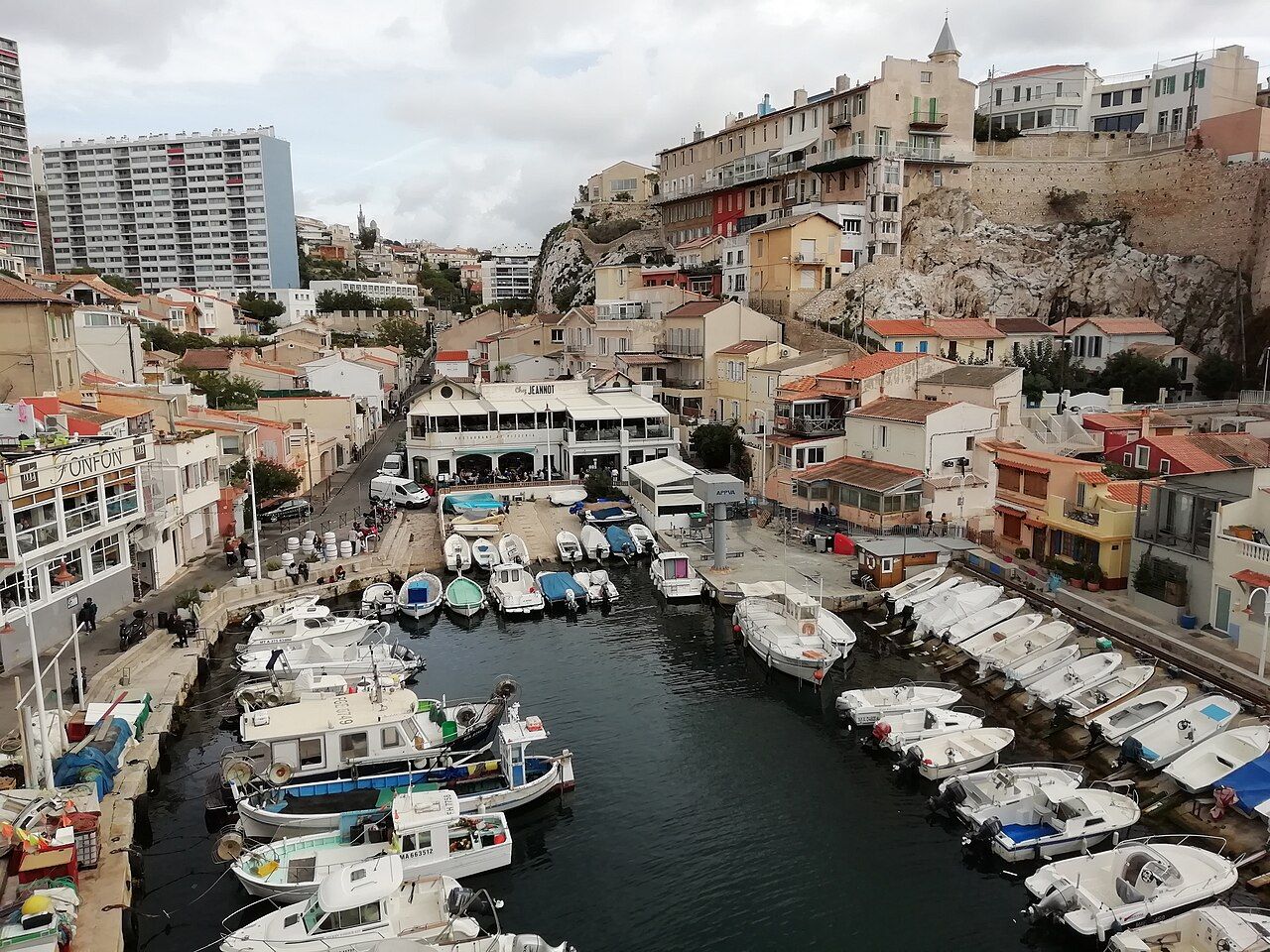 Photograph: Patafisik — CC-BY-SA-4.0
Where does the harbour begin?
Start on the Corniche, above the narrow inlet. The Vallon des Auffes is a small fishing harbour below it, with the Corniche crossing the mouth on a stone viaduct of arches. That gives the visit its simple shape: first the crossing overhead, then the descent to the quay, then a look back at the harbour from below.
From the port, bus 83 takes about 10 minutes. The approach is short in the scale of a city journey; the change in level is the part to notice.
Find the stairs down
Stairs lead from the Corniche to the quay. Take them down rather than treating the harbour as a view to be seen only from above. The inlet narrows around the water, and the quay brings the small working scale of the place into view. The descent shifts the view from the road above to the harbour below.
At the top, the viaduct makes a clear line across the mouth. Below, the harbour is held within the inlet. I prefer this order: cross above, then come down to see what the arches span.
Look across the moorings
Small traditional wooden fishing boats called pointus are moored in the Vallon des Auffes. Take time to look at their outlines and how they sit beside the quay. The boats are not a backdrop added to the harbour; they are part of its working character. The inlet is small, and its scale suits a quiet look rather than a grand scene.
From the quay, let the eye move between the boats and the stone arches overhead. The two views belong together: the close scale of the moorings and the larger bridge crossing the opening.
Notice the cabanons
Fishermen’s huts, called cabanons, line the sides of the Vallon des Auffes. Their position along the inlet makes the harbour feel closely arranged around the water. Look at the sides of the cove as well as the moorings; otherwise it is easy to miss how much of the scene is made up by the edges.
The name has its own working trace. Vallon des Auffes comes from “auffe”, the Provençal word for esparto grass, which rope-makers worked here. It is a useful detail to carry back up the stairs: this place has a name tied to material and labour.
Take in the Corniche again
From the quay, look towards the mouth of the inlet and the stone viaduct. Its arches mark the point where the Corniche crosses above the harbour. Then turn back to the boats and cabanons. The view changes with a small shift of attention, not a long walk. A few steps along the quay are enough to compare the close harbour and the bridge above it.
For a continuation on foot, the rocky lanes just beyond lead the way out from this compact stop. the rocky lanes just beyond
Visit the arch on the Corniche
Just north of the Vallon des Auffes, on the Corniche, stands the Monument aux morts de l’Armée d’Orient. The architect Gaston Castel designed it. Inaugurated in 1927, it is a great arch that frames the sea. Its position makes it possible to connect the harbour below with the larger memorial landscape along the Corniche.
The monument honours soldiers who fought in the Balkans and the eastern Mediterranean during the First World War. Allow the harbour and the memorial to remain distinct places: one is a small fishing inlet, the other a commemorative arch above it.
| Approach | From the port, bus 83, about 10 minutes |
|---|---|
| Harbour | Vallon des Auffes, below the Corniche |
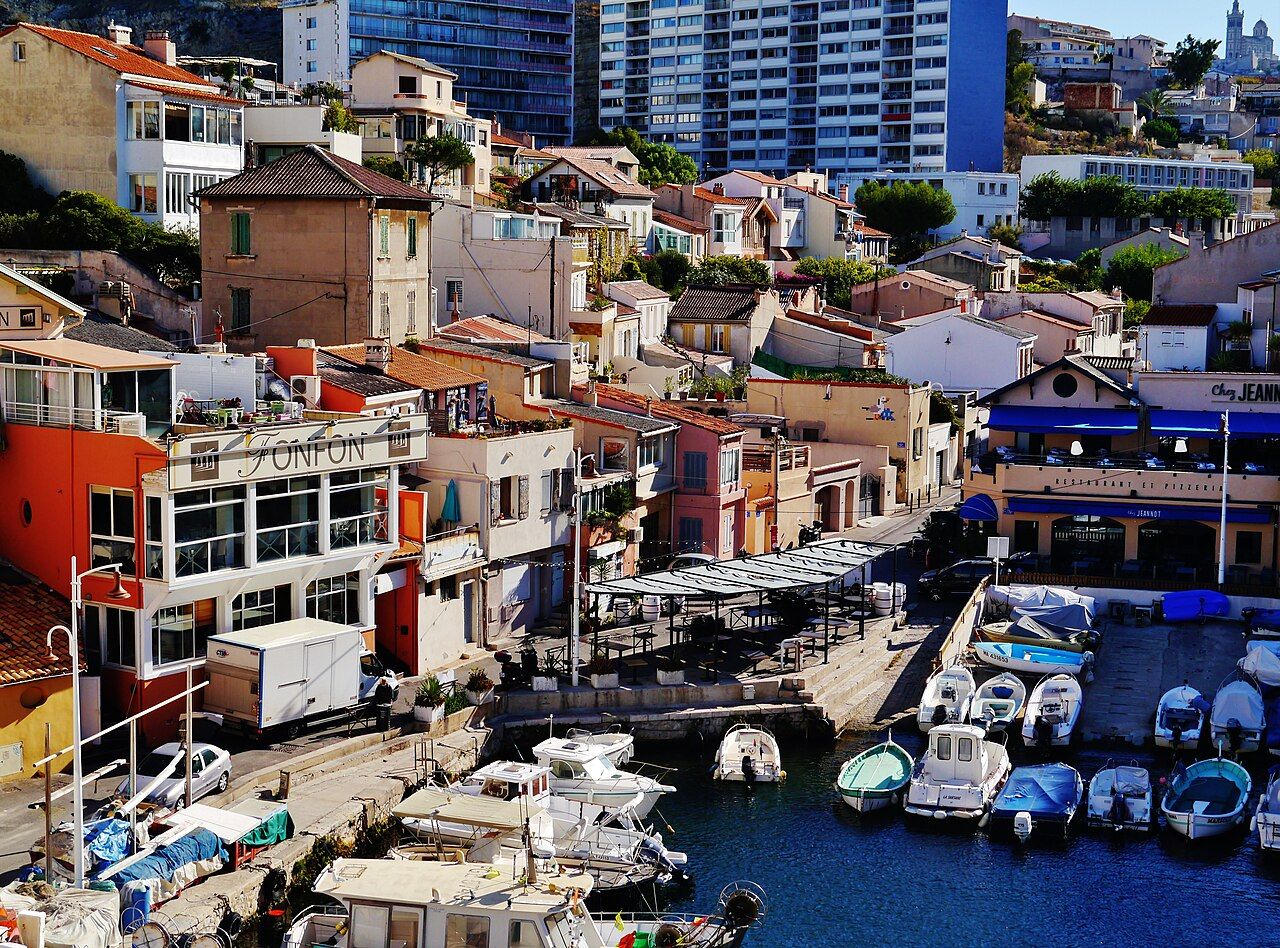 Photograph: Zairon — CC-BY-SA-4.0
The best part is the short descent from the arches to the working cove below.