Entry012
La Vieille Charité: from almshouse to open courtyard
Pierre Puget’s arcaded almshouse was built to confine Marseille’s poor. Its long decline, near ruin and restoration sit plainly in the courtyard it now shares with Le Panier.
- Place
- Vieille Charité
- Arrondissement
- 2nd
- From the Quai des Belges
- 15 minutes uphill
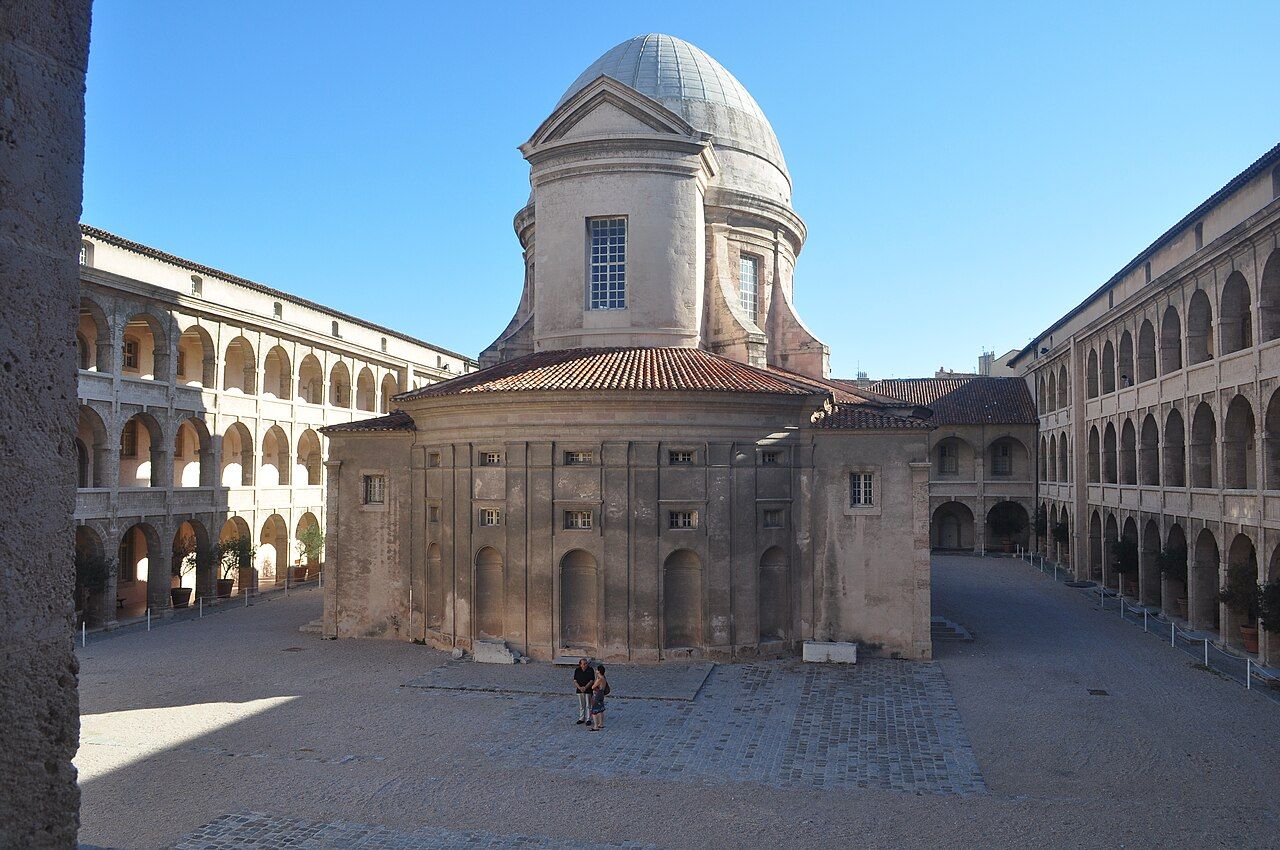 Photograph: Charliemoon — CC-BY-SA-3.0
1. What was this courtyard meant to contain?
La Vieille Charité was built between 1671 and 1749 as an almshouse for the poor of Marseille. That description can sound like care offered in a building. The purpose was harsher: it was built to shut away beggars and vagrants under the royal policy of confining the poor. The courtyard, now open to anyone walking through Le Panier, belongs to that history as much as to the building’s later museum life.
There is a useful tension in standing here. The galleries make an ordered enclosure; the place is now open to passers-by. Neither fact cancels the other. I find it helps to hold both in view rather than let the handsome courtyard settle the story too neatly.
2. A plan by Pierre Puget
The plans are credited to Pierre Puget, a Marseille-born architect and sculptor. That is the firm point to begin with. The building’s authorship sits close to the city, while its purpose came from a royal policy applied to poor people. The two strands meet in a place built with care in its form and confinement in its use.
Four ranges of arcaded galleries on three levels enclose the courtyard. The repetition is easy to read: gallery after gallery, level above level, all facing inward. It gives the courtyard a strong boundary. I keep returning to that arrangement because the building does not hide its structure; it makes the enclosure the first thing to understand.
3. The chapel at the centre
A Baroque chapel crowned by an oval dome stands in the middle of the courtyard. The galleries draw the eye around the enclosure, while the chapel gives it a centre. From within the courtyard, the two forms are hard to separate: the chapel is part of the composition, not a distant addition to it.
The word almshouse can make the whole place sound like a single-purpose institution. Here, the plan is more particular. Arcades, levels and chapel are all present in one contained space. That does not soften the original policy of shutting people away. It does make the building’s organisation legible, which matters when the later story turns from use to neglect.
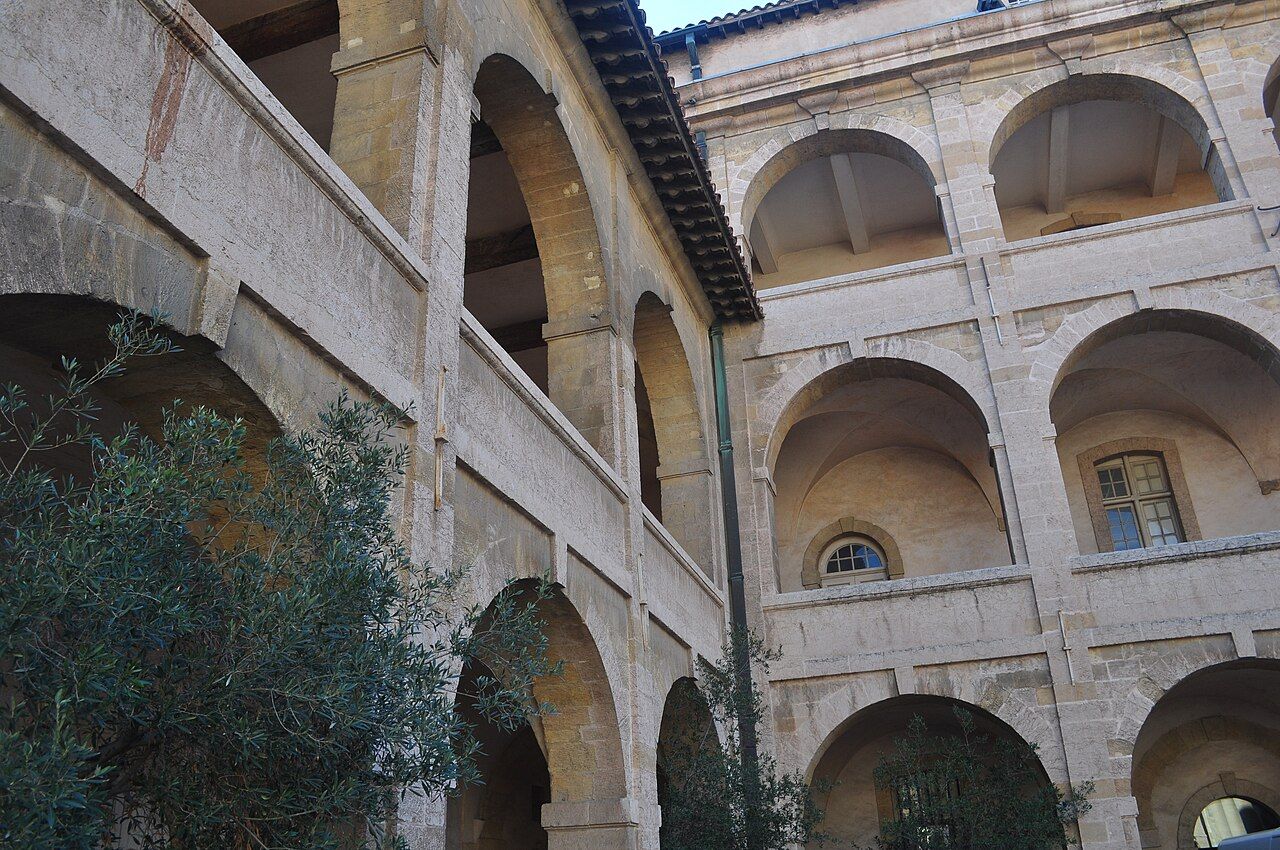 Photograph: Charliemoon — CC-BY-SA-3.0
4. The building changes hands
After the almshouse closed, La Vieille Charité served as a barracks and then as lodging for poor families. The uses changed; the building remained. The sequence speaks plainly for itself. It is a plain account of a place being put to different purposes after the institution it was built for had closed.
These later uses also sit beside the original purpose without resolving it. Confinement, barracks, lodging: each gives the building a different role, while its enclosed form stays present. The galleries and chapel do not tell the whole story by themselves. The changes in use do. I prefer to read the courtyard with those changes in mind, rather than treat it only as an architectural arrangement.
5. Close to ruin
By the century’s midpoint, La Vieille Charité was close to ruin. That is the point where the account shifts from changing uses to a building at risk of being lost. The contrast with the courtyard now is stark, though it does not need extra drama: close to ruin is enough to say.
The building’s history is not a clean passage from neglect to use. That is one reason the courtyard holds my attention. A neat restoration story could make the earlier confinement and the long period of decline seem like prelude only. They are part of what the place is. The present state can be valued without pretending that the past was simple.
The building’s history is not a clean passage from neglect to use.
6. Restoration, between 1970 and 1986
La Vieille Charité was restored between 1970 and 1986. The dates give the work a span rather than a single moment. The building was not simply carried from one use to another; it had first come close to ruin, then was restored. That is the central turn in its long fall and rescue.
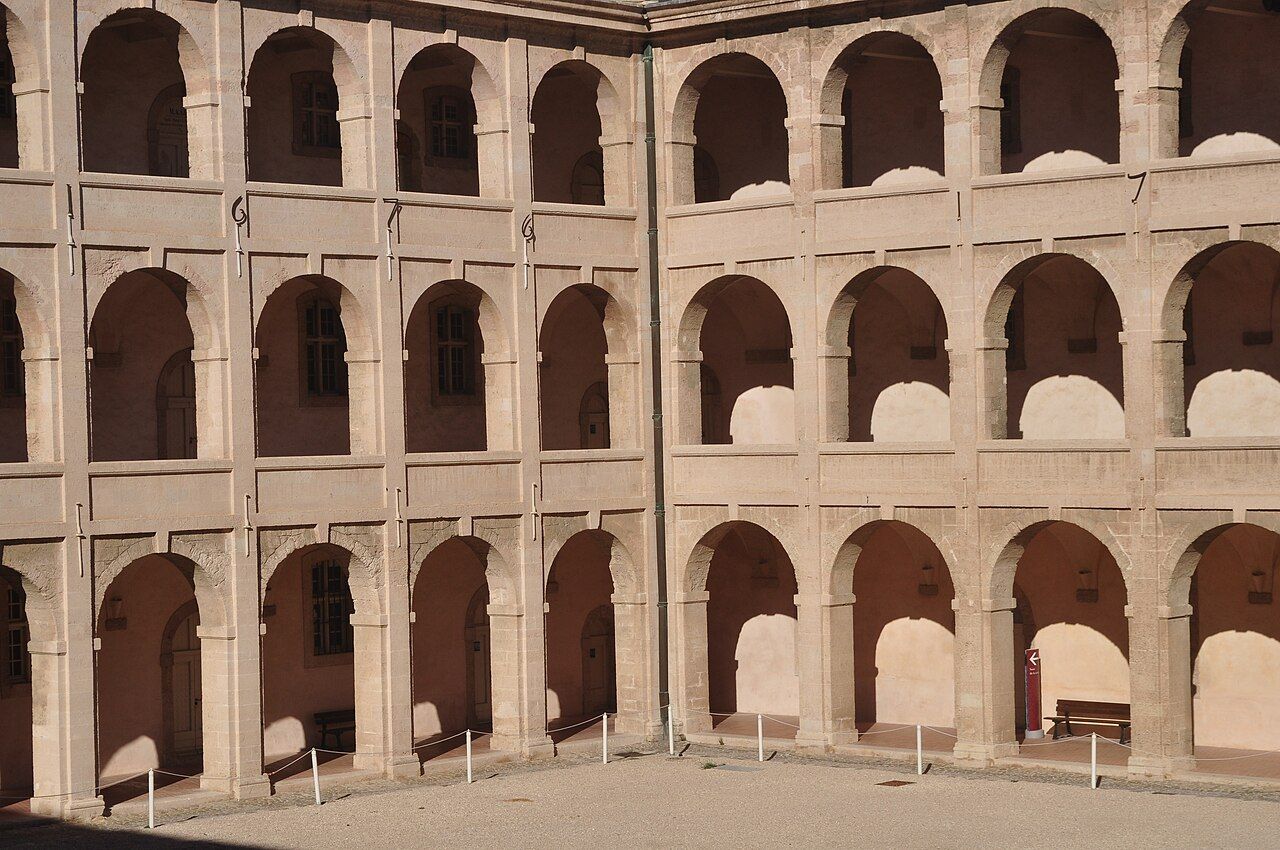 Photograph: Charliemoon — CC-BY-SA-3.0
Restoration is visible here in the survival of the courtyard as a place people can walk through. The four ranges still enclose it, and the chapel still stands in the middle beneath its oval dome. I do not need to imagine what the work involved to see the result described by those facts: the building remains available to be read as a whole.
7. A courtyard in Le Panier
The courtyard of La Vieille Charité is open to anyone walking through Le Panier. It can be part of a passage through the neighbourhood, rather than a destination that requires the whole story to be understood before entering. The building belongs in a walk that includes the stairways and lanes around it, where the courtyard’s inward order makes a clear change of pace.
The pink and cream stone of the galleries glows in late afternoon light. It is a small, specific pleasure, and one I would take over a broad claim about the place. I keep sweets in a pocket on a walk; here, I can stand in the courtyard and let the stone be the detail I remember. The colour does not erase the building’s purpose. It makes the surviving fabric easy to notice.
8. Museum rooms within the old almshouse
The Musée d’Archéologie Méditerranéenne occupies part of La Vieille Charité. The Musée d’Arts Africains, Océaniens et Amérindiens is also housed here. The museum uses add another present-day layer to a building that has already served as an almshouse, barracks and lodging for poor families.
There is no single label that covers all of it. The courtyard is open to people walking through Le Panier; museums occupy part of the building; the chapel and arcaded galleries remain at its centre. I like that the place can be encountered first as a courtyard, then understood through the sequence of its uses. The stone holds the eye; the history keeps it from stopping there.
| Approach | From the port |
|---|---|
| 2nd | 15 minutes uphill |